
Cellular senescence represents one of the most significant breakthroughs in our understanding of ageing and age-related disease. These non-dividing cells accumulate throughout our bodies over time, releasing inflammatory molecules that damage surrounding tissues and accelerate decline. The emergence of cellular senescence treatment strategies has transformed regenerative medicine, offering targeted approaches to remove or neutralise these problematic cells. With research accelerating rapidly in 2026, patients now have access to evidence-based interventions that address senescence at its source.
Understanding Cellular Senescence and Its Impact
Cellular senescence occurs when cells stop dividing but resist programmed death, remaining metabolically active within tissues. Unlike normal cell death (apoptosis), senescent cells persist and secrete a complex mixture of inflammatory cytokines, growth factors, and proteases collectively termed the senescence-associated secretory phenotype (SASP).
This inflammatory output creates significant problems. Senescent cells comprise less than 15% of aged tissue in most organs, yet their influence extends far beyond their numbers. The SASP disrupts tissue architecture, impairs stem cell function, and promotes chronic inflammation that underlies numerous age-related conditions.
The Biological Mechanisms Driving Senescence
Multiple stressors trigger cellular senescence throughout life:
- Telomere shortening from repeated cell division
- DNA damage from oxidative stress and environmental toxins
- Oncogene activation that halts potentially cancerous cells
- Mitochondrial dysfunction reducing cellular energy production
- Chronic inflammatory signals from persistent infections or autoimmune activity
Research published in Nature Reviews Drug Discovery highlights the complex pathways that regulate senescence, demonstrating why cellular senescence treatment requires sophisticated, multi-targeted approaches rather than single interventions.

Senolytic Approaches to Cellular Senescence Treatment
Senolytics represent the first generation of cellular senescence treatment designed to selectively eliminate senescent cells whilst sparing healthy tissue. These compounds exploit vulnerabilities in senescent cell anti-apoptotic pathways, effectively removing accumulated damaged cells.
The most extensively studied senolytic combination pairs dasatinib (a tyrosine kinase inhibitor) with quercetin (a natural flavonoid). Clinical trials have demonstrated measurable benefits across multiple age-related conditions. A recent randomised controlled trial in postmenopausal women showed that intermittent dasatinib plus quercetin improved bone metabolism markers and reduced inflammatory burden.
Evidence-Based Senolytic Compounds
| Compound | Mechanism | Clinical Status | Primary Applications |
|---|---|---|---|
| Dasatinib + Quercetin | BCL-2 family inhibition | Phase 2 trials | Idiopathic pulmonary fibrosis, osteoarthritis |
| Fisetin | Multiple anti-apoptotic pathways | Phase 2 trials | Frailty, cognitive decline |
| Navitoclax | BCL-2/BCL-xL inhibition | Early Phase trials | Haematological conditions |
| Piperlongumine | Oxidative stress induction | Preclinical | Broad senescence targeting |
These cellular senescence treatment options show promise, though dosing strategies remain under investigation. Intermittent administration (rather than continuous therapy) appears optimal for balancing efficacy with safety.
Senomorphic Strategies for Managing Senescence
Senomorphics take a different approach to cellular senescence treatment. Rather than eliminating senescent cells, these agents suppress the harmful SASP without killing cells. This strategy may prove safer for long-term use, particularly in tissues where senescent cells serve protective functions.
Rapamycin and its analogues (rapalogues) represent the most advanced senomorphic class. These compounds inhibit the mTOR pathway, reducing inflammatory secretions whilst preserving beneficial senescence functions. Metformin, already prescribed widely for diabetes, demonstrates senomorphic properties that may contribute to its observed longevity benefits.
Comparing Treatment Modalities
Different cellular senescence treatment approaches suit different clinical contexts:
Senolytics excel when:
- Senescent cell burden is high
- Acute intervention is needed
- Tissue regeneration capacity remains intact
Senomorphics prove advantageous when:
- Long-term management is required
- Senescent cells serve protective roles
- Safety profiles must be maximised
Emerging research suggests combination strategies may offer superior outcomes. Advances in senotherapeutics demonstrate that personalised treatment protocols tailored to individual senescent cell profiles will likely dominate future clinical practice.
Immune-Mediated Cellular Senescence Treatment
The immune system naturally clears senescent cells through specialised surveillance mechanisms. However, this clearance capacity declines with age, allowing senescent cell accumulation. Immune-mediated cellular senescence treatment strategies aim to restore or enhance this natural clearance.
Natural killer (NK) cells and cytotoxic T lymphocytes recognise senescent cells through specific surface markers. Therapeutic approaches under development include:
- CAR-T cells engineered to target senescence markers
- Vaccines that stimulate anti-senescence immunity
- Antibodies directed against senescent cell surface proteins
- Checkpoint inhibitors that enhance immune recognition
These immunotherapy-based approaches represent a promising frontier, potentially offering more precise targeting than current small-molecule senolytics.

Stem Cell Therapy as Cellular Senescence Treatment
Regenerative medicine offers complementary approaches to addressing cellular senescence. Stem cell therapy works through multiple mechanisms that counteract senescence-related damage and support tissue rejuvenation.
Mesenchymal stem cells (MSCs) demonstrate particular promise in cellular senescence treatment contexts. These cells secrete anti-inflammatory factors that modulate the SASP whilst promoting tissue repair. Umbilical cord-derived MSCs possess enhanced regenerative capacity compared to adult-derived cells, with lower immunogenicity and superior proliferation rates.
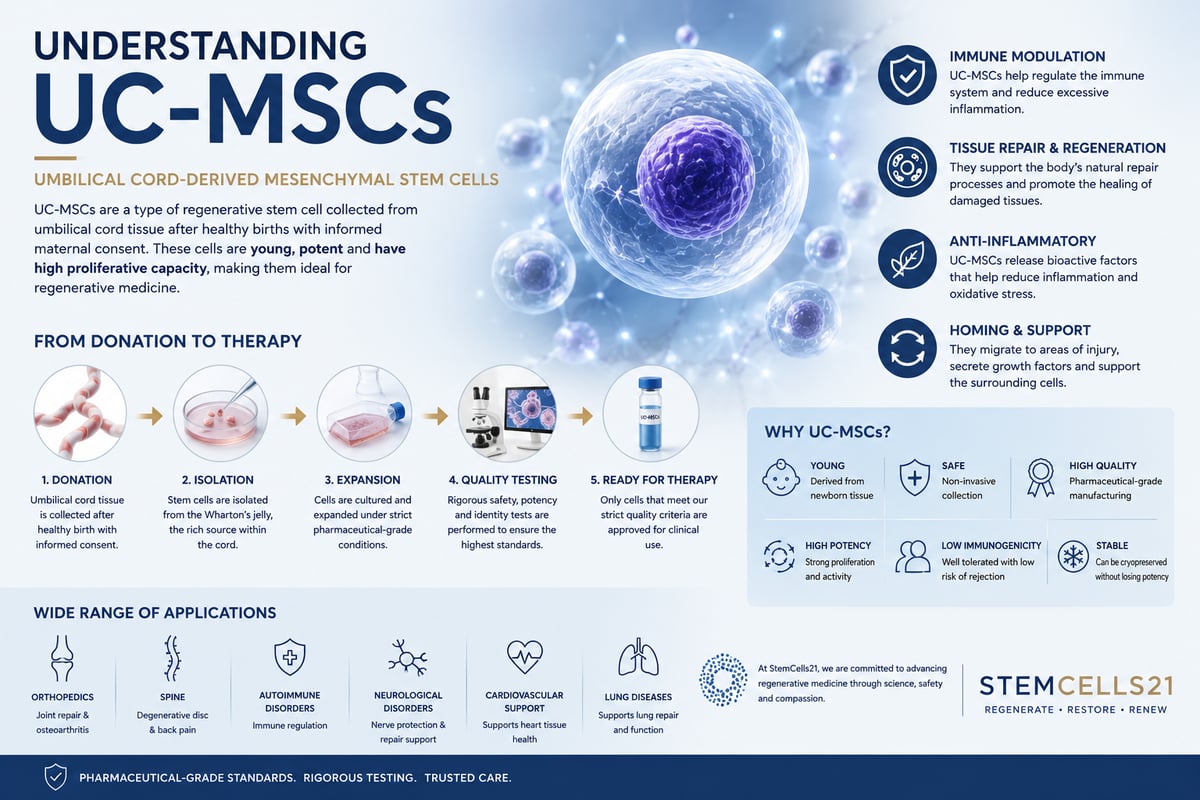
The paracrine effects of MSCs extend beyond simple anti-inflammatory action. These cells release extracellular vesicles containing microRNAs and proteins that reprogram senescent cells, restore mitochondrial function, and enhance endogenous stem cell activity within treated tissues.
Mechanisms of Stem Cell-Mediated Senescence Modulation
MSC therapy influences cellular senescence through several validated pathways:
- SASP suppression via secreted anti-inflammatory cytokines
- Mitochondrial transfer restoring metabolic function in damaged cells
- Immunomodulation enhancing natural senescent cell clearance
- Matrix remodelling reversing senescence-induced tissue dysfunction
- Stem cell niche restoration improving endogenous regenerative capacity
This multi-factorial mechanism makes stem cell approaches particularly valuable for complex conditions involving widespread senescence across multiple tissue types. Conditions that may benefit from stem cell intervention include degenerative diseases, chronic inflammatory conditions, and age-related functional decline.
Clinical Applications Across Disease States
Cellular senescence treatment shows promise across numerous age-related conditions. The SASP contributes to pathology in osteoarthritis, cardiovascular disease, neurodegenerative disorders, pulmonary fibrosis, and metabolic dysfunction. Targeting senescence addresses root causes rather than merely managing symptoms.
Neurodegeneration and Cognitive Decline
Senescent glial cells accumulate in ageing brains, releasing inflammatory factors that damage neurons and impair synaptic function. Research on senotherapeutics in Alzheimer’s disease demonstrates that clearing senescent cells improves cognitive markers in preclinical models and early human trials.
Senescent astrocytes and microglia lose their supportive functions whilst gaining neurotoxic properties. Cellular senescence treatment in neurodegenerative contexts must carefully preserve beneficial glial functions whilst eliminating harmful senescent populations.
Musculoskeletal and Joint Health
Osteoarthritis progression correlates strongly with senescent cell accumulation in cartilage and synovial tissue. These cells secrete matrix-degrading enzymes and inflammatory mediators that accelerate joint destruction. Early clinical trials using senolytic therapy show reduced pain scores and improved physical function.
Stem cell approaches for degenerative conditions offer additional benefits by combining senescence modulation with active tissue repair. This dual mechanism addresses both the removal of damaged cells and the restoration of healthy tissue architecture.
Cancer Biology and Senescence
The relationship between cellular senescence treatment and cancer requires nuanced understanding. Senescence evolved partly as a tumour suppression mechanism, halting potentially malignant cells. However, the SASP can paradoxically promote tumour growth, invasion, and metastasis in established cancers.
Current research on senescence in cancer explores using senescence induction followed by selective senolytic treatment in oncology. This "one-two punch" strategy forces cancer cells into senescence with chemotherapy, then eliminates them with senolytics before they can recover or secrete pro-tumour factors.

Diagnostic Biomarkers for Senescence Assessment
Effective cellular senescence treatment requires accurate measurement of senescent cell burden. Traditional markers like senescence-associated β-galactosidase (SA-β-gal) work only in laboratory settings. Clinical practice demands accessible, quantifiable biomarkers.
Promising diagnostic approaches include:
- Circulating SASP factors measured through blood tests
- Senescence-associated glycan patterns detectable via mass spectrometry
- Cell-free DNA methylation patterns indicating senescent cell presence
- Advanced imaging techniques identifying senescent cells in vivo
| Biomarker Type | Accessibility | Specificity | Current Status |
|---|---|---|---|
| p16INK4a expression | Tissue biopsy required | High | Research use |
| SASP cytokines (IL-6, IL-8) | Blood test | Moderate | Clinically available |
| Senescence-associated secretome | Blood test | Moderate-High | Development phase |
| DNA methylation clocks | Blood test | High | Limited clinical use |
Gerodiagnostic development remains critical for personalising cellular senescence treatment protocols and monitoring therapeutic efficacy. Without reliable biomarkers, clinicians cannot optimise dosing or determine treatment duration.
Safety Considerations and Risk Management
Cellular senescence treatment interventions require careful safety evaluation. Senescent cells occasionally serve beneficial functions, particularly in wound healing and tissue remodelling. Complete elimination might impair these processes.
Reported side effects in senolytic trials remain generally mild. The intermittent dosing regimens used with dasatinib plus quercetin minimise toxicity risks associated with continuous therapy. However, potential concerns include:
- Impaired wound healing from excessive senescent cell clearance
- Thrombocytopenia with BCL-2 family inhibitors affecting platelets
- Drug interactions particularly with anticoagulants
- Unknown long-term effects from chronic senescence modulation
Stem cell-based approaches carry different risk profiles. High-quality pharmaceutical-grade cells manufactured under rigorous quality standards demonstrate excellent safety records. Ongoing research at specialised facilities continues refining protocols to maximise benefits whilst minimising potential complications.
Personalisation and Treatment Optimisation
The future of cellular senescence treatment lies in personalised medicine approaches. Senescent cell types, tissue distribution, and SASP profiles vary substantially between individuals. Standardised protocols cannot address this heterogeneity effectively.
Advanced assessment strategies will guide treatment selection:
Patient Stratification Factors
- Chronological age versus biological age markers
- Specific senescent cell types present in affected tissues
- SASP composition and inflammatory profile
- Comorbid conditions influencing treatment safety
- Previous therapy responses indicating likely benefit
- Genetic factors affecting senescence susceptibility
Combining diagnostic biomarkers with clinical presentation enables practitioners to select optimal cellular senescence treatment strategies. Some patients may benefit most from aggressive senolytic therapy, whilst others require gentler senomorphic approaches or regenerative interventions.
Emerging Technologies and Future Directions
Innovation continues advancing cellular senescence treatment capabilities. Novel compounds entering development show improved selectivity and reduced toxicity. Targeted delivery systems may soon enable tissue-specific senescence modulation without systemic effects.
Gene therapy approaches could reprogram senescent cells rather than eliminating them. CRISPR-based technologies might correct the underlying damage causing senescence, restoring normal cellular function. Artificial intelligence algorithms will likely optimise combination protocols by predicting individual responses.
The integration of multiple modalities represents the next frontier:
- Initial senolytic clearance reducing senescent cell burden
- Stem cell transplantation supporting tissue regeneration
- Senomorphic maintenance preventing recurrent accumulation
- Immune enhancement strengthening natural clearance mechanisms
- Lifestyle interventions reducing senescence-inducing stressors
This comprehensive approach addresses cellular senescence treatment from multiple angles, maximising benefits whilst maintaining safety. Advances in regenerative medicine continue expanding therapeutic possibilities for patients seeking to address age-related decline.
Global Access and Treatment Availability
Cellular senescence treatment availability varies significantly across regions. Well-established senolytic compounds like quercetin are widely accessible as supplements, though pharmaceutical-grade formulations for clinical use remain limited. Prescription senolytics require specialist oversight and careful patient selection.
Stem cell therapies demand sophisticated manufacturing capabilities and quality control systems. Accredited facilities with pharmaceutical-grade production standards ensure optimal safety and efficacy. Patient access depends on regulatory frameworks, with some jurisdictions offering broader treatment options than others.
Cost considerations influence treatment accessibility. Research-stage interventions available through clinical trials provide options for some patients. As cellular senescence treatment approaches gain regulatory approval and enter mainstream medicine, costs should decrease through competition and scaled production.
International patients increasingly seek treatment at specialised centres offering comprehensive senescence-targeted protocols. These facilities combine cutting-edge interventions with personalised assessment and follow-up care, delivering outcomes that generalised healthcare systems cannot yet match.
Cellular senescence treatment has evolved from theoretical concept to clinical reality, offering evidence-based interventions that address fundamental ageing mechanisms. Whether through senolytics, senomorphics, immune modulation, or regenerative approaches, patients now have options for targeting accumulated senescent cells that drive age-related decline. StemCells21 provides access to pharmaceutical-grade stem cell therapies and personalised regenerative medicine protocols designed to support healthy ageing and address senescence-related conditions. Our Bangkok facility combines advanced cellular therapeutics with comprehensive patient care, helping individuals optimise their healthspan through scientifically validated interventions.