
Exosome therapy represents a frontier in regenerative medicine that extends far beyond conventional treatments, offering promising applications for healthy ageing and lifespan extension. These naturally occurring nanovesicles facilitate intercellular communication and carry crucial biological cargo that can influence tissue repair, immune modulation, and cellular rejuvenation. As scientific understanding deepens and clinical evidence accumulates, exosome therapy longevity applications are emerging as a sophisticated approach to addressing age-related decline at the molecular level.
Understanding Exosomes and Their Role in Cellular Communication
Exosomes are extracellular vesicles measuring 30-150 nanometres in diameter, secreted by virtually all cell types throughout the body. These microscopic messengers transport proteins, lipids, messenger RNA, microRNA, and other bioactive molecules between cells, coordinating complex physiological processes.
Unlike conventional pharmaceuticals that typically target single pathways, exosomes operate through multi-faceted mechanisms. They bind to recipient cells and either fuse with the plasma membrane or undergo endocytosis, delivering their cargo directly into the cellular environment. This natural delivery system evolved over millions of years, making exosomes exceptionally biocompatible.
Mechanisms of Action in Ageing Biology
Research demonstrates that exosome therapy longevity benefits stem from several interconnected mechanisms:
- Mitochondrial function restoration through delivery of functional proteins and regulatory RNAs
- Senescent cell clearance via immune system modulation and apoptotic signalling
- Stem cell niche preservation by maintaining supportive microenvironments
- Inflammation reduction through anti-inflammatory cytokine delivery and immune balance
The cargo composition varies dramatically depending on the parent cell type and its physiological state. Mesenchymal stem cell-derived exosomes, for instance, contain particularly rich arrays of regenerative factors that support tissue repair and immune regulation.

Clinical Evidence and Research Developments
The scientific literature surrounding exosome applications has expanded exponentially in recent years. A comprehensive 2024 review on extracellular vesicles highlights advances in therapeutic cargo delivery, engineering strategies, and translational challenges facing the field.
Preclinical studies have demonstrated exosome therapy longevity potential across multiple age-related pathologies. Research published in Signal Transduction & Targeted Therapy summarizes extracellular vesicles as therapeutic tools across diseases, including detailed discussion of delivery mechanisms, safety profiles, and clinical translation considerations.
Neurodegenerative Disease Applications
Cognitive decline represents one of the most impactful aspects of ageing. Multiple research teams have investigated exosome interventions for neurodegenerative conditions. A systematic review of extracellular vesicles for Alzheimer’s disease treatment examined therapeutic evidence, mechanisms, and methodological quality according to MISEV2023 guidelines.
The neuroprotective effects observed in laboratory models include:
- Clearance of amyloid-beta protein aggregates
- Reduction of tau protein phosphorylation
- Neuroinflammation suppression
- Synaptic plasticity enhancement
- Blood-brain barrier protection
A bibliometric study published in Frontiers identified research trends and hotspots for exosomes in Alzheimer's disease, demonstrating exponential growth in publications since 2020.
Sources and Production Methodologies
Not all exosomes possess equal therapeutic potential. The source cell type fundamentally determines the cargo composition and biological activity. Mesenchymal stem cells derived from umbilical cord tissue produce exosomes particularly rich in regenerative and immunomodulatory factors.
| Source | Advantages | Primary Applications |
|---|---|---|
| Umbilical cord MSCs | High proliferation rate, low immunogenicity | Tissue repair, immune modulation |
| Adipose tissue MSCs | Readily available, anti-inflammatory | Musculoskeletal conditions |
| Bone marrow MSCs | Well-characterized, regulatory precedent | Haematopoietic support |
| Dendritic cells | Immune activation capacity | Cancer immunotherapy |
Production methods significantly influence exosome quality, yield, and reproducibility. Standard protocols involve cell culture under controlled conditions, followed by collection of culture medium at specific time points.
Isolation and Purification Techniques
Current good manufacturing practice requires rigorous isolation and characterization protocols. Common approaches include:
- Ultracentrifugation: Traditional method using sequential high-speed centrifugation
- Size-exclusion chromatography: Separation based on particle dimensions
- Immunoaffinity capture: Antibody-based selection of specific surface markers
- Tangential flow filtration: Scalable membrane-based concentration
Each technique presents distinct advantages regarding purity, scalability, and preservation of exosome functionality. A systematic review published in the Journal of Translational Medicine provides a roadmap discussing small extracellular vesicle classifications, production methods, and translational hurdles.

Engineering Strategies for Enhanced Therapeutic Efficacy
Natural exosomes already possess therapeutic properties, but bioengineering approaches can significantly enhance their longevity-promoting capabilities. Researchers have developed methods to load exosomes with specific therapeutic cargo or modify their surface properties for targeted delivery.
Advanced engineering techniques include:
Genetic modification of parent cells to overexpress desired proteins or regulatory RNAs that subsequently incorporate into secreted exosomes. This approach enables production of exosomes enriched with specific neuroprotective factors, antioxidants, or longevity-associated proteins.
Electroporation and sonication methods physically permeabilize exosome membranes temporarily, allowing introduction of external therapeutic molecules including small drugs, peptides, or nucleic acids.
Surface decoration with targeting ligands enhances delivery to specific tissues or cell types. Attaching peptides that recognize age-related biomarkers enables preferential accumulation in senescent cell populations.
A Journal of Nanobiotechnology review examines exosomes as therapeutic vehicles for neurodegenerative diseases, covering cargo loading strategies, targeting mechanisms, and preclinical efficacy data relevant to longevity-focused neuroprotection.
Quality Control and Standardisation Challenges
Translating exosome therapy longevity applications from laboratory to clinic requires addressing substantial standardisation challenges. Batch-to-batch variability, potency quantification, and long-term stability represent ongoing concerns for manufacturers and regulatory bodies.
The International Society for Extracellular Vesicles established Minimal Information for Studies of Extracellular Vesicles (MISEV) guidelines, updated most recently in 2023. These recommendations specify characterisation requirements including:
| Parameter | Method | Purpose |
|---|---|---|
| Size distribution | Nanoparticle tracking analysis | Confirm EV size range |
| Morphology | Transmission electron microscopy | Verify vesicle structure |
| Surface markers | Flow cytometry, Western blot | Confirm EV identity |
| Protein content | BCA assay, mass spectrometry | Quantify cargo composition |
| RNA cargo | RT-qPCR, RNA sequencing | Profile nucleic acid content |
| Purity | Particle-to-protein ratio | Assess contamination |
Pharmaceutical-grade production demands cleanroom environments, validated equipment, and comprehensive quality management systems. Manufacturing facilities must demonstrate reproducible production of exosomes meeting predetermined specifications for identity, purity, potency, and safety.
Clinical Trials and Regulatory Landscape
The translation of exosome therapy into clinical practice proceeds through formal clinical trial programmes registered with regulatory authorities. Searching ClinicalTrials.gov for exosome and extracellular vesicle therapy studies reveals dozens of active investigations across diverse conditions relevant to healthy ageing.
Early-phase trials focus primarily on safety and tolerability, establishing appropriate dosing regimens and administration routes. Phase II studies evaluate preliminary efficacy signals whilst continuing safety monitoring in larger patient populations.
Regulatory Considerations
Classification of exosome products varies by jurisdiction. The European Medicines Agency typically considers them advanced therapy medicinal products (ATMPs), whilst the United States Food and Drug Administration evaluates them under biological product regulations.
Manufacturers must demonstrate:
- Consistent manufacturing processes with defined critical quality attributes
- Comprehensive preclinical safety data including biodistribution and immunogenicity
- Clinical trial protocols with appropriate endpoints and patient selection criteria
- Post-market surveillance plans for long-term safety monitoring
Recent regulatory guidance documents acknowledge the unique characteristics of exosome therapeutics whilst maintaining rigorous safety standards developed for cellular and gene therapies.

Integration with Comprehensive Longevity Programmes
Exosome therapy longevity interventions deliver optimal results when integrated within comprehensive health optimisation programmes. Regenerative approaches work synergistically with lifestyle modifications, nutritional optimisation, and personalised medical monitoring.
At leading regenerative medicine centres, patients undergo detailed health assessments before treatment planning. Diagnostic evaluations may include advanced biomarker analysis, genomic testing, metabolic profiling, and functional capacity measurements. These data inform personalised treatment protocols tailored to individual ageing patterns and health goals.
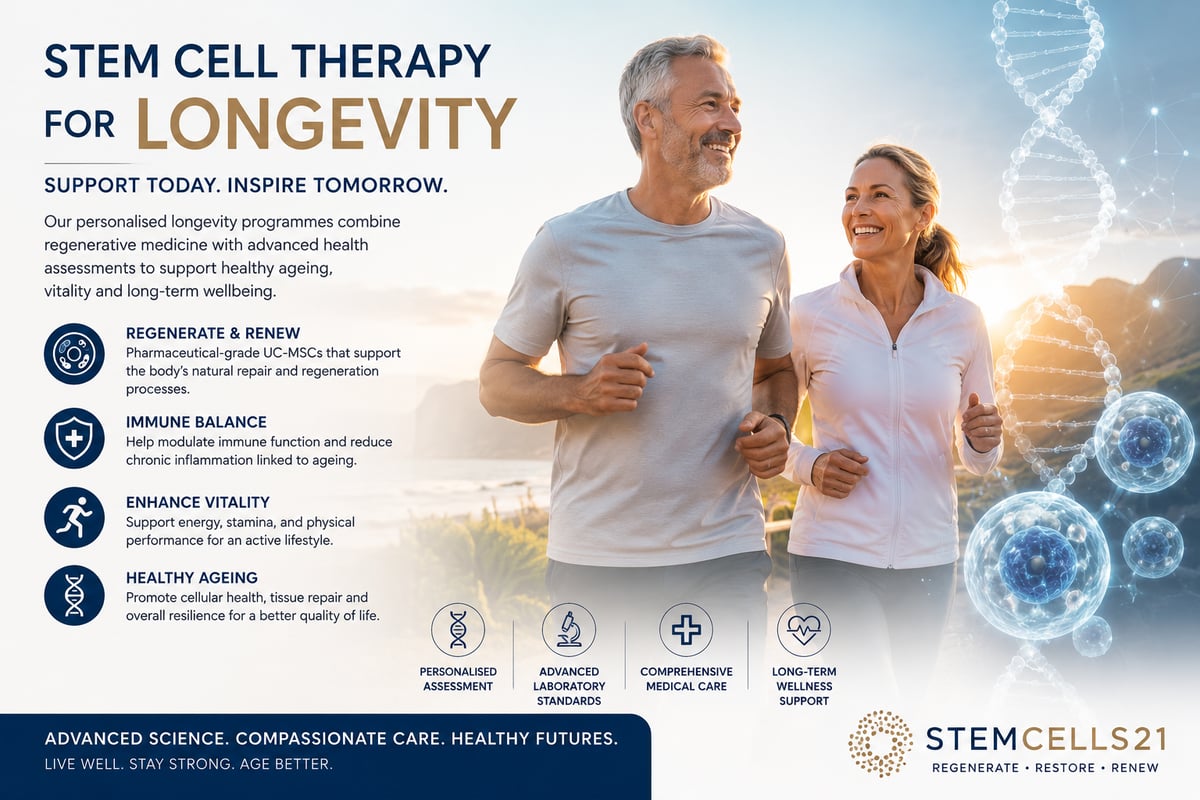
Pharmaceutical-grade umbilical cord-derived mesenchymal stem cells represent a particularly valuable source of therapeutic exosomes due to their immunomodulatory properties and tissue repair capabilities. For patients seeking to maintain vitality, mobility, and overall wellbeing as they age, Longevity Treatment programmes combine regenerative medicine with advanced health assessments, using umbilical cord-derived mesenchymal stem cells to support long-term wellness and resilience.
Multi-modal approaches may combine exosome administration with:
- Senolytic interventions targeting aged, dysfunctional cells
- NAD+ precursor supplementation supporting mitochondrial metabolism
- Hormone optimisation addressing age-related endocrine decline
- Exercise prescription enhancing tissue responsiveness to regenerative signals
Safety Profile and Adverse Event Monitoring
Clinical experience accumulated across multiple trials indicates generally favourable safety profiles for mesenchymal stem cell-derived exosomes. Most reported adverse events classify as mild to moderate and resolve spontaneously.
Common observations include temporary injection site reactions, mild fever, or fatigue following administration. Serious adverse events remain rare in published studies, though long-term follow-up data continue accumulating.
Theoretical concerns warrant ongoing vigilance:
- Potential for immune reactions in susceptible individuals
- Uncertain effects of repeated dosing over extended periods
- Possible unintended tissue effects from broad cellular targeting
- Quality variations between manufacturing facilities and protocols
Comprehensive patient screening, manufacturing quality control, and post-treatment monitoring form essential components of responsible clinical practice. Patients should receive treatment only at facilities with appropriate medical oversight and emergency management capabilities.
Delivery Routes and Administration Protocols
The optimal delivery method for exosome therapy longevity applications depends on therapeutic goals and target tissues. Current clinical investigations employ several administration routes, each with distinct pharmacokinetic properties.
Intravenous infusion provides systemic distribution, allowing exosomes to reach multiple organ systems simultaneously. This approach suits general anti-ageing and immune modulation objectives. Typical protocols involve slow infusion over 30-60 minutes with vital sign monitoring.
Local injection concentrates exosomes at specific anatomical sites requiring targeted intervention. Intra-articular administration for joint health, intradermal for skin rejuvenation, or direct tissue injection for localised repair exemplify this strategy.
Intranasal delivery offers a non-invasive route with potential for central nervous system access, bypassing the blood-brain barrier through olfactory and trigeminal nerve pathways. This approach shows particular promise for cognitive longevity applications.
Dosing strategies continue evolving as clinical experience expands. Factors influencing dose selection include patient body weight, condition severity, exosome source and potency, and treatment frequency. Some protocols employ single administrations whilst others implement serial dosing schedules.
Future Directions and Emerging Applications
The field of exosome therapy advances rapidly, with several promising developments on the horizon. Engineering techniques will likely produce increasingly sophisticated therapeutic products with enhanced targeting, prolonged circulation time, and optimised cargo composition.
Personalised exosome therapies derived from patients' own cells or matched allogeneic donors may reduce immunological concerns whilst providing tailored therapeutic profiles. Artificial intelligence algorithms could analyse patient data to predict optimal exosome characteristics for individual ageing patterns.
Combination therapies pairing exosomes with complementary interventions represent another frontier. Synergistic effects may emerge when combining exosome administration with metabolic modulators, epigenetic regulators, or cellular reprogramming factors.
Diagnostic applications extend beyond therapy, as exosome profiling in biological fluids provides windows into tissue health status. Liquid biopsies analysing circulating exosomes could enable early detection of age-related pathology and guide personalised intervention timing.
Manufacturing innovations promise to address current production limitations. Scalable bioreactor systems, automated purification platforms, and advanced characterisation technologies will support wider clinical availability whilst maintaining pharmaceutical quality standards.
A 2025 review on engineering exosomes for Alzheimer’s disease details multi-target therapeutic strategies, GMP-scale production considerations, and clinical translation pathways applicable broadly across longevity-focused applications.
Patient Selection and Individualised Treatment Planning
Not all individuals represent ideal candidates for exosome therapy longevity interventions. Comprehensive medical evaluation identifies those most likely to benefit whilst screening for contraindications or complicating factors.
Suitable candidates typically include individuals experiencing:
- Age-related functional decline despite healthy lifestyle practices
- Chronic inflammatory conditions contributing to accelerated ageing
- Regenerative capacity limitations following injury or illness
- Proactive health optimisation goals with realistic expectations
Medical history review examines previous treatments, concurrent medications, allergies, and underlying health conditions. Laboratory testing establishes baseline biomarkers for subsequent treatment monitoring. Imaging studies may document structural changes in target tissues.
Patient education forms a critical component of treatment planning. Understanding the investigational nature of some applications, evidence quality, realistic timeframes for potential benefits, and commitment to follow-up monitoring ensures informed decision-making.
Facilities offering exosome therapy should provide transparent information regarding treatment costs, expected outcomes based on current evidence, and alternative approaches. Ethical practice demands honest communication about both potential benefits and uncertainties inherent in emerging therapeutic fields.
Monitoring Treatment Response and Long-Term Outcomes
Assessing exosome therapy longevity interventions requires multi-dimensional outcome measurement. Subjective improvements in energy, cognitive function, or physical performance complement objective biomarker changes and functional testing results.
Follow-up protocols typically incorporate:
Short-term assessments within days to weeks post-treatment evaluate immediate safety and early response indicators. These may include inflammatory marker levels, immune cell profiles, or symptom questionnaires.
Medium-term evaluations at 3-6 month intervals track sustained improvements in functional capacity, quality of life measures, and physiological parameters relevant to healthy ageing.
Long-term monitoring extending years post-treatment documents durability of benefits and informs decisions regarding maintenance dosing. Advanced imaging, genomic methylation analysis, or telomere length measurement may reveal cellular-level anti-ageing effects.
Standardised assessment tools enable comparison across patients and treatment protocols. Validated instruments measuring physical function, cognitive performance, and health-related quality of life provide meaningful outcome data for clinical decision-making and research advancement.
Exosome therapy longevity applications represent an exciting convergence of regenerative medicine, cellular biology, and personalised healthcare, offering science-based approaches to healthy ageing and vitality preservation. As research continues validating mechanisms and clinical protocols mature, these therapies may become integral components of comprehensive longevity strategies. If you're interested in exploring how regenerative medicine can support your health and longevity goals, StemCells21 offers personalised treatment programmes using pharmaceutical-grade therapies in a state-of-the-art Bangkok facility, combining advanced regenerative approaches with expert medical care tailored to your individual needs.