
The discovery that ordinary adult cells can be reprogrammed into stem cells has fundamentally transformed regenerative medicine. Induced pluripotency represents one of the most significant breakthroughs in modern science, enabling researchers and clinicians to create patient-specific stem cells without the ethical concerns associated with embryonic sources. This revolutionary approach opens new pathways for treating degenerative diseases, modelling complex conditions, and developing personalised therapeutic interventions that were previously unimaginable.
Understanding the Science Behind Induced Pluripotency
Induced pluripotency refers to the process of converting differentiated adult cells back into a pluripotent state, meaning they can develop into virtually any cell type in the human body. This remarkable transformation occurs through the introduction of specific transcription factors, typically Oct4, Sox2, Klf4, and c-Myc, collectively known as Yamanaka factors after their discoverer, Shinya Yamanaka.
The reprogramming process fundamentally alters cellular identity. When these transcription factors are delivered into somatic cells such as skin fibroblasts, they initiate a cascade of epigenetic modifications that erase the cell's developmental history. The molecular mechanisms underlying this transformation involve extensive chromatin remodelling, DNA methylation changes, and activation of pluripotency-associated gene networks.
Key Characteristics of Induced Pluripotent Stem Cells
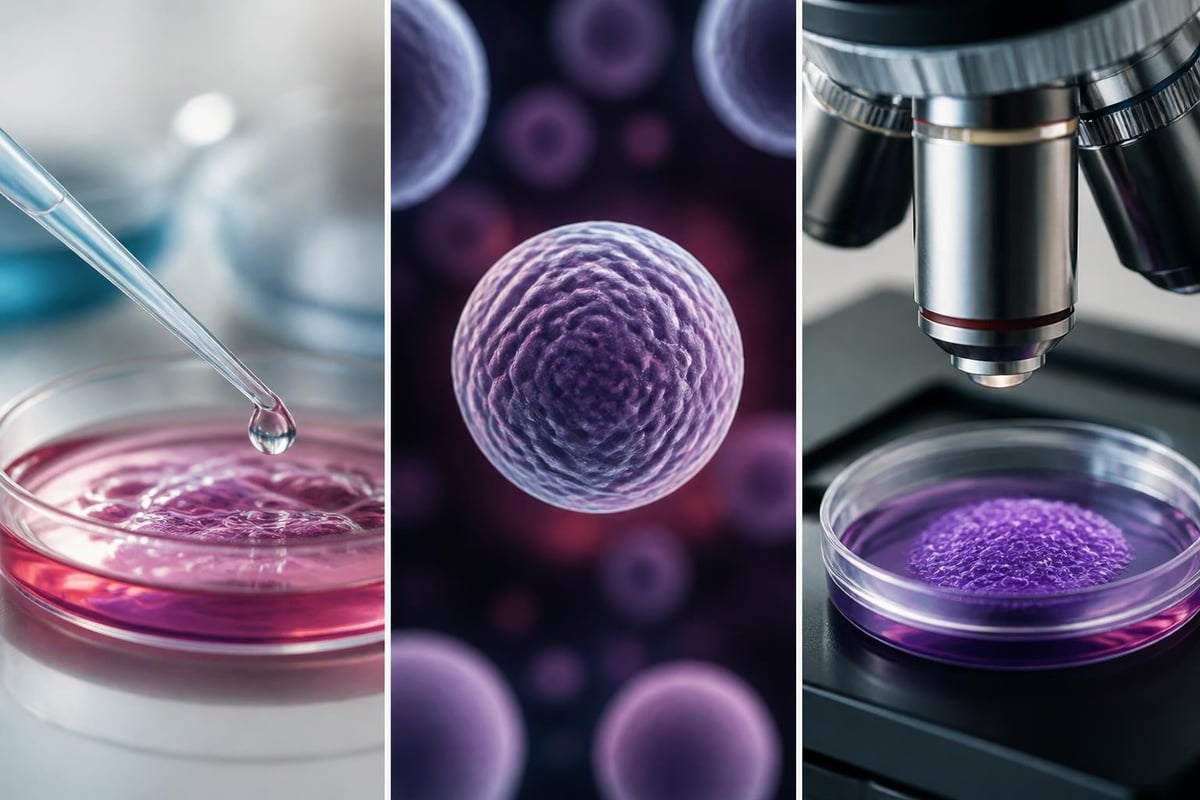
Induced pluripotent stem cells (iPSCs) share fundamental properties with embryonic stem cells whilst offering distinct advantages. They exhibit unlimited self-renewal capacity, maintaining their undifferentiated state through countless divisions. This characteristic provides an inexhaustible source of cells for research and therapeutic applications.
Core properties of iPSCs include:
- Expression of pluripotency markers including SSEA-3, SSEA-4, TRA-1-60, and TRA-1-81
- Capacity to differentiate into all three germ layers: endoderm, mesoderm, and ectoderm
- Indefinite proliferation whilst maintaining genomic stability
- Ability to form teratomas containing multiple tissue types when transplanted
The quality and functionality of iPSCs depend heavily on reprogramming efficiency and method. Contemporary production approaches range from integrating viral vectors to non-integrating episomal plasmids and Sendai virus systems, each offering different safety profiles and practical considerations.
Reprogramming Methods and Technical Approaches
The methodology selected for cellular reprogramming significantly impacts the safety and applicability of resulting iPSCs. Early approaches relied on retroviral and lentiviral vectors that permanently integrate transgenes into the host genome, raising concerns about insertional mutagenesis and uncontrolled transgene reactivation.
Non-Integrating Reprogramming Technologies
Modern clinical applications increasingly favour non-integrating methods that leave no genetic footprint. Episomal vectors deliver reprogramming factors as extrachromosomal DNA that dilutes with cell division, eventually disappearing completely. Sendai virus, a negative-strand RNA virus, replicates in the cytoplasm without entering the nucleus, providing efficient reprogramming without genomic integration.
| Method | Integration | Efficiency | Clinical Suitability |
|---|---|---|---|
| Retrovirus | Yes | High | Low |
| Lentivirus | Yes | High | Low |
| Episomal | No | Moderate | High |
| Sendai virus | No | High | High |
| mRNA | No | Moderate | Very High |
Synthetic mRNA and recombinant proteins represent the safest approaches, though they require multiple applications and demonstrate lower efficiency. The trade-off between reprogramming efficiency and safety profile remains a critical consideration in selecting appropriate methodologies for different applications.
Quality control throughout the reprogramming process ensures iPSC lines meet rigorous standards. Comprehensive characterisation includes verifying pluripotency marker expression, confirming differentiation potential, assessing genomic stability through karyotyping, and screening for adventitious agents.
Clinical Applications and Therapeutic Potential
The promise of induced pluripotency extends far beyond the laboratory, offering tangible solutions to pressing medical challenges. Patient-specific iPSCs enable autologous cell therapy, eliminating immune rejection whilst providing unlimited cell quantities for transplantation.
Neurological conditions represent particularly promising targets for iPSC-based interventions. Dopaminergic neurons derived from iPSCs offer hope for Parkinson's disease patients, with clinical trials demonstrating safety and preliminary efficacy. Spinal cord injuries, previously considered irreversible, may benefit from iPSC-derived neural progenitors that promote repair and functional recovery.
At StemCells21, regenerative medicine approaches harness the body's inherent healing capacity through advanced cellular therapies. Whilst current clinical protocols primarily utilise umbilical cord-derived mesenchymal stem cells for their proven safety and efficacy, the principles of induced pluripotency inform ongoing research into next-generation therapeutic strategies.
Disease Modelling and Drug Discovery
Beyond direct therapeutic applications, iPSC technology revolutionises how researchers study human disease. Patient-derived iPSCs carrying disease-causing mutations can be differentiated into affected cell types, creating "disease in a dish" models that recapitulate pathological features.
Key advantages of iPSC disease models:
- Genetic authenticity: Models preserve the patient's complete genetic background
- Cellular relevance: Affected human cell types versus animal models
- Mechanistic insights: Direct observation of disease processes at cellular level
- Drug screening: Testing therapeutic compounds on relevant human cells
- Personalised medicine: Identifying patient-specific treatment responses
Pharmaceutical companies increasingly rely on iPSC-derived cells for safety testing and efficacy screening, reducing late-stage clinical trial failures. Cardiotoxicity assessment using iPSC-derived cardiomyocytes has become standard practice, identifying potentially dangerous compounds before human trials.
Challenges and Limitations in Clinical Translation
Despite tremendous potential, several obstacles impede widespread clinical adoption of iPSC-based therapies. Clinical translation of iPSC technologies faces regulatory, technical, and economic hurdles that require innovative solutions.
Genomic stability concerns persist throughout reprogramming and expansion. Extended culture periods may accumulate genetic aberrations, including point mutations and chromosomal abnormalities. Regular karyotyping and whole-genome sequencing ensure lines remain genetically normal, though these quality control measures increase production costs.
Manufacturing and Scalability Considerations
Producing clinical-grade iPSCs demands rigorous good manufacturing practice (GMP) facilities and standardised protocols. Variability between cell lines, even from the same patient, complicates reproducibility and requires extensive characterisation. Automation and standardisation initiatives aim to reduce batch-to-batch variation whilst improving cost-efficiency.
The time required to generate patient-specific iPSC lines poses practical limitations. Reprogramming, expansion, differentiation, and quality control typically require several months, delaying treatment for acute conditions. HLA-matched iPSC banks offer a practical alternative, providing pre-manufactured, characterised cells that match common HLA haplotypes.
| Approach | Timeline | Immune Matching | Cost |
|---|---|---|---|
| Autologous iPSCs | 4-6 months | Perfect | Very High |
| HLA-matched bank | Days-weeks | Good | Moderate |
| Universal donor iPSCs | Days-weeks | Requires immunosuppression | Lower |
Japan's Center for iPS Cell Research and Application (CiRA) pioneered the haplobank concept, creating a repository of iPSC lines from donors homozygous for common HLA types. This approach dramatically reduces production time whilst maintaining reasonable immune compatibility for many patients.
Regulatory Framework and Ethical Considerations
The regulatory landscape governing iPSC-based therapies continues evolving as the field matures. Regulatory agencies worldwide recognise induced pluripotency technologies as advanced therapy medicinal products, subjecting them to rigorous safety and efficacy requirements before clinical approval.
The International Society for Stem Cell Research (ISSCR) provides comprehensive guidelines balancing innovation with patient protection. These standards address informed consent, equitable access, responsible translation, and safeguards against premature commercialisation.
Ethical advantages of induced pluripotency over embryonic stem cells proved decisive in gaining public acceptance. Patient-derived iPSCs bypass moral objections whilst offering superior immunological compatibility. However, new ethical questions emerge regarding consent for long-term biobanking, potential commercial exploitation, and equitable global access to expensive technologies.
Safety Monitoring and Long-term Considerations
Tumorigenicity represents the most significant safety concern with pluripotent cell therapies. Undifferentiated iPSCs can form teratomas, requiring complete removal before transplantation. Advanced purification strategies, including cell sorting and selective culture conditions, ensure only desired differentiated cells reach patients.
Long-term surveillance following iPSC-based therapy tracks potential delayed adverse effects. Registries documenting patient outcomes provide invaluable safety data whilst identifying factors influencing therapeutic success. These real-world evidence sources complement controlled clinical trials, informing treatment optimisation.
Integration with Existing Stem Cell Therapies
Current regenerative medicine practices primarily utilise adult stem cells, particularly mesenchymal stem cells (MSCs), which offer immediate availability and well-established safety profiles. These cells modulate immune responses, reduce inflammation, and support tissue repair through paracrine signalling rather than direct differentiation.
The relationship between induced pluripotency and existing therapies is complementary rather than competitive. MSCs excel in conditions requiring immunomodulation and trophic support, whilst iPSC-derived cells offer unlimited quantities of specific cell types for replacement therapy. Future protocols may combine both approaches, leveraging their respective advantages.
Comparative therapeutic considerations:
- MSCs: Immediate availability, proven safety, immunomodulatory effects, limited differentiation
- iPSC-derivatives: Patient-specific matching, unlimited expansion, precise cell types, longer development timeline
Understanding which diseases stem cells can treat requires careful evaluation of mechanism requirements. Conditions benefiting from immune regulation and paracrine effects may respond optimally to MSC therapy, whilst those requiring cell replacement favour iPSC-derived specialised cells.
Future Directions and Emerging Technologies
The field of induced pluripotency continues advancing rapidly, with several transformative developments on the horizon. Gene editing technologies, particularly CRISPR-Cas9, enable correction of disease-causing mutations in patient iPSCs before differentiation and transplantation. This combination creates genetically corrected, autologous cells that address underlying genetic defects.
Universal donor iPSCs represent another frontier, engineered to evade immune recognition through targeted gene modifications. Deleting HLA class I and class II molecules whilst expressing immune checkpoint proteins could create "off-the-shelf" cells suitable for any recipient without immunosuppression.
Artificial Intelligence and Automated Production
Machine learning algorithms optimise reprogramming protocols by analysing vast datasets identifying factors influencing efficiency and quality. Predictive models guide media formulation, timing of factor delivery, and selection of superior clones, accelerating development whilst reducing costs.
Robotic automation standardises iPSC production, eliminating operator variability and enabling parallel processing of multiple lines. Integrated platforms combine reprogramming, expansion, differentiation, and quality control in closed systems that minimise contamination whilst ensuring reproducibility.
- Automated cell culture systems: Maintain optimal growth conditions with minimal intervention
- High-content imaging: Real-time monitoring of cellular characteristics and quality markers
- Robotic liquid handling: Precise, reproducible media changes and passaging
- Integrated quality control: Continuous assessment throughout production process
- Data management systems: Complete traceability and regulatory compliance documentation
Economic and Access Considerations
The cost structure of iPSC-based therapies presents significant challenges for widespread adoption. Patient-specific cell production requires substantial investment in facilities, equipment, and highly trained personnel. Manufacturing a single autologous iPSC-derived cell therapy may cost hundreds of thousands of pounds, limiting access to affluent patients or well-funded healthcare systems.
Haplobanking strategies dramatically reduce per-patient costs by distributing manufacturing expenses across multiple recipients. Economies of scale become possible when single production runs serve numerous patients sharing compatible HLA types. This model improves accessibility whilst maintaining much of the immunological advantage over allogeneic therapies.
Global disparities in access to advanced regenerative medicine technologies raise important equity questions. Developing comprehensive infrastructure supporting iPSC research and clinical application requires substantial national investment, potentially widening healthcare gaps between wealthy and resource-limited regions. International collaboration and technology transfer initiatives aim to democratise access, though significant work remains.
Real-World Clinical Progress
Multiple clinical trials currently evaluate iPSC-derived cell therapies across diverse conditions. Age-related macular degeneration trials transplant retinal pigment epithelium cells, demonstrating safety whilst providing preliminary evidence of visual improvement. Cardiac disease studies explore iPSC-derived cardiomyocytes and cardiac patches for regenerating damaged heart tissue.
The convergence of induced pluripotency with complementary technologies accelerates clinical progress. Biomaterial scaffolds support iPSC-derived cells, providing three-dimensional structure that enhances survival and integration. Bioprinting technologies create complex tissue constructs with precise cellular organisation, advancing toward functional organ replacement.
Collaboration between research institutions, regulatory agencies, and clinical centres establishes best practices whilst identifying optimal applications. Shared learnings from early trials inform protocol refinements, gradually improving outcomes whilst maintaining rigorous safety standards. Patient registries track long-term results, building the evidence base supporting expanded therapeutic use.
The regulatory pathway for iPSC therapies continues maturing, with agencies developing specific guidance addressing unique aspects of pluripotent cell products. Harmonisation efforts across jurisdictions reduce duplicative requirements whilst maintaining rigorous standards, facilitating international development programmes.
Induced pluripotency has revolutionised our approach to regenerative medicine, offering unprecedented opportunities for patient-specific therapies, disease modelling, and drug discovery. As manufacturing processes mature and regulatory frameworks solidify, these transformative technologies edge closer to routine clinical application. At StemCells21, our commitment to advancing regenerative medicine encompasses both current evidence-based therapies and emerging innovations that hold promise for tomorrow's treatments. Contact our specialist team in Bangkok to explore personalised regenerative medicine options tailored to your specific condition and health goals.