
Mesenchymal stromal cells, commonly known as MSCs stem cells, have emerged as one of the most extensively researched and clinically applied cell types in regenerative medicine. These multipotent cells possess remarkable abilities to modulate immune responses, support tissue repair, and differentiate into various cell lineages. Understanding the fundamental biology, therapeutic mechanisms, and clinical applications of mscs stem cells is essential for patients considering regenerative treatments and healthcare professionals navigating this rapidly evolving field.
Understanding MSCs Stem Cells: Nomenclature and Definitions
The terminology surrounding mscs stem cells has evolved considerably over the past two decades. Originally termed "mesenchymal stem cells," the International Society for Cell & Gene Therapy (ISCT) has recommended the designation "mesenchymal stromal cells" to more accurately reflect their biological characteristics and therapeutic properties.
This nomenclature shift reflects several important factors:
- Not all MSCs demonstrate true stem cell self-renewal capacity
- Their primary therapeutic effects arise from paracrine signalling rather than differentiation
- Standardised characterisation criteria help ensure consistency across research and clinical applications
Defining Characteristics of MSCs Stem Cells
According to ISCT criteria, authentic mscs stem cells must satisfy three essential requirements. First, they must demonstrate plastic adherence when maintained under standard culture conditions. Second, they must express specific surface markers (CD105, CD73, and CD90) whilst lacking expression of haematopoietic markers (CD45, CD34, CD14, CD11b, CD79α, CD19, and HLA-DR).
Third, these cells must exhibit tri-lineage differentiation potential, demonstrating the capacity to differentiate into osteoblasts (bone), adipocytes (fat), and chondroblasts (cartilage) under appropriate culture conditions.

Tissue Sources and Procurement of MSCs Stem Cells
MSCs stem cells can be isolated from numerous tissue sources throughout the body, each offering distinct advantages and characteristics. The most commonly utilised sources include bone marrow, adipose tissue, umbilical cord tissue, and peripheral blood.
| Tissue Source | Procurement Method | Cell Yield | Proliferation Rate | Clinical Applications |
|---|---|---|---|---|
| Bone Marrow | Aspiration | Low-Moderate | Moderate | Orthopaedic, haematological |
| Adipose Tissue | Liposuction | High | High | Cosmetic, reconstructive |
| Umbilical Cord | Donation post-birth | Moderate-High | Very High | Immunological, degenerative |
| Peripheral Blood | Apheresis | Very Low | Low | Limited research use |
Umbilical Cord-Derived MSCs Stem Cells
Umbilical cord tissue has emerged as a particularly valuable source of mscs stem cells for therapeutic applications. These cells are harvested from donated umbilical cord tissue following healthy births, with informed maternal consent ensuring ethical procurement practices.
Umbilical cord-derived MSCs offer several distinct advantages. They are younger and more proliferative than adult-derived cells, exhibit robust immunomodulatory properties, and can be obtained non-invasively. These cells demonstrate lower immunogenicity compared to adult sources, reducing the risk of rejection and adverse immune responses.
Mesenchymal stem cells from umbilical cord tissue undergo pharmaceutical-grade manufacturing processes that include extensive quality testing, sterility verification, and potency assays to ensure safety and therapeutic efficacy.
Therapeutic Mechanisms of MSCs Stem Cells
The clinical benefits of mscs stem cells arise from multiple interconnected mechanisms rather than a single therapeutic pathway. Understanding these mechanisms is crucial for appreciating how MSC therapy addresses diverse medical conditions.
Immunomodulation and Immune Regulation
One of the most significant therapeutic properties of mscs stem cells is their capacity to modulate immune system activity. Research has demonstrated that MSCs interact with virtually all immune cell types, including T cells, B cells, natural killer cells, dendritic cells, and macrophages.
MSCs stem cells regulate immune responses through several pathways:
- Secretion of soluble factors such as prostaglandin E2 (PGE2), indoleamine 2,3-dioxygenase (IDO), and transforming growth factor-beta (TGF-β)
- Cell-to-cell contact mechanisms involving programmed death-ligand 1 (PD-L1) and other surface molecules
- Release of extracellular vesicles containing microRNAs and regulatory proteins
- Modulation of inflammatory versus regulatory immune cell populations
This immunomodulatory capacity makes mscs stem cells particularly valuable for treating autoimmune conditions, inflammatory diseases, and transplant rejection.
Paracrine Signalling and Trophic Support
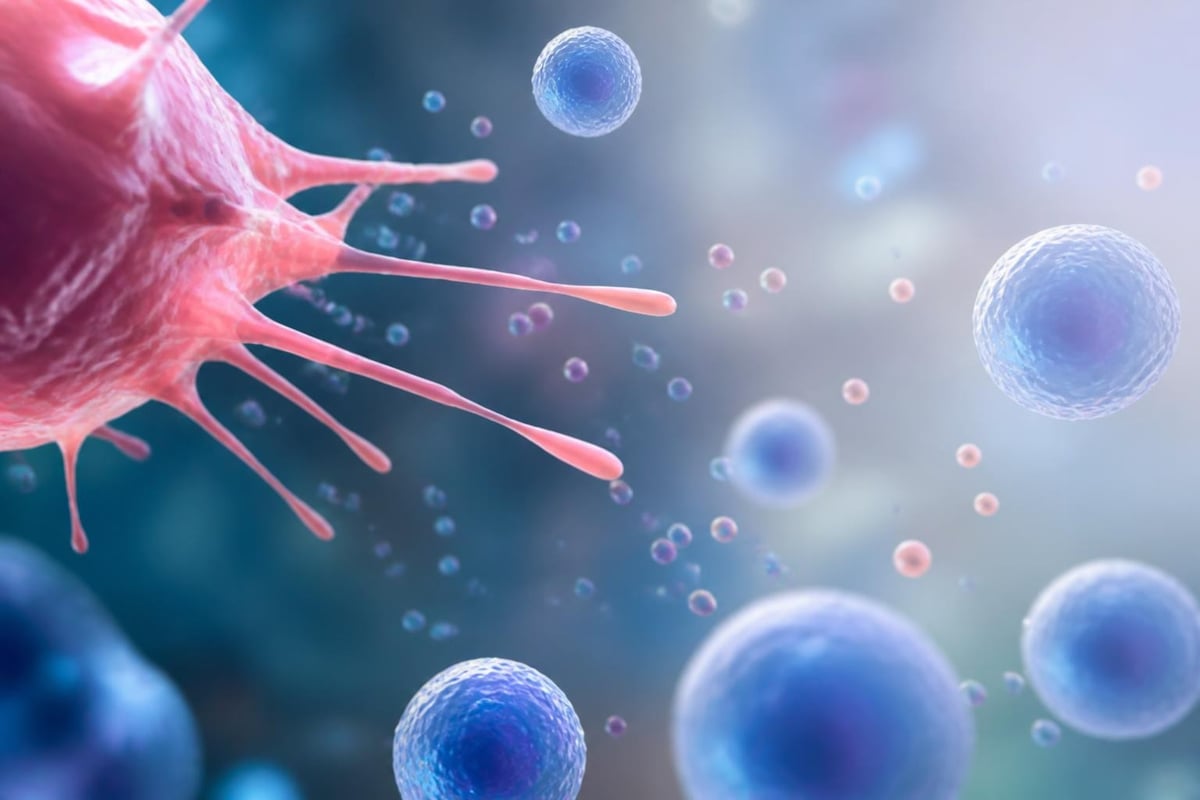
Rather than directly replacing damaged cells, mscs stem cells primarily function through paracrine mechanisms, secreting bioactive molecules that influence surrounding tissues. These secreted factors create a regenerative microenvironment that supports tissue repair and reduces pathological inflammation.
The MSC secretome includes growth factors (vascular endothelial growth factor, hepatocyte growth factor, insulin-like growth factor), cytokines, chemokines, and extracellular vesicles. These molecules promote angiogenesis (new blood vessel formation), reduce apoptosis (cell death), stimulate endogenous stem cell activity, and modulate extracellular matrix remodelling.
Apoptosis and Therapeutic Efficacy
Interestingly, recent research has revealed that mscs stem cells undergo apoptosis (programmed cell death) relatively quickly after administration, yet therapeutic benefits persist long after the cells have been cleared. This finding suggests that transient MSC presence triggers endogenous repair mechanisms that continue independently.
The apoptotic process itself may contribute to therapeutic effects, as dying MSCs release molecules that are engulfed by host macrophages, subsequently reprogramming these immune cells toward anti-inflammatory and pro-regenerative phenotypes.
Clinical Applications of MSCs Stem Cells
The versatility of mscs stem cells has led to their investigation across an extraordinarily broad range of medical conditions. Clinical trials and therapeutic applications span orthopaedic disorders, autoimmune diseases, neurological conditions, cardiovascular diseases, and tissue injuries.
Orthopaedic and Degenerative Joint Conditions
Musculoskeletal applications represent one of the most established clinical uses for mscs stem cells. These cells demonstrate particular promise in addressing cartilage damage, which has limited natural healing capacity due to the avascular nature of cartilage tissue.
For patients with osteoarthritis, mscs stem cells offer a regenerative approach that addresses both symptoms and underlying joint degeneration. The cells reduce inflammatory mediators within the joint space, promote cartilage matrix synthesis, and support overall joint homeostasis.
At StemCells21, we offer Osteoarthritis Stem Cell Treatment using pharmaceutical-grade umbilical cord-derived mesenchymal stem cells (UC-MSCs). Our personalised treatment programmes are designed to support joint health, improve mobility, and help patients maintain an active lifestyle under expert medical care.

Autoimmune and Inflammatory Conditions
The immunomodulatory properties of mscs stem cells make them particularly suited for treating autoimmune disorders where the immune system mistakenly attacks healthy tissue. Conditions such as rheumatoid arthritis, multiple sclerosis, Crohn's disease, and lupus have all been investigated in clinical trials.
MSCs stem cells address autoimmune pathology through multiple mechanisms:
- Suppression of autoreactive T cell proliferation and activity
- Promotion of regulatory T cells that maintain immune tolerance
- Reduction of pro-inflammatory cytokine production
- Modulation of B cell antibody production
- Reprogramming of macrophages from inflammatory to regulatory phenotypes
Neurological and Neurodegenerative Disorders
Mscs stem cells have demonstrated potential in addressing various neurological conditions despite not directly becoming neurons. Their neuroprotective and neuromodulatory effects arise from secreted factors that support existing neural tissue and promote endogenous repair mechanisms.
Clinical investigations have explored MSC therapy for stroke, traumatic brain injury, spinal cord injury, Parkinson's disease, Alzheimer's disease, and autism spectrum disorder. Understanding stem cell biology helps contextualise how these therapies may support neurological health.
Respiratory and Pulmonary Applications
The anti-inflammatory and tissue-protective properties of mscs stem cells have led to their investigation in respiratory conditions including chronic obstructive pulmonary disease (COPD), acute respiratory distress syndrome (ARDS), and idiopathic pulmonary fibrosis.
MSCs can be administered systemically and have shown the ability to migrate to injured lung tissue, where they modulate immune responses, reduce fibrosis, and support epithelial repair mechanisms.
Safety Considerations and Quality Standards
The clinical success of mscs stem cells depends critically on manufacturing quality, characterisation rigour, and appropriate patient selection. The International Society for Stem Cell Research (ISSCR) has established comprehensive guidelines for stem cell research and clinical translation that emphasise patient safety and scientific rigor.
Manufacturing and Quality Control
Pharmaceutical-grade mscs stem cells undergo extensive manufacturing processes designed to ensure safety, purity, and potency. These processes include donor screening, tissue procurement under sterile conditions, cell isolation and expansion in controlled environments, and comprehensive testing protocols.
Critical quality control measures include:
- Sterility testing to exclude bacterial, fungal, and mycoplasma contamination
- Endotoxin testing to ensure products meet safety thresholds
- Viability assessment to confirm adequate living cell percentages
- Potency assays to verify functional therapeutic capacity
- Identity verification through surface marker expression
- Karyotype analysis to detect chromosomal abnormalities
Clinical Translation and Regulatory Oversight
The ISSCR’s guidance on clinical translation emphasises the importance of preclinical evidence, appropriate trial design, informed consent, and transparent reporting of outcomes. These standards protect patients whilst advancing legitimate therapeutic development.
Patients considering mscs stem cells therapy should verify that treatment providers adhere to established quality standards, operate under appropriate regulatory oversight, and provide transparent information about expected outcomes and potential risks.
Current Research and Future Directions
The field of mscs stem cells continues to evolve rapidly, with ongoing research addressing fundamental questions about mechanisms, optimising therapeutic protocols, and expanding clinical applications.
Enhancing Therapeutic Potency
Researchers are investigating various strategies to enhance the therapeutic potency of mscs stem cells. These include preconditioning cells with hypoxia or inflammatory signals, genetic modification to overexpress beneficial factors, and combination approaches integrating MSCs with biomaterials or other therapeutic agents.
Emerging enhancement strategies:
- Three-dimensional culture systems that better preserve native cell characteristics
- Exosome isolation focusing on the therapeutic secretome rather than whole cells
- Tissue-specific differentiation prior to administration for targeted applications
- Combination with pharmacological agents that synergise with MSC effects
Standardisation and Reproducibility
A significant challenge in mscs stem cells research has been variability between studies, sources, and manufacturing protocols. Comprehensive reviews have highlighted the need for greater standardisation in cell characterisation, dosing strategies, administration routes, and outcome measurements.
International collaborative efforts are working to establish consensus protocols, reference standards, and harmonised regulatory frameworks that will facilitate more consistent therapeutic outcomes and enable meaningful comparisons across clinical trials.
Personalised Medicine Approaches
The future of mscs stem cells therapy increasingly points toward personalised treatment strategies that account for individual patient characteristics, disease stages, and biomarker profiles. Advanced diagnostics and predictive modelling may enable clinicians to identify which patients are most likely to benefit from MSC therapy and optimise treatment parameters accordingly.
Medical cases documented across diverse conditions provide valuable insights into treatment responses and help refine therapeutic protocols for individual patient needs.
Addressing Unproven Interventions and Patient Safety
The promising potential of mscs stem cells has unfortunately led to proliferation of unproven clinics offering treatments without adequate scientific validation or regulatory oversight. The Lancet Commission on stem cells and regenerative medicine has highlighted serious concerns about patient exploitation and safety risks.
Identifying Legitimate Therapy Providers
Patients considering mscs stem cells therapy should carefully evaluate treatment providers based on several criteria. Legitimate clinics operate under appropriate medical and regulatory oversight, provide transparent information about cell sources and manufacturing, employ qualified medical professionals with relevant expertise, and offer realistic outcome expectations based on clinical evidence.
Warning signs of unproven interventions include:
- Guarantees of cure or dramatic improvements
- Treatment of numerous unrelated conditions with identical protocols
- Lack of transparency about cell sources, manufacturing, or quality testing
- Absence of qualified medical oversight or follow-up care
- Marketing that emphasises patient testimonials over scientific evidence
Evidence-Based Decision Making
Informed patient decision-making requires access to balanced information about potential benefits, realistic expectations, known risks, and alternative treatment options. Mscs stem cells therapy represents a valuable option within comprehensive treatment plans but should not be viewed as a replacement for established medical care.
Patients should discuss MSC therapy with their primary healthcare providers, review available clinical evidence for their specific condition, verify provider credentials and facility standards, and understand the investigational nature of many applications.
Integration with Comprehensive Care Approaches
Optimal outcomes from mscs stem cells therapy typically occur when treatment is integrated within comprehensive care programmes addressing multiple aspects of health and disease management. This holistic approach recognises that regenerative medicine works synergistically with lifestyle modifications, physical rehabilitation, nutritional support, and conventional medical management.
Multidisciplinary Treatment Planning
Effective mscs stem cells therapy programmes involve collaboration between stem cell specialists, primary care physicians, physiotherapists, nutritionists, and other relevant healthcare professionals. This multidisciplinary approach ensures that cell therapy complements rather than conflicts with other interventions.
Treatment planning should include baseline health assessment, identification of modifiable risk factors, optimisation of overall health status prior to cell administration, and structured follow-up protocols to monitor outcomes and adjust care plans accordingly.
Lifestyle and Environmental Factors
The regenerative potential of mscs stem cells can be enhanced or limited by patient lifestyle factors and environmental conditions. Adequate nutrition, appropriate physical activity, stress management, sleep quality, and avoidance of harmful substances all influence the body's capacity to respond to regenerative therapies.
Patients undergoing MSC therapy benefit from guidance on supporting their body's healing processes through evidence-based lifestyle interventions that create an optimal environment for regenerative medicine to achieve maximal therapeutic effects.
MSCs stem cells represent a sophisticated therapeutic modality with well-characterised mechanisms, diverse clinical applications, and evolving evidence supporting their safety and efficacy across numerous conditions. As research continues to refine our understanding and optimise treatment protocols, these cells offer valuable options for patients seeking regenerative approaches to degenerative diseases, injuries, and age-related conditions. If you're interested in exploring how pharmaceutical-grade mesenchymal stem cell therapy might support your health goals, StemCells21 offers personalised treatment programmes developed by experienced specialists using rigorously tested cells in our state-of-the-art Bangkok facility.