
Stem cell injections represent one of the most promising frontiers in regenerative medicine, offering patients with degenerative diseases, chronic injuries, and age-related conditions new pathways toward improved function and quality of life. Unlike conventional treatments that manage symptoms, these regenerative therapies aim to support the body's natural repair mechanisms by delivering specialized cells directly to damaged or inflamed tissues. As clinical research expands and manufacturing standards tighten, more patients worldwide are exploring these advanced options under expert medical supervision.
Understanding Stem Cell Injections and Their Therapeutic Role
Stem cell injections deliver concentrated populations of specialized cells into targeted areas of the body to promote healing, reduce inflammation, and support tissue repair. These cells possess unique biological properties that distinguish them from ordinary body cells.
What Makes Stem Cells Unique
Mesenchymal stem cells (MSCs) derived from umbilical cord tissue exhibit remarkable capabilities that make them valuable in regenerative medicine. These cells can self-renew, differentiate into various tissue types, and secrete bioactive molecules that influence their surrounding environment.
The NIH Stem Cell Information portal explains how different stem cell types function in research and therapeutic development. Umbilical cord-derived mesenchymal stem cells (UC-MSCs) are particularly notable because they are obtained ethically from donated tissue following healthy births, with informed maternal consent, and are young, highly active cells with robust regenerative potential.
Key characteristics of UC-MSCs include:
- Immunomodulatory properties: regulate immune system responses and reduce excessive inflammation
- Paracrine signaling: secrete growth factors and cytokines that support tissue repair
- Low immunogenicity: reduced risk of rejection compared to other cell sources
- Proliferative capacity: ability to expand in culture whilst maintaining quality

How Injection Therapy Works
The therapeutic process begins with careful patient assessment, including medical history review, diagnostic imaging, and laboratory testing. Clinicians develop personalized treatment plans based on the specific condition, severity, and individual patient factors.
During administration, pharmaceutical-grade stem cells are prepared in controlled environments and delivered through precise injection techniques. The route of administration varies by condition-intravenous infusions for systemic conditions, intra-articular injections for joint disorders, or targeted local injections for specific injuries.
Following injection, the stem cells begin interacting with the local tissue environment. Rather than simply replacing damaged cells, they primarily work through:
- Reducing inflammatory responses in affected tissues
- Secreting protective factors that support existing cells
- Recruiting the body's own repair cells to the injury site
- Modulating immune system activity to prevent further damage
Clinical Applications Across Multiple Conditions
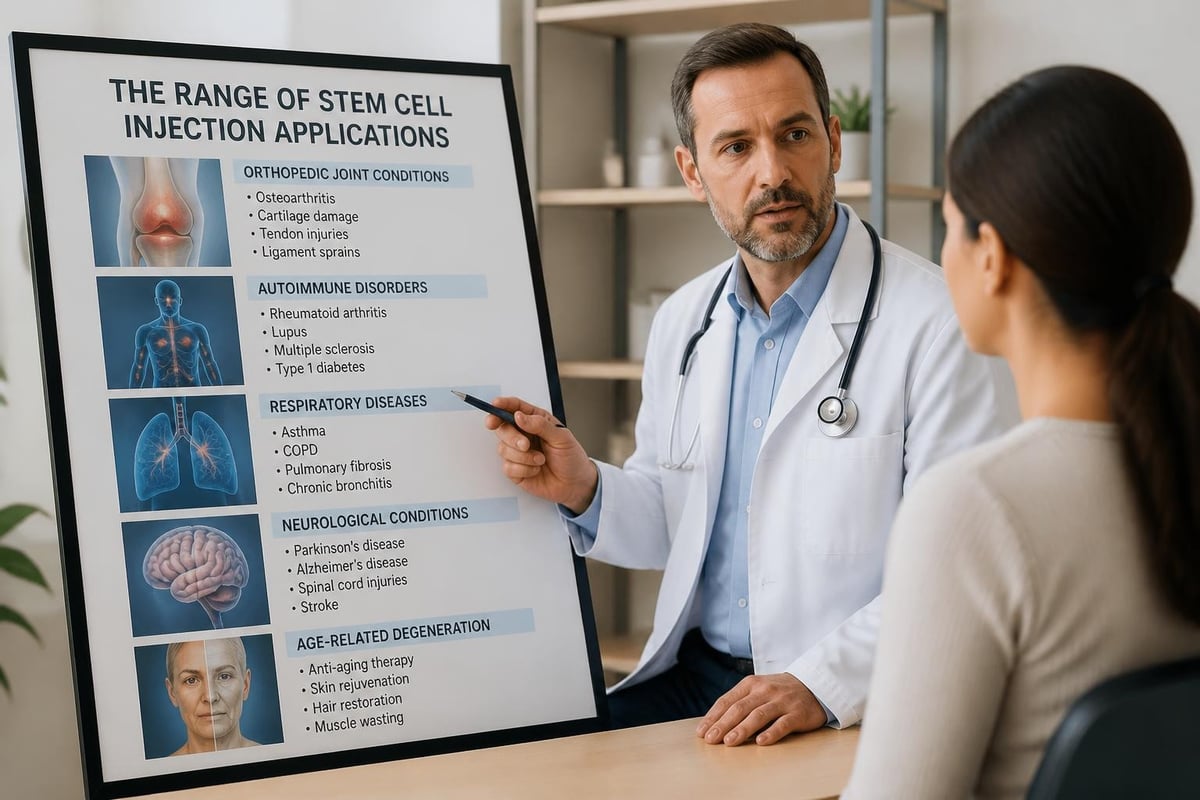
Stem cell injections are being investigated and utilized for an expanding range of medical conditions, from orthopedic injuries to autoimmune disorders and neurodegenerative diseases.
Orthopedic and Joint Disorders
Degenerative joint conditions such as osteoarthritis affect millions globally, causing pain, stiffness, and reduced mobility. The Cochrane evidence summary provides a systematic appraisal of benefits and risks for knee osteoarthritis treatment.
| Condition | Primary Goals | Expected Outcomes |
|---|---|---|
| Osteoarthritis | Reduce inflammation, support cartilage health | Improved mobility, reduced pain |
| Rheumatoid arthritis | Modulate immune response, protect joints | Better function, decreased swelling |
| Spine degeneration | Support disc and tissue repair | Enhanced flexibility, pain relief |
| Sports injuries | Accelerate healing, restore function | Faster recovery, tissue regeneration |
A systematic review of randomized controlled trials examining intra-articular stem cell injections demonstrates the growing evidence base for these applications. Research continues to refine protocols, dosing, and patient selection criteria to optimize outcomes.
For patients experiencing chronic back pain from degenerative spine conditions, Spine Stem Cell Treatment using pharmaceutical-grade UC-MSCs offers a personalized approach designed to support natural repair processes, reduce inflammation, and help improve function.

Autoimmune and Inflammatory Conditions
Autoimmune diseases occur when the immune system mistakenly attacks healthy tissues. Stem cell injections may help recalibrate immune responses and reduce tissue damage.
Multiple sclerosis, rheumatoid arthritis, and other autoimmune conditions share common inflammatory pathways that UC-MSCs can potentially influence. The cells' immunomodulatory properties help restore balance between pro-inflammatory and anti-inflammatory signals.
- Patients often report gradual improvements over weeks to months
- Multiple treatment sessions may be recommended for optimal results
- Outcomes vary based on disease stage, severity, and individual factors
Respiratory and Neurological Applications
Chronic obstructive pulmonary disease (COPD) and neurodegenerative conditions represent complex challenges where conventional treatments primarily manage symptoms. Regenerative approaches aim to address underlying tissue damage and immune dysfunction.
Clinical programmes for these conditions typically combine stem cell injections with comprehensive supportive care, including physiotherapy, nutritional optimization, and ongoing medical monitoring.
Safety Standards and Quality Manufacturing
The safety and efficacy of stem cell injections depend critically on manufacturing standards, quality control, and proper clinical protocols.
Pharmaceutical-Grade Production
Reputable facilities produce UC-MSCs under stringent pharmaceutical-grade conditions, following Good Manufacturing Practice (GMP) guidelines. This ensures consistency, purity, and safety across every batch.
Quality control measures include:
- Donor screening: thorough health assessments and infectious disease testing
- Cell characterization: verification of cell type, viability, and potency
- Sterility testing: microbiological safety confirmation
- Endotoxin testing: ensuring absence of harmful bacterial products
- Stability assessment: maintaining cell quality during storage and transport
The WHO technical guidance outlines international standards for cell and tissue regulation, emphasizing the importance of robust oversight frameworks.
Patient Safety Considerations
Patients considering stem cell injections should thoroughly research providers and understand the evidence supporting their specific condition. The ISSCR patient handbook offers practical guidance for evaluating clinics and treatment claims.
Warning signs of untrustworthy providers include:
- Claims of miracle cures or 100% success rates
- Treatment offered for every possible condition
- Lack of transparent information about cell source and processing
- No proper informed consent or medical evaluation
- Pressure to commit immediately without time for research
Legitimate clinics provide detailed patient information, conduct thorough medical assessments, discuss realistic expectations, and maintain transparent communication throughout the treatment journey.
Evidence Base and Ongoing Research
The scientific foundation for stem cell injections continues to evolve through rigorous clinical trials and translational research.
Current Evidence Landscape
Clinical evidence for stem cell injections varies significantly by condition and cell type. Some applications, particularly in orthopedics, have substantial research support, whilst others remain investigational.
Strong evidence exists for:
- Osteoarthritis symptom improvement
- Certain sports-related soft tissue injuries
- Inflammatory joint conditions
Emerging evidence supports:
- Autoimmune disease management
- Neurodegenerative condition support
- Respiratory function optimization
- Healthy ageing and longevity
The MedlinePlus overview provides patient-focused explanations that help individuals understand current knowledge and remaining questions about stem cell treatments.
Next-Generation Developments
Research continues to enhance stem cell therapy through innovative approaches. A Nature Reviews Bioengineering article discusses engineering strategies such as hypoimmunogenic cells designed to evade immune detection and improve therapeutic persistence.
| Innovation Area | Potential Benefits | Current Status |
|---|---|---|
| Gene-edited cells | Enhanced properties, reduced rejection | Preclinical research |
| Tissue-specific differentiation | Better targeted repair | Early clinical trials |
| Combination therapies | Synergistic effects | Ongoing investigation |
| Biomaterial scaffolds | Improved cell retention and function | Clinical development |
These advances aim to increase efficacy, reduce treatment frequency, and expand the range of treatable conditions.
Treatment Journey and Patient Experience
Understanding what to expect during stem cell injection therapy helps patients prepare mentally and physically for the process.
Initial Consultation and Assessment
The journey typically begins with a comprehensive medical evaluation. Clinicians review medical history, current symptoms, previous treatments, and diagnostic imaging. Laboratory tests may assess inflammatory markers, immune function, and overall health status.
During this phase, physicians determine candidacy for stem cell injections, explain the scientific rationale, discuss realistic outcomes, and outline the treatment protocol. Patients should ask questions about:
- The specific cell source and preparation method
- Evidence supporting treatment for their condition
- Expected timeline for potential improvements
- Number of sessions recommended
- Costs and what they include
- Follow-up care and monitoring
Treatment Administration
On treatment day, patients undergo preparation procedures that may include additional assessments or imaging to guide precise injection placement. The actual administration process varies by protocol but generally involves minimal discomfort.
Typical treatment steps:
- Patient preparation and positioning
- Skin cleansing and local anaesthesia (if needed)
- Precise cell delivery via injection or infusion
- Brief observation period
- Post-treatment instructions and scheduling
Most patients return to normal activities within hours to days, depending on the injection site and individual factors.

Post-Treatment Monitoring and Optimization
Following stem cell injections, patients typically follow structured monitoring protocols. Healthcare teams track symptom changes, functional improvements, and any side effects through regular follow-up appointments.
Supportive therapies often enhance outcomes:
- Physiotherapy: maintains and improves joint or tissue function
- Nutritional support: provides building blocks for tissue repair
- Lifestyle modifications: reduces inflammatory triggers
- Stress management: optimizes healing environment
Patients may notice gradual improvements over weeks to months as stem cells exert their regenerative effects. Some conditions require multiple treatment sessions spaced strategically to achieve optimal results.
Personalized Treatment Approaches
Effective stem cell therapy recognizes that each patient presents unique characteristics requiring tailored strategies.
Customizing Protocols
Variables influencing treatment design include disease severity, patient age, overall health status, concurrent medications, and treatment goals. Advanced facilities develop individualized protocols rather than applying one-size-fits-all approaches.
Personalization factors include:
- Cell dosage: calculated based on body weight, condition severity, and treatment site
- Administration route: selected for optimal cell delivery to target tissues
- Treatment frequency: determined by condition type and response monitoring
- Adjunctive therapies: integrated based on individual needs
Combining Regenerative and Conventional Medicine
Stem cell injections often work best as part of comprehensive care strategies that include proven conventional treatments. This integrated approach maximizes benefits whilst managing risks appropriately.
Patients may continue medications that control symptoms whilst regenerative therapies address underlying tissue damage. Surgical interventions might be delayed or avoided if stem cell treatments provide sufficient improvement.
Patient Selection and Realistic Expectations
Not every patient with a degenerative condition is an ideal candidate for stem cell injections, and setting appropriate expectations is crucial for satisfaction and ethical practice.
Ideal Candidate Characteristics
Patients most likely to benefit typically have:
- Confirmed diagnosis: clear understanding of their specific condition
- Adequate remaining tissue: some healthy cells for regenerative processes to support
- Realistic expectations: understanding of potential benefits and limitations
- Commitment to comprehensive care: willingness to participate in rehabilitation and lifestyle modifications
- Overall health stability: absence of active infections or uncontrolled systemic diseases
Understanding Limitations
Stem cell injections are not miracle cures. They represent one tool in the regenerative medicine toolkit, with outcomes varying between individuals.
Patients should understand that:
- Results take time to manifest (weeks to months)
- Not everyone responds equally to treatment
- Additional sessions may be necessary
- Conventional treatments may still be required
- Ongoing research continues to refine approaches
Transparent communication between patients and providers ensures informed decision-making and appropriate expectation setting.
Global Standards and Regulatory Landscape
The regulatory environment for stem cell injections varies significantly across countries, influencing access, quality, and safety.
International Oversight Frameworks
Different nations approach stem cell regulation through varied pathways. Some classify certain therapies as approved treatments, whilst others consider them investigational and available only through clinical trials or special access programmes.
Key regulatory considerations include:
- Cell sourcing, processing, and manufacturing standards
- Clinical trial requirements before approval
- Post-market surveillance and safety reporting
- Advertising and marketing claim restrictions
- International harmonization efforts
Patients seeking treatment internationally should verify that facilities comply with recognized standards and maintain transparency about regulatory status.
Choosing Accredited Providers
Reputable clinics demonstrate commitment to quality through:
- International accreditation: recognized certifications for quality management
- Transparent protocols: published information about methods and evidence
- Qualified medical teams: specialists with relevant training and experience
- Comprehensive informed consent: detailed explanation of procedures, risks, and alternatives
- Outcome tracking: systematic follow-up and data collection
Patients can research providers through professional organizations, published clinical results, and independent reviews from past patients.
Future Directions in Regenerative Medicine
The field of stem cell injections continues evolving rapidly, with exciting developments on the horizon.
Emerging Technologies
Researchers are developing enhanced cell products with improved properties. Genetic modifications may create cells that survive longer, resist immune responses more effectively, or target specific tissues with greater precision.
Biomaterial carriers provide scaffolding that keeps injected cells in place whilst releasing them gradually for sustained therapeutic effects. Three-dimensional bioprinting may eventually allow creation of complex tissue structures combining cells, growth factors, and structural materials.
Expanding Applications
As safety data accumulates and manufacturing processes improve, stem cell injections may address additional conditions. Current research explores applications in cardiac disease, diabetes complications, cognitive decline, and aesthetic medicine.
Longevity medicine represents a particularly promising area, where regenerative therapies aim to maintain health and vitality throughout the ageing process rather than simply treating disease.
Personalized Cell Banking
Some facilities now offer umbilical cord tissue banking, storing cells from births for potential future family use. Whilst currently limited in scope, this practice may expand as regenerative medicine advances and personalized approaches become standard.
Stem cell injections offer remarkable potential for patients with degenerative diseases, chronic injuries, and age-related conditions, supported by growing clinical evidence and advancing manufacturing standards. Whether you're exploring options for joint pain, autoimmune conditions, or healthy ageing, working with experienced specialists ensures safe, personalized care aligned with the latest scientific knowledge. StemCells21 provides pharmaceutical-grade UC-MSC therapies at our state-of-the-art Bangkok facility, combining rigorous quality standards with individualized treatment programmes designed to support your health goals and improve your quality of life.