
Stem cell therapy has emerged as one of the most promising advances in regenerative medicine, offering hope to patients with degenerative diseases, chronic conditions, and injuries that have limited conventional treatment options. However, understanding the financial investment required remains a critical concern for many prospective patients. The stem cell therapy cost varies significantly based on numerous factors, including the type of cells used, the condition being treated, geographic location, and the expertise of the medical team. This comprehensive guide examines the current pricing landscape, explores what drives these expenses, and provides practical insights to help patients make informed decisions about their treatment journey in 2026.
Understanding the Basic Cost Structure
Stem cell therapy cost encompasses far more than the price of the cells themselves. The total investment includes sophisticated laboratory processes, medical expertise, facility fees, and comprehensive patient care protocols that ensure both safety and efficacy.
Manufacturing pharmaceutical-grade stem cells requires state-of-the-art laboratory facilities, stringent quality control measures, and adherence to international safety standards. These processes account for a substantial portion of the overall expense. The regulatory framework established by the WHO ensures that therapeutic cells meet rigorous safety and quality benchmarks, though this compliance necessarily increases production costs.
Key Components of Treatment Expenses
The typical breakdown includes several distinct cost categories:
- Cell procurement and processing: Laboratory cultivation, expansion, and quality testing
- Medical consultations: Initial assessment, treatment planning, and follow-up appointments
- Administration procedures: Clinical protocols, delivery methods, and monitoring
- Facility fees: Operating theatre usage, medical equipment, and support staff
- Post-treatment care: Rehabilitation protocols, progress tracking, and additional therapies
Diagnostic testing before and after treatment adds another layer to the financial commitment. Comprehensive health assessments, imaging studies, and biomarker analysis help physicians develop personalized treatment plans and measure therapeutic outcomes.

Price Ranges Across Different Conditions
Stem cell therapy cost varies considerably depending on the specific medical condition being addressed. Complex neurological disorders typically require more cells, multiple administrations, and extended monitoring protocols compared to localized orthopedic issues.
| Condition Category | Typical Price Range (USD) | Treatment Duration |
|---|---|---|
| Orthopedic (joints, spine) | $5,000 – $25,000 | 1-3 sessions |
| Autoimmune disorders | $15,000 – $40,000 | Multiple cycles |
| Neurological conditions | $20,000 – $60,000 | Extended protocols |
| Cardiovascular disease | $25,000 – $70,000 | Complex procedures |
| Longevity/wellness | $8,000 – $30,000 | Periodic treatments |
These figures represent broad estimates for 2026, with actual costs influenced by individual patient factors and chosen treatment facilities. The clinical development and implementation challenges associated with cell therapies for complex conditions significantly impact final pricing.
Factors Affecting Individual Treatment Costs
Disease severity plays a crucial role in determining the total investment required. Early-stage conditions may respond to fewer cells and simpler protocols, whilst advanced disease often necessitates more aggressive intervention strategies.
Geographic location significantly influences pricing structures. Treatments in North America and Western Europe typically command premium prices reflecting higher operating costs, regulatory requirements, and market dynamics. Southeast Asian medical centers often provide comparable quality at substantially reduced rates, making international medical tourism an attractive option for many patients.
International Cost Comparisons
The global landscape of stem cell therapy cost reveals striking variations between regions and countries. Understanding these differences helps patients identify value whilst maintaining focus on safety and clinical outcomes.
United States: American clinics generally represent the highest end of the pricing spectrum, with costs ranging from $10,000 to $100,000 depending on the condition. Limited insurance coverage and high operational expenses contribute to these premium rates.
European Union: Prices across EU member states vary from €8,000 to €50,000, with Western European facilities typically charging more than Eastern European counterparts. Regulatory harmonization under EU directives ensures consistent safety standards.
Thailand and Southeast Asia: Countries like Thailand offer treatments ranging from $4,000 to $35,000, providing sophisticated medical care at substantially lower costs. Bangkok has emerged as a leading destination for regenerative medicine, combining clinical expertise with modern facilities and competitive pricing.
Quality Versus Affordability
Lower prices don't necessarily indicate inferior care. Many international facilities maintain the same pharmaceutical-grade standards and employ physicians trained at leading global institutions. The cost differential often reflects economic factors rather than quality disparities.
However, patients must exercise due diligence when evaluating treatment options. Facilities should demonstrate:
- Compliance with international regulatory standards
- Use of properly characterized, tested stem cells
- Transparent pricing with detailed treatment protocols
- Qualified medical teams with relevant specialization
- Comprehensive patient safety monitoring systems
The ISSCR’s Guidelines for Stem Cell Research and Clinical Translation provide a framework for evaluating whether a clinic meets appropriate ethical and scientific standards.
Insurance Coverage and Payment Options
Most insurance providers in 2026 continue to classify stem cell therapies as experimental for many conditions, resulting in limited coverage. This classification leaves patients responsible for the full stem cell therapy cost out-of-pocket, creating significant financial barriers to access.
Medicare and Medicaid considerations: In the United States, coverage remains restricted to FDA-approved applications such as hematopoietic stem cell transplantation for blood cancers. The Kaiser Family Foundation’s recent survey highlights ongoing discussions about improving access to cell and gene therapies through innovative payment models.

Alternative Financing Solutions
Forward-thinking clinics now offer structured payment arrangements to improve accessibility:
- Installment plans: Monthly payments spread over 12-24 months
- Medical credit cards: Healthcare-specific financing with promotional periods
- Health savings accounts: Pre-tax funds for qualified medical expenses
- Treatment packages: Bundled pricing for multiple sessions
- International partnerships: Coordinated care reducing overall expenses
Some patients explore crowdfunding platforms or medical tourism loan programs specifically designed for international treatment. These options require careful evaluation of terms, interest rates, and long-term financial implications.
Cost-Effectiveness Analysis
Beyond the upfront investment, evaluating stem cell therapy cost requires examining long-term value compared to conventional treatments. Recent cost-effectiveness analyses demonstrate how regenerative approaches may offer superior value when considering lifetime medical expenses.
For chronic conditions requiring ongoing medication, physical therapy, and surgical interventions, a single regenerative treatment could potentially reduce cumulative costs over time. A systematic review of economic evaluations highlights both the potential benefits and the methodological challenges in assessing these advanced therapies.
Calculating Total Healthcare Investment
Consider the comprehensive financial picture:
| Traditional Management (Annual) | Stem Cell Therapy Approach |
|---|---|
| Pain medications: $2,400 | One-time treatment: $15,000 |
| Physical therapy: $3,600 | Minimal ongoing medication |
| Specialist visits: $1,800 | Annual check-ups: $500 |
| Surgical intervention: $25,000 (potential) | Reduced surgical risk |
| Lost productivity: Variable | Improved function and activity |
Over a five-to-ten-year horizon, regenerative therapy may prove more economical whilst potentially offering better outcomes. Individual results vary, and patients should discuss realistic expectations with qualified physicians.
Maximizing Value in Treatment Selection
Selecting the right treatment program involves balancing cost considerations with quality, safety, and expected outcomes. The stem cell therapy cost should align with the comprehensiveness of care provided.
Red flags indicating potential concerns:
- Prices significantly below market averages without clear explanation
- Promises of guaranteed results or cure claims
- Lack of transparent information about cell source and processing
- Absence of qualified medical oversight
- No pre-treatment evaluation or post-treatment follow-up
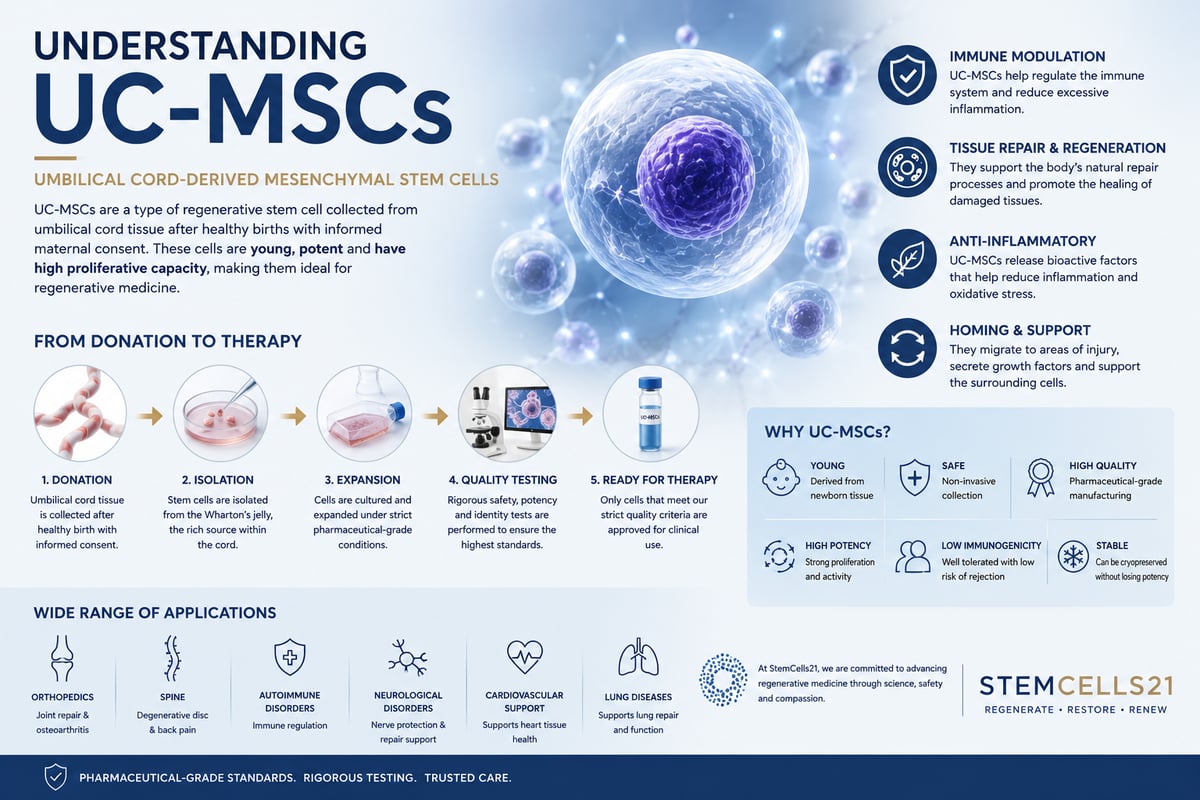
Reputable facilities provide detailed treatment protocols, including the specific type and dose of cells, administration method, and expected timeline. At StemCells21, we offer regenerative stem cell therapy using pharmaceutical-grade umbilical cord-derived mesenchymal stem cells manufactured to the highest quality standards, with transparent pricing and comprehensive patient care protocols.
Questions to Ask Before Committing
Informed patients request specific information:
- What is the complete all-inclusive price?
- What type of stem cells will be used?
- How many cells will be administered?
- What laboratory certifications does the facility hold?
- What are the physician's qualifications and experience?
- What post-treatment support is included?
- Are there additional costs for complications or repeat treatments?
Detailed answers to these questions help patients compare options accurately and avoid unexpected expenses.

The Role of Cell Type and Source
The origin and type of stem cells significantly influence both efficacy potential and cost. Different cell types require varying levels of processing, storage, and quality control.
Autologous versus allogeneic cells: Autologous treatments using a patient's own cells involve harvesting procedures, processing, and sometimes storage. Allogeneic therapies using donor-derived cells benefit from economies of scale but require extensive screening and testing protocols.
Umbilical cord-derived mesenchymal stem cells (UC-MSCs) have gained prominence due to their young, highly active characteristics and ability to be manufactured in pharmaceutical-grade batches. These cells undergo rigorous safety testing and quality verification, justifying their associated costs through proven reliability and consistency.
Advanced treatment articles on stem cell therapy provide deeper insights into how cell selection impacts both clinical outcomes and financial investment.
Regional Pricing Trends in 2026
The stem cell therapy cost landscape continues evolving as more facilities enter the market and manufacturing processes become more efficient. Competition in established medical tourism destinations has helped moderate price increases despite inflation.
Bangkok has maintained its position as a cost-effective hub for regenerative medicine, offering treatments at 40-60% less than comparable Western facilities whilst maintaining international quality standards. This pricing advantage reflects lower operational costs rather than compromised quality, with many Bangkok clinics employing internationally trained physicians and using the same cell processing technologies as premium Western centers.
Latin American countries, particularly Mexico and Panama, have similarly positioned themselves as affordable alternatives. Eastern European nations including Ukraine and Czech Republic offer mid-range pricing with EU regulatory oversight.
Emerging Market Dynamics
Several trends are shaping future pricing:
- Increased automation in cell manufacturing reducing labor costs
- Greater regulatory clarity improving market confidence
- Expanded clinical evidence supporting broader applications
- Competition among facilities moderating price escalation
- Development of standardized protocols allowing more predictable pricing
These factors suggest that whilst stem cell therapy cost will remain substantial, the value proposition should continue improving as the field matures.
Preparing for the Financial Commitment
Prospective patients benefit from thorough financial planning before embarking on stem cell therapy. The investment extends beyond the treatment itself to include travel, accommodation, time away from work, and potential follow-up care.
Budget considerations include:
- Treatment fees (cells, procedures, medical team)
- Pre-treatment diagnostics and consultations
- Travel and accommodation (for international patients)
- Post-treatment rehabilitation or supportive therapies
- Follow-up appointments and progress monitoring
- Potential supplementary treatments or booster sessions
Creating a comprehensive budget prevents financial surprises and allows realistic planning. Some patients find it helpful to allocate an additional 20-30% buffer for unexpected expenses or extended recovery time.
Making the Decision
Ultimately, deciding whether the stem cell therapy cost represents worthwhile value requires personal assessment of potential benefits, financial capacity, and treatment alternatives. Not every patient will be a suitable candidate, and honest medical evaluation should precede financial commitment.
Quality facilities conduct thorough assessments to determine candidacy and provide realistic outcome expectations. Patients should be cautious of any clinic that accepts all applicants without detailed evaluation or fails to discuss potential limitations alongside benefits.
The investment in regenerative therapy represents hope for improved quality of life, reduced symptoms, and enhanced function. For many patients dealing with conditions that significantly impact daily living, the cost becomes justified when weighed against the potential for meaningful improvement and reduced reliance on ongoing conventional treatments.
Understanding the complete picture of stem cell therapy cost empowers patients to make informed decisions aligned with their health goals and financial circumstances. The investment reflects sophisticated science, medical expertise, and comprehensive care designed to support the body's natural healing capabilities. StemCells21 offers transparent pricing for pharmaceutical-grade regenerative treatments in Bangkok, combining clinical excellence with personalized care protocols. Contact our medical team to discuss your specific condition and receive a detailed treatment plan tailored to your needs.