Autoimmune diseases affect millions globally, causing the immune system to mistakenly attack healthy tissues and organs. From rheumatoid arthritis to multiple sclerosis, these conditions often require lifelong management with immunosuppressive medications that carry significant side effects. As regenerative medicine advances, stem cell therapy for autoimmane disease has emerged as a promising alternative, offering the potential to reset immune function rather than merely suppress symptoms. This therapeutic approach harnesses the unique properties of stem cells to modulate immune responses, reduce inflammation, and promote tissue repair, representing a paradigm shift in how clinicians approach chronic autoimmune conditions.
Understanding Autoimmune Disease Mechanisms
Autoimmune diseases occur when the body's immune system loses its ability to distinguish between foreign invaders and its own cells. This breakdown in self-tolerance leads to chronic inflammation and progressive tissue damage across multiple organ systems.
The immune system normally employs regulatory T cells and other checkpoint mechanisms to prevent attacks on healthy tissue. When these safeguards fail, autoreactive immune cells proliferate unchecked, producing inflammatory cytokines and antibodies that target specific tissues. The resulting cascade affects connective tissue, joints, nerves, skin, and internal organs, depending on the specific condition.
Common Autoimmune Conditions
Over 80 distinct autoimmune diseases have been identified, each affecting different body systems:
- Rheumatoid arthritis: attacks joint linings, causing pain and deformity
- Systemic lupus erythematosus: affects multiple organs including kidneys, heart, and brain
- Multiple sclerosis: damages the protective myelin sheath around nerve fibres
- Type 1 diabetes: destroys insulin-producing pancreatic beta cells
- Inflammatory bowel disease: triggers chronic intestinal inflammation
Current standard treatments rely heavily on corticosteroids, disease-modifying antirheumatic drugs (DMARDs), and biologics that broadly suppress immune activity. Whilst these therapies manage symptoms, they rarely address the underlying immune dysregulation and can increase infection risk.

The Science Behind Stem Cell Therapy for Autoimmune Disease
Mesenchymal stem cells (MSCs) have emerged as the most extensively studied cell type for autoimmune applications. These multipotent stromal cells possess powerful immunomodulatory properties that make them particularly suitable for resetting aberrant immune responses.
Unlike traditional immunosuppressants that indiscriminately block immune function, MSCs work through multiple complementary mechanisms. They secrete bioactive factors including prostaglandin E2, indoleamine 2,3-dioxygenase (IDO), and transforming growth factor-beta (TGF-β) that actively suppress pro-inflammatory T cells whilst promoting regulatory T cell expansion. This selective approach helps restore immune balance rather than simply dampening all immune activity.
Mechanisms of Action
The therapeutic effects of stem cell therapy for autoimmune disease involve several interconnected pathways:
| Mechanism | Function | Clinical Benefit |
|---|---|---|
| Immune modulation | Shifts balance from Th1/Th17 to Th2/Treg responses | Reduces autoimmune attack |
| Anti-inflammatory | Decreases TNF-α, IL-6, IL-17 production | Controls tissue inflammation |
| Trophic support | Secretes growth factors and chemokines | Promotes tissue repair |
| Homing capacity | Migrates to sites of inflammation and injury | Targeted therapeutic delivery |
Research published in Nature Reviews Drug Discovery highlights how cellular therapies fit within broader strategies to reset the immune system in autoimmune conditions. MSCs can induce a state of immune tolerance by educating dendritic cells and macrophages to adopt anti-inflammatory phenotypes.
The cells' ability to sense their microenvironment and respond accordingly represents a significant advantage over static pharmaceutical interventions. In highly inflamed tissues, MSCs upregulate their immunosuppressive functions, whilst in balanced environments they maintain tissue homeostasis without over-suppression.
Clinical Evidence and Research Outcomes
The past decade has witnessed substantial growth in clinical trials investigating stem cell therapy for autoimmune disease across multiple conditions. A systematic analysis of the clinical trial landscape reveals over 200 registered studies examining mesenchymal stem cell applications in autoimmune rheumatic diseases alone.
Early phase trials have demonstrated encouraging safety profiles, with serious adverse events remaining rare even at high cell doses. The most common side effects include transient fever and mild infusion reactions that typically resolve within hours.
Disease-Specific Results
Multiple Sclerosis: Several phase II trials have shown that MSC infusions can reduce new lesion formation on MRI scans and slow disability progression. Patients receiving stem cell therapy for autoimmune disease affecting the central nervous system often report improved fatigue scores and quality of life measures compared to standard treatments.
Systemic Lupus Erythematosus: Chinese research teams have reported remission rates exceeding 50% in patients with refractory lupus following allogeneic MSC transplantation. Disease activity scores, complement levels, and autoantibody titres all showed sustained improvement over multi-year follow-up periods.
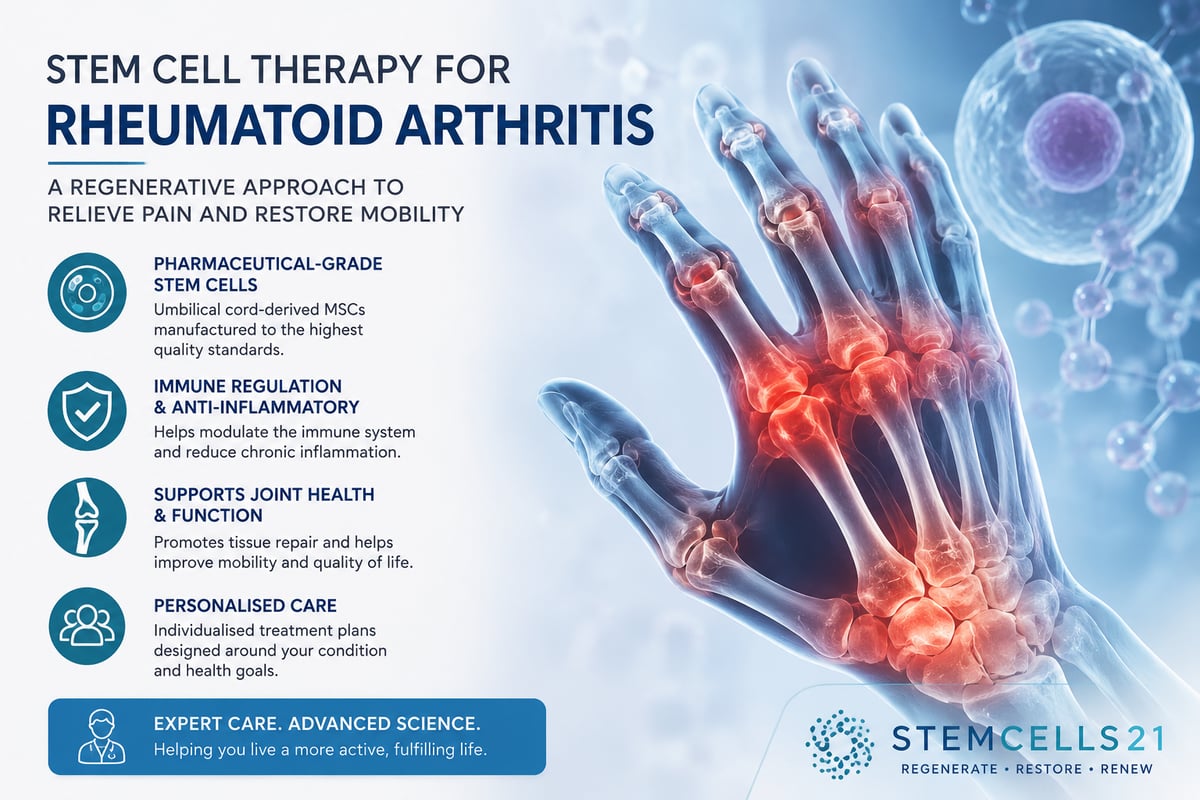
Rheumatoid Arthritis: Early studies indicate that MSC therapy can reduce joint inflammation and tender joint counts whilst allowing some patients to decrease conventional medication doses. The combination of Rheumatoid Arthritis Treatment using pharmaceutical-grade umbilical cord-derived mesenchymal stem cells alongside expert medical care offers a personalised approach to supporting immune regulation and improving joint function for patients seeking alternatives to lifelong immunosuppression.
A recent global survey examining trends in stem cell therapy trials notes that autoimmune applications now represent one of the fastest-growing segments in regenerative medicine research, with particular momentum in Asia-Pacific regions.

Types of Stem Cells Used in Treatment
Not all stem cell therapies offer equivalent benefits for autoimmune conditions. Understanding the distinctions between cell sources helps explain varying clinical outcomes and safety considerations.
Mesenchymal Stem Cells
Bone marrow-derived MSCs were the first type studied extensively but require invasive harvesting procedures and yield decreases with donor age. Autologous bone marrow transplantation after chemotherapy-induced immune ablation represents an established but intensive approach for severe autoimmune disease.
Adipose-derived MSCs can be harvested more easily through liposuction but show slightly lower immunomodulatory potency in comparative studies. Their abundance makes them attractive for applications requiring large cell numbers.
Umbilical cord-derived MSCs have become the preferred source for many clinical programmes. These cells demonstrate superior expansion capacity, higher secretion of immunomodulatory factors, and lower immunogenicity compared to adult-derived alternatives. The World Health Organization’s standards for cell and tissue therapy products emphasize manufacturing quality and safety testing that pharmaceutical-grade UC-MSC production must meet.
Hematopoietic Stem Cells
Hematopoietic stem cell transplantation (HSCT) represents a more aggressive form of stem cell therapy for autoimmune disease, involving complete immune system ablation followed by reconstitution. This approach achieves deep remissions in carefully selected patients with severe, treatment-refractory conditions.
The EBMT/ISCT expert position statement provides detailed clinical practice recommendations for cellular therapies in autoimmune diseases, outlining patient selection criteria and procedural standards that minimize transplant-related risks.
Treatment Protocols and Patient Selection
Successful outcomes with stem cell therapy for autoimmune disease depend heavily on appropriate patient selection, treatment timing, and comprehensive care protocols. Not every patient represents an ideal candidate for cellular therapy.
Eligibility Criteria
Clinicians typically consider the following factors when evaluating candidates:
- Disease severity: moderate to severe cases showing inadequate response to conventional therapy
- Overall health status: sufficient organ function to tolerate treatment procedures
- Disease activity: active inflammation requiring intervention
- Prior treatments: documented failure or intolerance of standard medications
- Realistic expectations: understanding that results vary between individuals
Patients with mild, well-controlled autoimmune conditions may achieve better outcomes continuing optimized conventional therapy. Conversely, those with end-stage organ damage may have limited regenerative potential despite stem cell intervention.
Treatment Administration
Modern protocols for mesenchymal stem cell therapy typically involve:
- Initial assessment: comprehensive medical evaluation, laboratory testing, and imaging studies
- Cell preparation: pharmaceutical-grade cells manufactured under GMP conditions with rigorous quality testing
- Infusion procedure: intravenous administration in a clinical setting with monitoring
- Follow-up: regular assessments to track response and adjust supportive care
| Treatment Phase | Duration | Activities |
|---|---|---|
| Pre-treatment evaluation | 1-2 weeks | Diagnostics, baseline measurements, treatment planning |
| Cell administration | 1-3 days | Infusion procedures, immediate monitoring |
| Early follow-up | 1-3 months | Safety monitoring, initial response assessment |
| Long-term monitoring | 6-24 months | Efficacy evaluation, booster therapy consideration |
Most programmes use multiple infusions spaced weeks to months apart rather than single treatments. This staged approach allows cumulative immune modulation whilst maintaining safety margins.

Safety Considerations and Regulatory Framework
The safety profile of stem cell therapy for autoimmune disease remains a critical consideration as the field matures. Regulatory bodies worldwide have established frameworks to ensure quality standards whilst allowing access to innovative treatments.
Adverse Event Profiles
Extensive clinical experience with mesenchymal stem cells demonstrates a generally favourable safety record. The most frequently reported adverse events include:
- Transient fever occurring in 10-30% of recipients
- Mild infusion-site reactions
- Temporary fatigue lasting 24-48 hours
- Rare allergic responses to culture media components
Serious adverse events remain uncommon in properly conducted programmes using quality-tested cells. Concerns about tumorigenicity have not materialized in long-term follow-up studies of thousands of treated patients.
Quality Standards
Pharmaceutical-grade stem cell manufacturing requires adherence to Good Manufacturing Practice (GMP) standards covering:
- Donor screening: comprehensive infectious disease testing and medical history review
- Cell processing: validated protocols in certified clean room facilities
- Quality control: sterility testing, mycoplasma screening, endotoxin quantification
- Characterization: flow cytometry confirmation of cell identity and purity
- Stability: viability testing before release for clinical use
Patients considering stem cell therapy for autoimmune disease should verify that their provider uses GMP-manufactured cells meeting international quality standards rather than minimally manipulated preparations lacking rigorous testing.
Personalised Treatment Approaches
The heterogeneity of autoimmune diseases demands individualised therapy planning rather than one-size-fits-all protocols. Advanced regenerative medicine centres now integrate comprehensive assessments to optimize outcomes.
Precision Medicine Integration
Modern stem cell programmes increasingly incorporate biomarker analysis to guide treatment decisions. Baseline measurements of inflammatory cytokines, autoantibody profiles, and regulatory T cell populations help predict response likelihood and inform dosing strategies.
Genetic testing can identify patients with specific HLA types or polymorphisms associated with better responses to particular cellular therapies. This pharmacogenomic approach mirrors broader trends in personalised medicine.
Imaging studies establish objective baseline measurements against which treatment effects can be measured. Serial MRI scans in multiple sclerosis patients, ultrasound assessment of synovial inflammation in arthritis, or pulmonary function testing in autoimmune lung disease provide quantifiable endpoints.
Combination Therapies
Emerging evidence suggests that stem cell therapy for autoimmune disease may work optimally when integrated with complementary interventions rather than used as monotherapy.
Researchers are exploring combinations including:
- Low-dose immunosuppressants to prevent rapid rejection of allogeneic cells
- Targeted biologics that synergize with MSC mechanisms
- Rehabilitation programmes that maximize functional gains
- Nutritional optimization to support tissue repair
The Nature Reviews Rheumatology analysis of cellular immunotherapies emphasizes the importance of patient selection and comprehensive care pathways that extend beyond the cell infusion itself.
Future Directions and Emerging Technologies
The landscape of stem cell therapy for autoimmune disease continues evolving rapidly as new technologies emerge and clinical understanding deepens. Several promising developments warrant attention.
Next-Generation Cell Products
Gene-modified stem cells: researchers are engineering MSCs to express enhanced levels of specific immunomodulatory molecules, potentially increasing potency whilst reducing required cell doses.
Induced pluripotent stem cell derivatives: iPSC technology enables generation of limitless standardised MSC-like cells, potentially addressing supply and consistency challenges.
Extracellular vesicles: the secreted nanoparticles (exosomes) from MSCs carry many therapeutic effects and may offer cell-free alternatives with simplified manufacturing and storage.
Combination with Advanced Immunotherapies
CAR T cell therapy, originally developed for cancer, is now being adapted for autoimmune applications. Early trials using CAR T cells engineered to eliminate autoreactive B cells have produced dramatic remissions in patients with severe lupus and other antibody-mediated diseases.
The potential to combine CAR T approaches that eliminate pathogenic immune cells with MSC therapy that promotes tolerance and tissue repair represents an exciting frontier. Sequential or concurrent use of these complementary modalities may achieve deeper, more durable remissions.
Predictive Biomarkers
Identifying which patients will benefit most from stem cell therapy for autoimmune disease remains a key research priority. Prospective studies are correlating baseline patient characteristics, disease features, and molecular signatures with treatment outcomes to develop predictive algorithms.
Machine learning approaches analysing multiple clinical and laboratory variables simultaneously may eventually enable precision matching of patients to optimal cellular therapies. Such tools could transform treatment selection from empirical trial-and-error to data-driven precision medicine.
Global Access and Treatment Centres
Geographic disparities in access to advanced cellular therapies reflect varying regulatory environments, manufacturing capabilities, and healthcare infrastructure. Patients increasingly seek treatment internationally when local options remain limited.
Asia-Pacific regions, particularly Thailand, have emerged as hubs for regenerative medicine excellence. Specialized facilities offer comprehensive programmes combining state-of-the-art cell manufacturing, experienced clinical teams, and personalized care protocols at accessible price points compared to Western alternatives.
The detailed analysis of ageing processes and stem cell therapeutic potential provides additional context for understanding how regenerative approaches address not only autoimmune disease but broader aspects of tissue deterioration and immune senescence.
When evaluating international treatment options, patients should verify:
- Regulatory approval status and compliance with manufacturing standards
- Physician qualifications and experience with specific conditions
- Transparent reporting of outcomes and adverse events
- Comprehensive pre-treatment evaluation and follow-up protocols
- Clear communication about realistic expectations and alternative options
Medical tourism for stem cell therapy for autoimmune disease requires careful research, but established centres with international accreditation and published outcomes offer legitimate alternatives for patients seeking advanced regenerative approaches.
Stem cell therapy for autoimmune disease represents a transformative approach that addresses underlying immune dysregulation rather than merely suppressing symptoms. As clinical evidence accumulates and manufacturing standards improve, cellular therapies are transitioning from experimental treatments to viable options for carefully selected patients with refractory conditions. StemCells21 combines pharmaceutical-grade mesenchymal stem cells with comprehensive medical expertise to deliver personalised regenerative medicine programmes tailored to each patient's unique clinical situation. Our Bangkok facility offers international patients access to advanced cellular therapies backed by rigorous quality standards and individualized care protocols designed to optimize outcomes and improve quality of life.