
Diabetes mellitus affects over 537 million adults worldwide and remains one of the most challenging metabolic disorders of our time. Conventional treatments focus on managing blood sugar levels through insulin injections, medications, and lifestyle modifications, yet these approaches often fail to address the underlying cellular damage that drives the disease. As research into regenerative medicine accelerates, stem cell therapy for diabetes has emerged as a promising frontier that could fundamentally change how we treat both type 1 and type 2 diabetes by targeting the root cause rather than simply managing symptoms.
Understanding the Diabetic Disease Process
Diabetes develops when the pancreas cannot produce sufficient insulin or when the body becomes resistant to insulin's effects. In type 1 diabetes, an autoimmune response destroys the insulin-producing beta cells within the pancreatic islets. Type 2 diabetes typically involves both insulin resistance and progressive beta-cell dysfunction.
The loss of functional beta cells creates a cascade of metabolic problems. Without adequate insulin production, glucose accumulates in the bloodstream rather than entering cells for energy. Over time, elevated blood sugar damages blood vessels, nerves, kidneys, and other organs.
Traditional treatments have improved outcomes significantly, but they cannot regenerate destroyed beta cells or reverse the underlying pathology. This limitation has driven researchers toward stem cell biology approaches that might restore natural insulin production.

Types of Stem Cells Used in Diabetes Treatment
Several distinct stem cell types show promise for diabetes applications, each with unique characteristics and potential therapeutic mechanisms.
Embryonic Stem Cells and Induced Pluripotent Stem Cells
Pluripotent stem cells can differentiate into any cell type in the body, including insulin-producing beta cells. Researchers have developed sophisticated protocols to guide stem cell differentiation into functional islet-like clusters. The most advanced clinical programmes use embryonic stem cell-derived islets, though induced pluripotent stem cells (iPSCs) offer the theoretical advantage of patient-specific therapy without immune rejection concerns.
A landmark clinical trial registered at ClinicalTrials.gov is evaluating VX-880, a stem cell-derived islet replacement therapy that has shown remarkable early results in type 1 diabetes patients.
Mesenchymal Stem Cells
Mesenchymal stem cells (MSCs) represent a different therapeutic strategy. Rather than replacing lost beta cells directly, MSCs work through immunomodulation and tissue repair mechanisms. These cells can:
- Regulate inflammatory responses that damage pancreatic tissue
- Support the survival of remaining beta cells
- Improve insulin sensitivity in peripheral tissues
- Promote vascularisation and tissue healing
Umbilical cord-derived mesenchymal stem cells (UC-MSCs) are particularly valued in regenerative medicine because they are young, highly proliferative, and demonstrate robust immunomodulatory properties. Recent meta-analyses published in medical journals have pooled data from multiple clinical trials examining MSC therapy outcomes in both type 1 and type 2 diabetes.
Clinical Evidence and Trial Results
The evidence base for stem cell therapy for diabetes has expanded considerably over the past five years. Multiple approaches have progressed from laboratory research to human clinical trials.
Islet Replacement Studies
The most dramatic results have come from studies replacing destroyed beta cells with stem cell-derived islets. Early-phase trials have demonstrated that properly differentiated and transplanted islet cells can engraft, survive, and produce insulin in response to blood glucose levels.
One patient in a pioneering study achieved insulin independence for over a year following stem cell-derived islet transplantation. The National Institute of Diabetes and Digestive and Kidney Diseases provides context on how islet transplantation research has evolved and where stem cell approaches fit within the broader therapeutic landscape.
However, these treatments currently require immunosuppression to prevent rejection, which carries its own risks and complications. Researchers are developing encapsulation devices and immune-privileged cell lines to overcome this limitation.
Mesenchymal Stem Cell Clinical Outcomes
MSC therapy trials have produced more variable but still encouraging results. A comprehensive systematic review and meta-analysis examined pooled data across multiple MSC studies in diabetes patients. The analysis found:
| Outcome Measure | Type 1 Diabetes | Type 2 Diabetes |
|---|---|---|
| HbA1c reduction | Modest improvement | Moderate improvement |
| C-peptide levels | Preserved in some patients | Variable response |
| Insulin requirements | Reduced in subset | Often reduced |
| Safety profile | Generally well-tolerated | Generally well-tolerated |
The heterogeneity in study designs, cell sources, dosing protocols, and patient populations makes definitive conclusions challenging. Nevertheless, the safety profile has been reassuring across trials, with serious adverse events rare.

Mechanisms of Action in Diabetic Patients
Understanding how stem cell therapy for diabetes works at the cellular and molecular level helps clarify both its potential and limitations.
Immunomodulation and Inflammation Control
In type 1 diabetes, the immune system mistakenly attacks pancreatic beta cells. MSCs can modulate this autoimmune response through several pathways:
- Regulatory T-cell expansion: MSCs promote the development of regulatory immune cells that suppress autoimmune activity
- Cytokine modulation: These cells alter the balance of inflammatory and anti-inflammatory signalling molecules
- Dendritic cell regulation: MSCs influence the cells that present antigens and initiate immune responses
This immunomodulatory effect may create a more favourable environment for any remaining beta cells to survive and function. In type 2 diabetes, chronic low-grade inflammation contributes to insulin resistance and beta-cell dysfunction, making anti-inflammatory effects particularly valuable.
Tissue Repair and Regeneration
Beyond immune effects, stem cells support tissue healing through paracrine signalling. They secrete growth factors, cytokines, and extracellular vesicles that promote:
- Angiogenesis and improved blood flow to pancreatic tissue
- Reduced oxidative stress and cellular damage
- Enhanced survival of existing beta cells
- Potential stimulation of endogenous pancreatic progenitor cells
Research into mesenchymal stem cell mechanisms continues to reveal new pathways through which these cells influence tissue function and metabolic health.
Metabolic Effects Beyond the Pancreas
Interestingly, stem cell therapy may improve diabetes management through effects on insulin-sensitive tissues. Studies suggest MSCs can enhance insulin receptor sensitivity in muscle and fat tissue, improve lipid metabolism, and reduce adipose tissue inflammation-all factors that influence glycaemic control in type 2 diabetes.
Treatment Protocols and Administration Methods
The practical aspects of delivering stem cell therapy for diabetes vary considerably depending on the cell type and therapeutic goal.
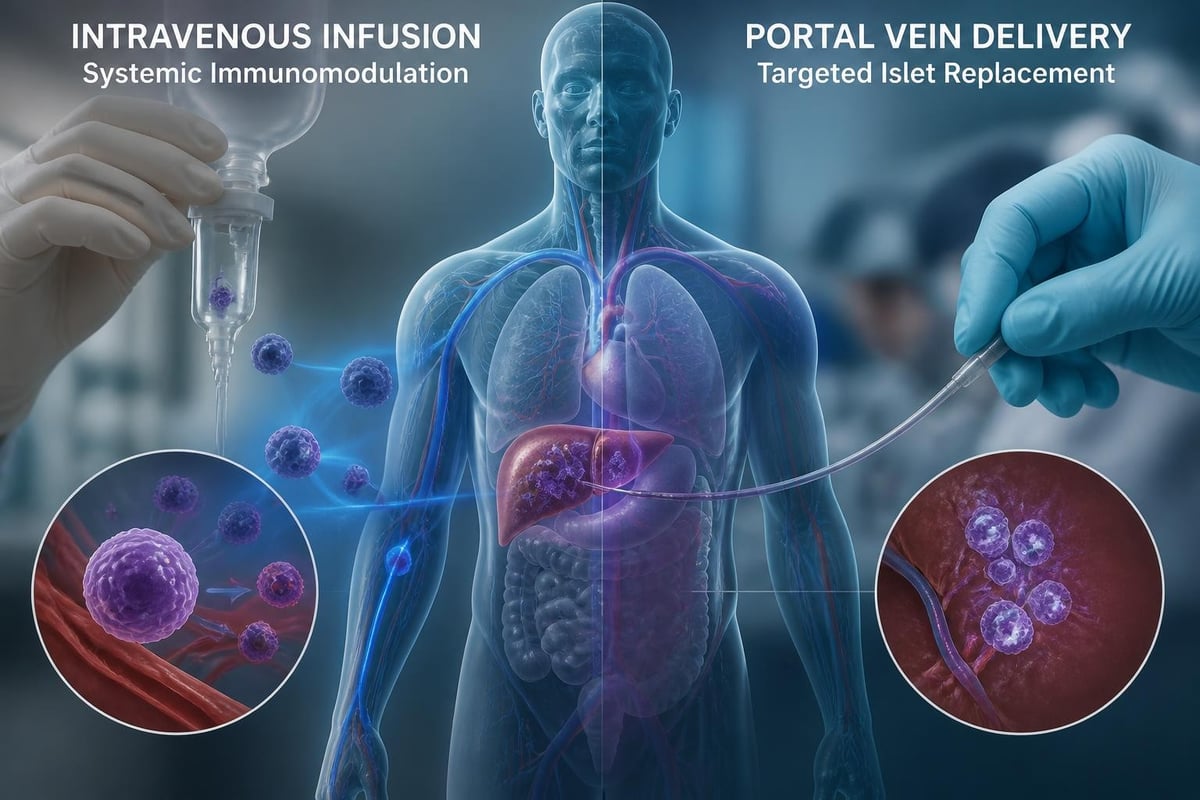
Intravenous Administration
Most MSC protocols use intravenous infusion, allowing cells to circulate systemically and home to sites of inflammation and tissue damage. Typical treatment courses involve:
- Multiple infusions spaced weeks or months apart
- Cell doses ranging from 1–2 million cells per kilogram of body weight
- Monitoring for infusion-related reactions (generally mild)
- Follow-up assessments of metabolic parameters over months
The cells are manufactured under pharmaceutical-grade conditions, tested for quality and safety, and administered in clinical settings with appropriate medical oversight. Facilities specialising in stem cell medicine maintain rigorous protocols for cell handling, patient screening, and post-treatment monitoring.
Direct Pancreatic or Portal Vein Delivery
For islet replacement approaches, cells are often delivered directly into the portal vein, where they can lodge in the liver and function as insulin-producing units. This method:
- Allows targeted delivery to a glucose-sensing location
- Minimises systemic cell loss
- Follows established protocols from cadaveric islet transplantation
- Requires specialised interventional radiology expertise
Some emerging protocols explore direct pancreatic injection or the use of biocompatible scaffolds to support engraftment and survival.
Patient Selection and Eligibility Criteria
Not every diabetes patient is an appropriate candidate for stem cell therapy at present. Clinical programmes typically apply specific selection criteria.
Type 1 Diabetes Candidates
Ideal candidates often include:
- Recent-onset disease (within months to a few years of diagnosis)
- Some remaining C-peptide production indicating residual beta-cell function
- Difficulty achieving glycaemic control despite optimal medical management
- Absence of severe diabetic complications
- Realistic expectations about experimental nature of treatment
Patients with long-standing type 1 diabetes and complete beta-cell destruction may still benefit from MSC immunomodulation, though insulin replacement will likely remain necessary.
Type 2 Diabetes Candidates
For type 2 diabetes, promising candidates typically have:
- Inadequate control despite multiple medications
- Evidence of beta-cell dysfunction rather than pure insulin resistance
- Willingness to maintain lifestyle modifications
- No active malignancy or severe comorbidities
The multifactorial nature of type 2 diabetes means stem cell therapy works best as part of comprehensive metabolic management rather than as monotherapy.
Safety Considerations and Potential Risks
While clinical evidence suggests stem cell approaches are generally safe, all medical interventions carry potential risks that must be weighed against benefits.
Short-term Adverse Events
Common mild reactions include:
- Transient fever or fatigue following infusion
- Mild infusion site reactions
- Temporary fluctuations in blood glucose requiring close monitoring
Serious acute complications are rare but can include allergic reactions, infection risk from immunosuppression (in islet replacement protocols), or thrombosis with portal vein delivery.
Long-term Safety Questions
Ongoing surveillance addresses theoretical concerns:
| Concern | Current Evidence | Monitoring Approach |
|---|---|---|
| Tumourigenicity | No increased cancer risk in MSC trials | Long-term registry follow-up |
| Immune reactions | Generally well-tolerated | Screening for antibody formation |
| Ectopic tissue formation | Extremely rare with adult stem cells | Imaging surveillance protocols |
| Unknown late effects | Limited data beyond 5–10 years | Continued patient tracking |
Regulatory bodies require rigorous safety reporting and long-term follow-up as these therapies advance through clinical development.
Current Limitations and Challenges
Despite encouraging progress, stem cell therapy for diabetes faces significant hurdles before becoming standard care.
Scientific and Technical Barriers
- Inconsistent engraftment: Not all transplanted cells survive and function long-term
- Immune rejection: Especially problematic for allogeneic islet replacement without encapsulation
- Scalability: Manufacturing sufficient high-quality cells for widespread treatment remains costly
- Protocol variability: Lack of standardised treatment regimens makes outcome comparison difficult
Regulatory and Access Issues
Most stem cell therapies for diabetes remain experimental in 2026. Patients can access treatments primarily through:
- Clinical trials at research institutions
- Specialised regenerative medicine centres operating under appropriate regulatory frameworks
- International treatment programmes in jurisdictions with established stem cell therapy infrastructure
The cost of treatment varies widely and is rarely covered by insurance given the investigational status. Patients should thoroughly research any programme and verify that treatments use pharmaceutical-grade cells with documented quality control.
Integration with Conventional Diabetes Management
Stem cell therapy should not be viewed as replacing established diabetes care but rather as a complementary approach that may enhance outcomes.
Combining Therapies
Most protocols maintain patients on their existing diabetes medications initially, making adjustments as metabolic parameters improve. Blood glucose monitoring remains essential, as insulin requirements may change following stem cell administration.
Lifestyle factors-nutrition, exercise, stress management, and sleep-continue to play crucial roles. Medical cases from regenerative medicine centres often highlight how stem cell therapy works best when integrated into comprehensive metabolic optimisation programmes.
Regenerative approaches can support overall health and resilience as patients age, potentially reducing the burden of diabetic complications. This broader wellness perspective aligns with how stem cell therapies are increasingly used to promote healthy ageing and vitality beyond specific disease treatment.

Monitoring Response and Adjusting Treatment
Following stem cell therapy, patients require careful follow-up including:
- Regular HbA1c measurements to track long-term glycaemic control
- C-peptide testing to assess endogenous insulin production
- Continuous glucose monitoring to detect patterns and variability
- Assessment of diabetic complications (retinopathy, neuropathy, nephropathy)
- Evaluation of quality of life and treatment burden
Response typically unfolds over weeks to months rather than immediately. Some patients experience gradual improvements in insulin sensitivity or beta-cell function, whilst others show stable disease rather than progression.
Future Directions and Research Priorities
The field of stem cell therapy for diabetes continues to evolve rapidly. Recent authoritative reviews in Nature outline the most promising research directions and remaining challenges.
Next-Generation Cell Products
Researchers are developing:
- Immune-evasive stem cells: Genetically modified to avoid rejection without immunosuppression
- Encapsulation devices: Biocompatible pouches that protect transplanted cells whilst allowing insulin and glucose exchange
- Enhanced differentiation protocols: Creating beta cells with improved glucose-sensing and insulin secretion characteristics
- Combined cell therapies: Pairing insulin-producing cells with supportive cell types
Personalised Medicine Approaches
Future protocols may stratify patients based on:
- Genetic markers predicting response
- Immune profiles indicating optimal cell type
- Disease stage and progression patterns
- Individual metabolic characteristics
This precision medicine approach could maximise benefit whilst minimising unnecessary treatment exposure.
Broader Regenerative Strategies
Beyond replacing or supporting beta cells, emerging research explores:
- Stimulating endogenous pancreatic progenitor cells to regenerate islets
- Reprogramming other pancreatic cell types into insulin-producing cells
- Combining stem cells with bioengineered scaffolds or organoid technologies
- Addressing the systemic metabolic dysfunction underlying type 2 diabetes
The latest stem cell news from research institutions worldwide demonstrates the accelerating pace of discovery in this field.
Practical Considerations for Patients
Individuals considering stem cell therapy for diabetes should approach the decision thoughtfully and with realistic expectations.
Questions to Ask Treatment Providers
Before proceeding with any programme, patients should inquire about:
- The specific cell type, source, and manufacturing standards used
- Published clinical data supporting the protocol
- Regulatory status and ethical approval
- Treatment cost, duration, and follow-up requirements
- Potential risks and how they are monitored and managed
- Realistic outcome expectations based on current evidence
Reputable centres provide transparent information and acknowledge both the promise and limitations of current therapies.
Red Flags and Cautions
Patients should be wary of:
- Providers guaranteeing cure or dramatic results
- Lack of clear information about cell source and processing
- Absence of medical oversight or follow-up
- High-pressure sales tactics or unrealistic marketing claims
- Operations in jurisdictions with minimal regulatory oversight
Legitimate regenerative medicine requires rigorous quality control, appropriate patient selection, and honest communication about the experimental nature of many approaches.
Stem cell therapy represents one of the most exciting frontiers in diabetes treatment, offering the potential to address underlying disease mechanisms rather than simply managing symptoms. Whilst significant challenges remain before these approaches become standard care, the progress achieved over the past decade-from laboratory protocols to clinical evidence of insulin independence in selected patients-demonstrates genuine therapeutic promise. If you're exploring regenerative medicine options for diabetes or other metabolic conditions, StemCells21 offers personalised assessment and access to pharmaceutical-grade stem cell therapies in a state-of-the-art Bangkok facility, combining cutting-edge science with comprehensive medical support to help you optimise your health outcomes.