
Chronic kidney disease affects millions worldwide, progressing through stages that often lead to dialysis or transplantation. Traditional management focuses on slowing progression, but regenerative medicine is opening new possibilities. Stem cell therapy for kidney disease represents a frontier in nephrology, with research demonstrating how mesenchymal stem cells may support tissue repair, modulate inflammation, and influence the underlying disease processes that conventional treatments cannot address. As we move through 2026, clinical evidence continues to accumulate, offering patients and clinicians fresh perspectives on managing this progressive condition.
Understanding Kidney Disease and Current Treatment Limitations
Kidney disease encompasses a spectrum of conditions, from acute injury to chronic progressive decline. The National Institute of Diabetes and Digestive and Kidney Diseases outlines five stages of chronic kidney disease, with each stage representing worsening filtration capacity and increasing risk of complications. Current standard care, as detailed in the KDIGO 2024 clinical practice guidelines, emphasizes blood pressure control, diabetes management, dietary modification, and medications to slow progression.
These approaches have limitations:
- They manage symptoms rather than repair damaged nephrons
- Progression continues in many patients despite optimal therapy
- End-stage renal disease remains a common outcome
- Transplantation faces donor shortages and immunological challenges

The Regenerative Medicine Paradigm Shift
Regenerative approaches aim to restore kidney structure and function rather than simply slow decline. A comprehensive review in Frontiers in Cell and Developmental Biology examines advances in cell therapy for kidney diseases, highlighting how stem cells interact with the renal microenvironment. Unlike pharmaceuticals that target single pathways, cellular therapies introduce living biological material capable of sensing local conditions and responding through multiple mechanisms simultaneously.
This biological complexity represents both opportunity and challenge. Stem cell therapy for kidney disease requires rigorous manufacturing standards, quality control, and clinical validation to ensure safety and efficacy.
Mechanisms of Action: How Stem Cells Support Kidney Function
Mesenchymal stem cells (MSCs) derived from umbilical cord tissue demonstrate several properties relevant to kidney disease. Research published in Nature Communications in 2024 used spatial transcriptomics to map injury-specific microenvironments in human kidneys, revealing cellular targets where therapeutic interventions might prove most effective.
Immunomodulatory Effects
A 2025 literature review in BMC Nephrology specifically examined immunomodulatory effects of mesenchymal stem cell therapy in chronic kidney disease. MSCs can:
- Regulate T-cell responses that contribute to chronic inflammation
- Modulate macrophage polarization from pro-inflammatory to tissue-repair phenotypes
- Secrete anti-inflammatory cytokines including IL-10 and TGF-β
- Reduce fibrosis by influencing myofibroblast differentiation
These immunological effects address a core feature of kidney disease: chronic inflammation drives progressive scarring and nephron loss. By shifting the immune balance, stem cell therapy for kidney disease may create conditions more favorable for tissue preservation.
| Mechanism | Effect on Kidney | Clinical Relevance |
|---|---|---|
| Immune regulation | Reduces chronic inflammation | May slow disease progression |
| Paracrine signaling | Supports resident cell survival | Preserves remaining nephrons |
| Anti-fibrotic action | Limits scarring | Maintains tissue architecture |
| Angiogenesis support | Improves microcirculation | Enhances oxygen delivery |
Paracrine Signaling and Trophic Support
Beyond direct cellular integration, MSCs release bioactive molecules that influence surrounding tissues. Growth factors, extracellular vesicles, and microRNAs secreted by transplanted cells can:
- Stimulate endogenous repair mechanisms in damaged tubular cells
- Promote angiogenesis to restore microvascular networks
- Reduce oxidative stress through antioxidant pathways
- Inhibit apoptosis in stressed but viable kidney cells
This paracrine activity means therapeutic benefits may occur even without long-term cell engraftment, a finding that has shifted understanding of how stem cell therapy for kidney disease achieves clinical effects.
Clinical Evidence and Trial Landscape
A systematic review mapping global clinical use of stem cells in chronic kidney disease examined trials through early 2025, identifying patterns in study design, cell types, and outcome measures. The clinical landscape remains heterogeneous, with variations in:
- Cell source (bone marrow, adipose tissue, umbilical cord)
- Delivery method (intravenous, intra-arterial, direct injection)
- Dosing regimens (single versus multiple administrations)
- Patient populations (diabetic nephropathy, hypertensive kidney disease, glomerular disorders)
Notable Clinical Trials
The Mayo Clinic’s NCT05362786 trial exemplifies rigorous investigation of bone marrow-derived mesenchymal stem cell therapy for chronic kidney disease. Such studies provide crucial safety data and preliminary efficacy signals that guide treatment protocol development.
Early-phase trials generally report:
- Acceptable safety profiles with low rates of serious adverse events
- Stabilization of kidney function in some participants
- Improvements in quality-of-life measures
- Reductions in inflammatory biomarkers
Challenges in trial design include:
- Standardizing cell manufacturing across sites
- Selecting appropriate endpoints (filtration rate, biomarkers, clinical events)
- Determining optimal timing in disease progression
- Accounting for concurrent standard therapies

Manufacturing Standards and Quality Assurance
Pharmaceutical-grade stem cell products require manufacturing under stringent conditions. The World Health Organization provides guidance on cell, tissue, and gene therapy products, establishing international frameworks for quality and safety.
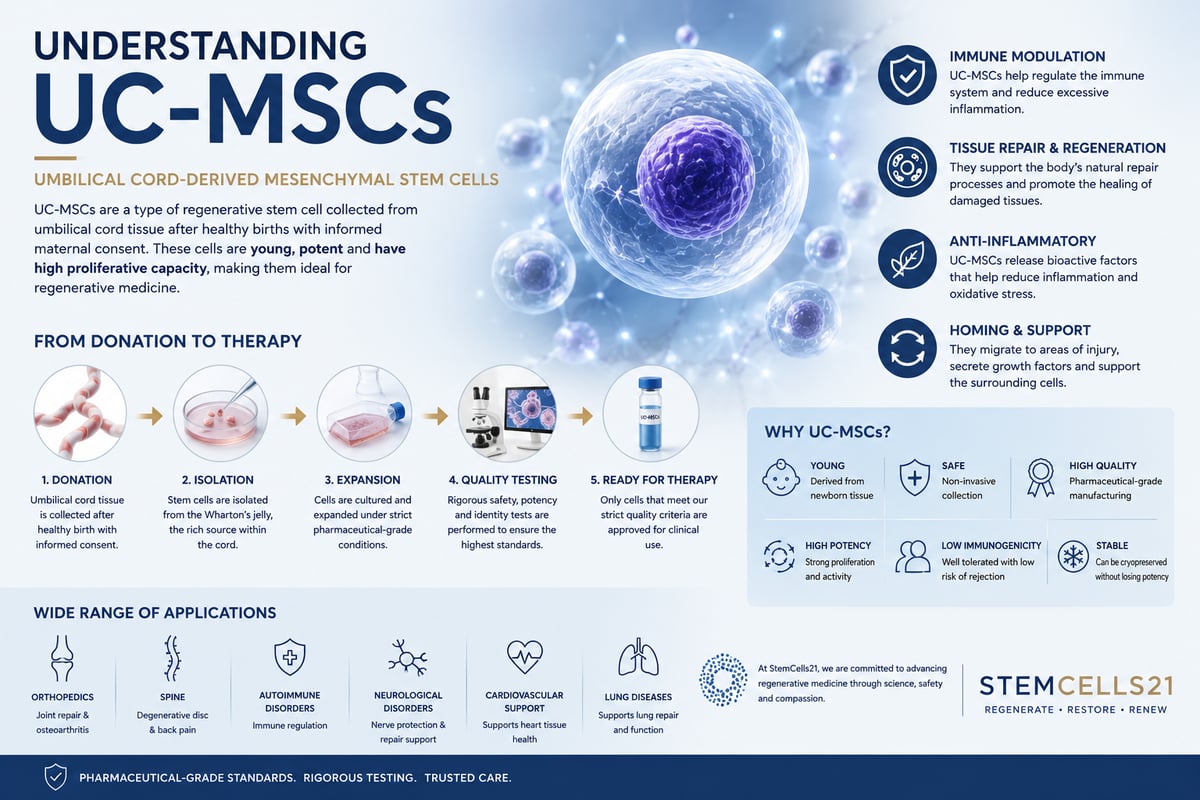
Umbilical cord-derived mesenchymal stem cells offer distinct advantages for manufacturing. These cells are:
- Collected non-invasively from donated tissue following healthy births
- More proliferative than adult-derived cells, allowing expansion to therapeutic doses
- Immunologically naïve, potentially reducing rejection risk
- Capable of extensive quality testing before clinical use
Manufacturing protocols at specialized facilities include identity verification, sterility testing, endotoxin screening, potency assays, and genomic stability assessment. Each batch undergoes comprehensive characterization before release for patient treatment, ensuring consistency and safety.
Patient Selection and Treatment Protocols
Not all kidney disease patients are suitable candidates for stem cell therapy. Ideal candidates typically present with moderate chronic kidney disease (stages 2-4) where substantial renal tissue remains viable. Factors influencing patient selection include:
- Disease etiology: Diabetic nephropathy and hypertensive kidney disease represent common targets
- Degree of fibrosis: Advanced scarring limits regenerative potential
- Inflammatory status: Active inflammation may indicate responsiveness to immunomodulation
- Concurrent conditions: Uncontrolled diabetes or hypertension require optimization first
At specialized regenerative medicine facilities, stem cell therapy for kidney disease involves comprehensive evaluation before treatment. Baseline assessment includes kidney function tests, imaging, biomarker panels, and overall health status to establish treatment appropriateness and create personalized protocols.
Treatment Administration
Delivery methods vary based on scientific rationale and institutional protocols:
- Intravenous infusion: Systemic delivery allowing cells to home to sites of injury
- Renal artery infusion: Targeted delivery increasing cell concentration in kidney tissue
- Direct parenchymal injection: Precise placement under imaging guidance
Most protocols involve multiple doses over weeks or months, recognizing that single administrations may produce transient effects. Follow-up monitoring tracks kidney function trends, inflammatory markers, and clinical symptoms to assess response.

Safety Considerations and Regulatory Context
Safety remains paramount in any investigational therapy. A bibliometric analysis of stem cell therapy research for kidney disease from 2015-2024 shows evolving focus on safety endpoints and adverse event reporting. Published studies generally report minimal serious complications, though vigilance continues for:
- Infusion reactions during cell administration
- Immunological responses in sensitized patients
- Potential for unwanted cell differentiation
- Long-term monitoring for unforeseen effects
Regulatory frameworks vary globally, but all require demonstrated safety and quality manufacturing. Patients should seek treatment at facilities operating under appropriate oversight, with transparent reporting of outcomes and complications.
| Safety Parameter | Assessment Method | Monitoring Frequency |
|---|---|---|
| Kidney function | eGFR, creatinine | Weekly initially, then monthly |
| Immune response | Antibody panels, inflammatory markers | Pre-treatment, 1, 3, 6 months |
| Systemic effects | Complete blood count, metabolic panel | Regular intervals per protocol |
| Adverse events | Clinical examination, patient reporting | Ongoing throughout follow-up |
Integration with Standard Nephrology Care
Stem cell therapy for kidney disease should complement, not replace, evidence-based standard care. Patients continue medications for blood pressure control, diabetes management, and complications like anemia or bone disease. Dietary modifications remain important, as does management of cardiovascular risk factors that often coexist with kidney disease.
This integrative approach recognizes that regenerative therapies address specific pathophysiological aspects whilst standard care manages the broader clinical picture. Coordination between regenerative medicine specialists and nephrologists ensures comprehensive patient management.
For patients exploring advanced regenerative options, facilities offering personalised treatment programmes using pharmaceutical-grade umbilical cord-derived mesenchymal stem cells provide structured protocols designed to support the body's natural repair processes alongside expert medical care. These programmes incorporate detailed assessment, quality-controlled cell products, and ongoing monitoring to optimize safety and outcomes.
Research Trends and Future Directions
The field continues advancing rapidly. Current research priorities include:
- Combination therapies: Pairing stem cells with growth factors or biomaterials
- Targeted delivery systems: Engineering cells or carriers for enhanced kidney homing
- Personalized approaches: Matching cell types and protocols to disease phenotypes
- Biomarker development: Identifying predictors of treatment response
- Long-term outcome studies: Tracking effects on disease progression and clinical endpoints
Gene-edited stem cells represent a particularly intriguing frontier, potentially enhancing therapeutic properties while maintaining safety. Researchers are exploring modifications that boost anti-inflammatory capacity, improve survival in the hostile kidney microenvironment, or enable sustained therapeutic molecule secretion.
Another promising avenue involves exosomes and extracellular vesicles derived from stem cells. These cell-free products may deliver therapeutic benefits without transplanting living cells, potentially simplifying manufacturing and reducing safety concerns. Early studies suggest kidney-protective effects comparable to parent cells in some models.
Geographic Patterns in Research
The bibliometric literature reveals concentration of stem cell kidney disease research in specific regions, with substantial contributions from Asian, European, and North American centers. This geographic diversity brings varied regulatory perspectives, patient populations, and research methodologies that collectively advance the field. International collaboration and data sharing will prove essential for translating laboratory discoveries into validated clinical protocols.
Patient Considerations and Informed Decision-Making
Individuals considering stem cell therapy for kidney disease face complex decisions requiring thorough information. Key questions to address include:
- What evidence supports this treatment for my specific kidney condition?
- What are realistic expectations for outcomes?
- How does this fit with my current treatment plan?
- What are the potential risks and how are they monitored?
- What are the costs and logistical requirements?
Transparency about evidence quality matters greatly. Whilst preclinical studies and early trials show promise, stem cell therapy for kidney disease remains investigational for most applications. Patients should maintain realistic expectations, recognizing that stabilization or modest improvement represents success rather than dramatic reversal of advanced disease.
Questions for treatment providers:
- What is your experience with kidney disease specifically?
- How do you manufacture and quality-test your cell products?
- What monitoring protocols ensure patient safety?
- Can you provide outcome data from previous patients?
- How do you coordinate with my nephrology team?
Reputable facilities welcome such questions and provide detailed, evidence-based responses. They should clearly distinguish established facts from theoretical benefits and never guarantee specific outcomes.
Cost and Accessibility Considerations
Regenerative medicine treatments typically involve significant costs not covered by standard insurance in many jurisdictions. Expenses encompass comprehensive medical evaluation, cell manufacturing, administration procedures, and follow-up monitoring. Geographic variation exists, with some regions offering more accessible pricing whilst maintaining quality standards.
Patients must weigh financial investment against potential benefits, existing alternatives, and personal circumstances. For those facing dialysis or transplant, the calculation differs from individuals with earlier-stage disease. Financial planning should account for potential need for multiple treatment cycles and ongoing standard care costs.
Some facilities offer structured packages that bundle evaluation, treatment, accommodation, and follow-up to provide transparency and convenience, particularly for international patients travelling for care.
The Role of Personalized Medicine
Modern regenerative approaches increasingly emphasize personalization. Rather than uniform protocols applied to all patients, treatment plans consider individual disease characteristics, inflammatory profiles, genetic factors, and concurrent conditions. This tailored approach recognizes heterogeneity within "chronic kidney disease" as a diagnostic category.
Advanced assessment tools enable deeper phenotyping:
- Detailed biomarker panels characterizing inflammatory state
- Genetic testing identifying disease-driving pathways
- Imaging techniques assessing tissue viability versus scarring
- Immunological profiling guiding cell selection and dosing
These data inform decisions about cell type, dose, delivery method, and adjunctive therapies, moving beyond one-size-fits-all approaches toward precision regenerative medicine.
Stem cell therapy for kidney disease represents a scientifically grounded yet still-evolving approach to a condition affecting millions globally. Evidence accumulated through 2026 demonstrates biological plausibility, acceptable safety profiles in published studies, and preliminary signals of clinical benefit, whilst larger trials continue to define optimal protocols and patient selection. For individuals with chronic kidney disease seeking comprehensive care that integrates regenerative possibilities with established nephrology standards, StemCells21 offers personalized treatment programmes in Bangkok, combining pharmaceutical-grade umbilical cord-derived mesenchymal stem cells with expert medical oversight to support patients' renal health and overall wellbeing.