
Liver disease represents one of the most pressing global health challenges, affecting millions worldwide and progressing from inflammation and fibrosis to cirrhosis and ultimately liver failure. Traditional interventions focus on managing symptoms and slowing progression, yet for advanced cases, organ transplantation often remains the only definitive option. Against this backdrop, stem cell therapy for liver disease has emerged as a regenerative approach that aims to support the liver's natural repair mechanisms, modulate immune dysfunction, and potentially restore hepatic function. This comprehensive guide examines the science, clinical evidence, treatment protocols, and practical considerations for patients exploring cellular therapies as part of their liver disease management strategy.
Understanding Liver Disease and Regenerative Challenges
The liver possesses remarkable intrinsic regenerative capacity, able to restore lost mass after acute injury. However, chronic insults from viral hepatitis, alcohol, metabolic disease, or autoimmune conditions overwhelm these repair pathways, leading to progressive fibrosis and architectural distortion. Once cirrhosis develops, conventional hepatocyte regeneration becomes impaired, stellate cells drive ongoing scarring, and portal hypertension creates systemic complications.
The Regenerative Deficit in Chronic Liver Disease
Chronic liver disease disrupts the carefully orchestrated cascade of hepatocyte proliferation, extracellular matrix remodelling, and immune resolution that characterizes successful liver repair. Research published in Nature has revealed the multimodal mechanisms underlying human liver regeneration at single-cell resolution, highlighting how chronic injury environments disrupt these coordinated processes.
Key regenerative challenges include:
- Hepatocyte senescence and reduced proliferative capacity in advanced disease
- Stellate cell activation perpetuating fibrogenesis despite removal of initial injury
- Immune dysregulation with persistent inflammation blocking resolution pathways
- Vascular remodelling that impairs oxygen delivery and metabolic function
- Loss of stem cell niches within the liver microenvironment

These challenges have prompted researchers to investigate whether externally administered stem cells might provide the signals, factors, or cellular building blocks necessary to restart productive regeneration in diseased livers.
The Science Behind Stem Cell Therapy for Liver Disease
Stem cell therapy for liver disease encompasses several distinct cellular approaches, each with different proposed mechanisms and levels of clinical development. The most extensively studied modalities include mesenchymal stem cells (MSCs), haematopoietic stem cells, and hepatic progenitor cells, with MSCs representing the most clinically advanced platform.
Mesenchymal Stem Cells: Mechanisms and Sources
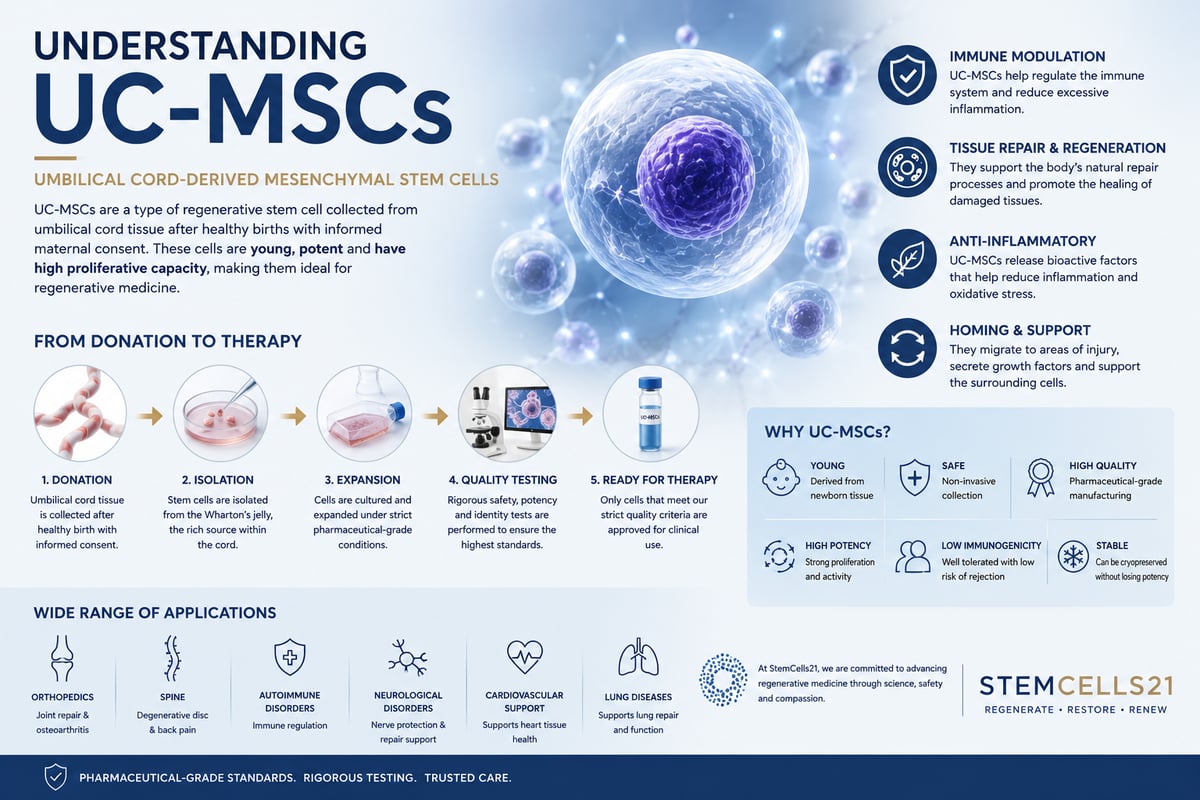
Mesenchymal stem cells are multipotent stromal cells capable of immune modulation, anti-inflammatory signalling, and paracrine support of tissue repair. In the liver disease context, umbilical cord-derived MSCs (UC-MSCs) have shown particular promise due to their low immunogenicity, high proliferative capacity, and robust secretion of regenerative factors.
| MSC Source | Key Advantages | Liver-Specific Benefits |
|---|---|---|
| Umbilical cord | High yield, young cells, low immunogenicity | Robust anti-fibrotic factor secretion |
| Bone marrow | Well-studied, autologous option available | Direct hepatocyte differentiation potential |
| Adipose tissue | Abundant, minimally invasive harvest | Strong immunomodulatory capacity |
The therapeutic mechanisms of stem cell therapy for liver disease appear to be primarily paracrine rather than direct cellular replacement. MSCs secrete:
- Growth factors (HGF, VEGF, IGF-1) that promote hepatocyte proliferation
- Anti-inflammatory cytokines (IL-10, TGF-β3) that dampen excessive immune responses
- Matrix metalloproteinases that support fibrosis resolution
- Extracellular vesicles carrying microRNAs and proteins that modulate recipient cell behaviour
Delivery Routes and Biodistribution
Clinical protocols employ various delivery methods, each with distinct biodistribution patterns and safety profiles. Intravenous administration offers simplicity but results in first-pass lung trapping, with cells subsequently migrating to liver and spleen. Direct portal vein or hepatic artery infusion maximizes initial liver delivery but requires interventional radiology. Intrasplenic injection represents a middle ground, leveraging portal circulation whilst avoiding invasive hepatic access.
Research demonstrates that regardless of delivery route, MSCs exert effects through both transient engraftment and systemic factor release, with therapeutic benefits often outlasting detectable cell presence.
Clinical Evidence and Treatment Outcomes
The evidence base for stem cell therapy for liver disease has expanded significantly, with multiple systematic reviews, meta-analyses, and randomized controlled trials now published. An umbrella review of systematic reviews examining stem cell therapy in chronic liver disease identified improvements in liver function markers, though heterogeneity in study design and patient populations complicates definitive conclusions.
Meta-Analytical Findings on Efficacy
A comprehensive meta-analysis published in 2024 assessed stem cell therapy for liver failure across multiple aetiologies, analyzing biochemical parameters, clinical outcomes, and survival data. The quantitative synthesis revealed:
Biochemical improvements:
- Serum albumin increase (mean difference +3.2 g/L)
- Total bilirubin reduction (mean difference -18.4 μmol/L)
- Prothrombin time improvement (mean difference +4.1%)
- MELD score reduction in decompensated cirrhosis cohorts
Clinical outcomes:
- Ascites reduction in 45-60% of treated patients
- Hepatic encephalopathy improvement (standardized mean difference 0.42)
- Quality of life scores elevated across multiple instruments
- Adverse event rates similar to control groups in most trials

Registered Clinical Trials and Study Design
The ClinicalTrials.gov registry contains numerous active investigations of stem cell therapy for liver disease, with trials examining different cell types, doses, and patient populations. Representative study designs include:
- Phase I/II dose-escalation studies establishing safety and optimal cell numbers
- Randomized controlled trials comparing cell therapy to standard medical management
- Long-term follow-up studies assessing durability of treatment response
- Comparative effectiveness trials evaluating different cell sources or delivery routes
- Biomarker studies identifying predictors of treatment response
Most contemporary trials employ rigorous inclusion criteria, standardized cell manufacturing, and comprehensive outcome assessment aligned with regulatory guidance from organizations such as the WHO.
Clinical Applications Across Liver Disease Spectrum
Stem cell therapy for liver disease has been investigated across a range of hepatic conditions, with varying levels of evidence supporting each application. Understanding which disease states demonstrate the strongest preliminary evidence helps set appropriate patient expectations.
Liver Cirrhosis and Decompensation
Cirrhosis represents the most extensively studied indication, particularly decompensated cirrhosis where patients experience ascites, hepatic encephalopathy, or variceal bleeding despite medical management. For patients ineligible for or awaiting transplantation, cellular therapy may serve as a bridge intervention to stabilize function.
The NIDDK provides information on cirrhosis clinical trials, offering patients resources to understand trial participation and locate relevant studies. Evidence suggests MSC therapy can temporarily improve synthetic function and reduce decompensation frequency, though long-term fibrosis regression remains difficult to demonstrate definitively.
Acute-on-Chronic Liver Failure
This syndrome of rapid deterioration in patients with underlying chronic disease carries high short-term mortality. Early-phase trials of stem cell therapy for liver disease in acute-on-chronic liver failure have shown encouraging signals, with some studies reporting reduced 90-day mortality compared to standard care. The acute inflammatory environment may actually enhance MSC therapeutic activity through licensing mechanisms.
Metabolic Liver Disease
Non-alcoholic fatty liver disease (NAFLD) and its progressive form, non-alcoholic steatohepatitis (NASH), represent growing indications. Preclinical models demonstrate MSC capacity to reduce hepatic steatosis, improve insulin sensitivity, and decrease inflammatory infiltration. Human trials remain limited but show potential for metabolic parameter improvement alongside hepatic benefit.
Viral Hepatitis and Autoimmune Disease
For patients with viral hepatitis-related cirrhosis, particularly those with treatment-refractory disease or post-viral fibrosis, cellular therapy offers an adjunctive approach. Similarly, autoimmune hepatitis patients who achieve incomplete response to immunosuppression may benefit from the immune-modulatory effects of MSCs, though this application requires careful monitoring for disease flare.
Treatment Protocols and Patient Journey
Understanding what stem cell therapy for liver disease actually entails helps patients make informed decisions and prepare appropriately. Modern protocols at specialized centres like StemCells21 follow structured pathways designed to maximize safety whilst optimizing therapeutic potential.
Pre-Treatment Assessment
Comprehensive evaluation forms the foundation of personalized therapy planning. The assessment typically includes:
- Detailed medical history and medication review
- Laboratory testing: complete liver panel, coagulation studies, viral serology, autoimmune markers
- Imaging studies: ultrasound, FibroScan, or MRI to quantify fibrosis and assess vascular anatomy
- Functional assessment: MELD score, Child-Pugh classification, performance status
- Screening for exclusions: active infection, malignancy, recent bleeding events
This evaluation ensures appropriate patient selection and establishes baseline parameters against which treatment response will be measured.
Cell Preparation and Quality Assurance
Pharmaceutical-grade MSC manufacturing follows rigorous protocols to ensure safety, potency, and consistency. Umbilical cord-derived cells undergo:
- Donor screening for infectious diseases and genetic abnormalities
- Tissue processing under GMP-compliant clean room conditions
- Cell expansion through multiple passages whilst maintaining phenotype
- Quality testing for viability, sterility, endotoxin, mycoplasma
- Potency assays confirming immunomodulatory and secretory function
- Cryopreservation in validated storage until clinical use
These manufacturing standards align with international regulatory expectations and ensure reproducible cellular products.
Administration Protocol
The actual treatment typically involves:
Day of administration:
- Cells thawed and prepared immediately before infusion
- Patient monitoring with vital signs and laboratory backup
- Intravenous or targeted delivery over 30-60 minutes
- Post-infusion observation period (typically 2-4 hours)
Immediate post-treatment:
- Discharge same day in most protocols
- Instructions for activity modification (usually minimal)
- Scheduled follow-up laboratory draws and assessments
Follow-up schedule:
- Week 1-2: early safety and tolerability check
- Month 1: initial efficacy parameters
- Months 3, 6, 12: comprehensive reassessment of function and symptoms
Multiple treatment cycles spaced weeks to months apart are common in chronic liver disease protocols, as single administrations may provide temporary benefit requiring reinforcement.
Safety Considerations and Contraindications
The safety profile of stem cell therapy for liver disease appears favorable in properly selected patients treated at experienced centres. Systematic reviews report adverse event rates comparable to control groups, with most reactions mild and self-limiting.
Common Short-Term Effects
Immediately following administration, patients may experience:
- Transient fever (typically self-resolving within 24 hours)
- Mild infusion-site reactions or phlebitis
- Temporary fatigue or malaise
- Headache or body aches
These effects generally require only supportive care and observation.
Serious Adverse Events and Risk Mitigation
More concerning complications remain rare but include:
| Complication | Incidence | Risk Factors | Prevention Strategies |
|---|---|---|---|
| Portal vein thrombosis | <1% | Portal hypertension, prothrombotic state | Pre-treatment coagulation assessment, anticoagulation consideration |
| Infection | <2% | Immunosuppression, ascites | Rigorous cell sterility testing, prophylactic antibiotics if indicated |
| Allergic reaction | <1% | Prior allergies | Premedication protocols, slow infusion rates |
| Tumour formation | Theoretical | Long follow-up lacking | Stringent donor screening, karyotype analysis |
Comprehensive pre-treatment screening and adherence to established protocols minimize these risks substantially.
Contraindications
Absolute contraindications typically include:
- Active or recent malignancy
- Uncontrolled systemic infection or sepsis
- Recent major bleeding events
- Pregnancy or lactation
- Severe cardiopulmonary disease limiting safety of procedure
Relative contraindications requiring individualized assessment include advanced age, renal failure, and severe coagulopathy.
Regulatory Landscape and Quality Standards
The field of stem cell therapy for liver disease operates within evolving regulatory frameworks designed to protect patient safety whilst enabling access to potentially beneficial treatments. Expert hepatology societies provide guidance on appropriate clinical use and research priorities.
Global Regulatory Approaches
Different jurisdictions take varying stances on cellular therapy regulation:
United States: FDA classifies MSCs as biological products requiring Investigational New Drug (IND) applications for clinical use outside of minimal manipulation autologous paradigms. Clinical trials require robust manufacturing documentation and phased safety/efficacy demonstration.
European Union: Advanced therapy medicinal products (ATMPs) fall under EMA oversight, with centralized marketing authorization for approved products and hospital exemption pathways for certain autologous applications.
Asia-Pacific: Regulatory stringency varies considerably, with some jurisdictions requiring clinical trial data whilst others permit clinical use under hospital-based research protocols with ethics committee oversight.
Selecting Reputable Treatment Centres
Patients considering stem cell therapy for liver disease should evaluate potential treatment centres against key quality indicators:
- Regulatory compliance with local health authority requirements
- GMP manufacturing of cellular products with documented quality control
- Published research demonstrating institutional experience and outcomes transparency
- Multidisciplinary teams including hepatologists, interventional radiologists, and transplant expertise
- Comprehensive informed consent processes explaining evidence limitations and alternatives
- Structured follow-up with outcome documentation and adverse event reporting
For many patients struggling with chronic liver conditions that limit daily function and wellbeing, exploring advanced regenerative approaches becomes an important consideration. The comprehensive review of cell therapy strategies published in Nature Reviews Gastroenterology & Hepatology provides detailed scientific context for healthcare professionals and informed patients alike.

Factors Influencing Treatment Response
Not all patients respond equally to stem cell therapy for liver disease, and identifying predictive factors helps set realistic expectations. Emerging research suggests several variables correlate with treatment outcomes.
Disease-Related Predictors
Severity staging: Patients with Child-Pugh class B cirrhosis generally show better responses than class C, suggesting a threshold beyond which regenerative capacity becomes too compromised. MELD scores below 20 correlate with more favorable outcomes in several series.
Aetiology: Viral and metabolic liver disease may respond differently than alcohol-related disease, possibly reflecting distinct inflammatory profiles and ongoing injury patterns. Abstinence from alcohol significantly improves outcomes in alcohol-related liver disease cohorts.
Fibrosis stage: Earlier intervention before advanced architectural disruption theoretically offers better regenerative potential, though cirrhosis patients still demonstrate measurable benefits in many trials.
Treatment-Related Variables
Cell dose: Higher cell numbers (typically 1-2 million cells per kilogram body weight) appear more effective than lower doses, though exact dose-response relationships remain under investigation.
Delivery route: Comparative data suggest targeted portal or hepatic arterial delivery may outperform peripheral intravenous routes, though invasiveness and safety trade-offs must be considered.
Treatment frequency: Multiple administrations spaced months apart show sustained benefits compared to single treatments in several studies, suggesting cumulative effects or need for repeated immune modulation.
Patient-Specific Factors
Nutritional status: Malnutrition and sarcopenia, common in advanced liver disease, may limit regenerative responses. Optimization of nutritional parameters before and during treatment appears beneficial.
Concurrent medications: Immunosuppressants might theoretically blunt MSC immunomodulatory effects, though clinical data remain limited. Careful medication reconciliation ensures no pharmacological antagonism.
Comorbidities: Diabetes, renal dysfunction, and cardiovascular disease may influence outcomes, highlighting the importance of holistic health optimization.
Integration with Conventional Management
Stem cell therapy for liver disease should be viewed as complementary to, not replacement for, evidence-based medical management. Optimal outcomes likely derive from integrated approaches addressing all aspects of liver health.
Medical Management Foundations
Standard-of-care interventions remain essential:
- Aetiology-specific treatment: Antiviral therapy, alcohol cessation, weight management, immunosuppression as appropriate
- Complication management: Diuretics for ascites, lactulose/rifaximin for encephalopathy, beta-blockers for portal hypertension
- Nutritional support: Adequate protein and calorie intake, vitamin supplementation, addressing sarcopenia
- Hepatocellular carcinoma surveillance: Regular ultrasound and AFP monitoring in at-risk patients
Cellular therapy ideally complements these interventions by addressing underlying regenerative deficits whilst conventional approaches manage symptoms and prevent complications.
Transplantation Considerations
For eligible patients with advanced disease, liver transplantation remains the gold-standard definitive therapy. Stem cell therapy for liver disease may serve several transplant-related roles:
- Bridge to transplant: Stabilizing or improving function whilst awaiting organ availability
- Transplant avoidance: In select responders, potentially forestalling or eliminating transplant need
- Post-transplant support: Theoretically reducing ischemia-reperfusion injury or supporting graft function, though this application remains largely investigational
Transparent discussion with transplant hepatologists ensures cellular therapy does not delay appropriate transplant evaluation or listing.
Lifestyle and Supportive Interventions
Maximizing the body's regenerative environment enhances stem cell therapy potential:
- Alcohol abstinence eliminates ongoing hepatotoxic injury
- Metabolic optimization through diet and exercise addresses NAFLD/NASH drivers
- Medication review eliminates hepatotoxic agents when possible
- Infection prevention reduces inflammatory stress on compromised liver
- Mental health support, as substance use disorders and depression commonly coexist with liver disease and benefit from integrated care through services such as addiction recovery programmes
Cost Considerations and Accessibility
Stem cell therapy for liver disease represents a significant financial investment, and understanding cost structures helps patients plan appropriately. Treatment pricing varies substantially based on geographic location, facility type, cell source, and protocol complexity.
Cost Components
Typical expense categories include:
Pre-treatment assessment: Laboratory testing, imaging studies, specialist consultations (£1,000-3,000)
Cell procurement and manufacturing: GMP production, quality testing, cryopreservation (£8,000-15,000)
Procedure and facility fees: Administration, monitoring, day-case or inpatient charges (£2,000-5,000)
Follow-up care: Subsequent assessments, repeat dosing if indicated (variable)
Total costs commonly range from £15,000-30,000 for initial treatment cycles, with geographical and institutional variation.
Insurance and Reimbursement
Most health insurance systems classify stem cell therapy for liver disease as investigational or experimental, limiting coverage to approved clinical trials. Private payers occasionally approve treatment on case-by-case basis with robust documentation of medical necessity and lack of alternatives.
Patients should:
- Request pre-authorization from insurers with detailed clinical rationale
- Explore clinical trial participation when eligible, often providing treatment at no cost
- Inquire about institutional financial assistance or payment plans
- Consider medical travel to jurisdictions offering more accessible pricing
Value Proposition
When evaluating cost-effectiveness, patients weigh stem cell therapy expense against:
- Ongoing costs of managing decompensated cirrhosis
- Potential to avoid or delay transplantation with associated surgical and lifetime immunosuppression costs
- Quality of life improvements enabling return to work or reduced caregiver burden
- Risk of progressive deterioration with associated hospitalization expenses
For carefully selected patients, cellular therapy may offer favorable value despite upfront costs, though rigorous pharmacoeconomic analyses remain limited.
Future Directions and Research Priorities
The field of stem cell therapy for liver disease continues advancing rapidly, with several promising research directions poised to enhance therapeutic potential and clinical applicability over coming years.
Next-Generation Cellular Products
Induced pluripotent stem cells (iPSCs): Patient-derived iPSCs differentiated toward hepatocyte lineages offer potential for personalized, immune-compatible cell replacement. Technical challenges around differentiation efficiency and tumorigenicity require resolution.
Genetically modified MSCs: Engineering cells to overexpress specific growth factors or homing molecules may enhance hepatic engraftment and therapeutic potency. Gene editing approaches enable precise modifications whilst maintaining safety profiles.
Extracellular vesicle therapy: Cell-free approaches using purified exosomes capture paracrine benefits whilst eliminating live cell risks. Manufacturing scalability and regulatory pathways remain under development.
Combination and Sequential Therapies
Scaffold-based delivery: Biomaterial carriers providing structural support and controlled release may enhance cell retention and function. Hydrogel and nanoparticle platforms show preclinical promise.
Pharmacological adjuncts: Combining cellular therapy with anti-fibrotic drugs, growth factors, or immunomodulators might produce synergistic effects exceeding either intervention alone.
Staged interventions: Sequential delivery of different cell types or repeated administrations with escalating doses represent emerging protocol refinements.
Biomarker Development and Response Prediction
Identifying reliable biomarkers predicting treatment response would enable precision patient selection and protocol optimization. Candidate markers under investigation include:
- Circulating microRNA profiles reflecting fibrosis stage and inflammatory status
- Proteomic signatures of regenerative capacity
- Imaging biomarkers quantifying liver stiffness changes
- Metabolomic panels assessing hepatic functional reserve
Mechanistic Understanding
Deeper elucidation of how stem cell therapy for liver disease produces clinical benefits will guide rational protocol optimization. Priority research areas include:
- Tracking cell biodistribution and persistence using advanced imaging
- Profiling recipient immune responses to administered cells
- Mapping paracrine factor secretion and recipient cell responses
- Understanding optimal timing relative to disease stage and injury patterns
Stem cell therapy for liver disease represents a scientifically grounded regenerative approach that may complement conventional management in carefully selected patients, offering potential to modulate inflammation, support hepatocyte function, and improve clinical outcomes in conditions ranging from cirrhosis to acute-on-chronic liver failure. As research continues refining cell sources, delivery protocols, and patient selection, this therapeutic modality may increasingly find application as part of comprehensive hepatology care. If you're exploring advanced regenerative options for liver disease management, StemCells21 offers personalized consultation to assess whether cellular therapy aligns with your specific condition, medical history, and treatment goals.