
The quest to extend both lifespan and healthspan has moved from the realm of science fiction into clinical reality. Stem cell therapy for longevity represents one of the most promising frontiers in regenerative medicine, offering potential interventions that target the fundamental processes of ageing at a cellular level. As our understanding of cellular senescence, tissue degeneration, and immune dysregulation deepens, researchers and clinicians are exploring how therapeutic applications of stem cells might slow biological ageing and maintain vitality well into later years. This convergence of cellular biology, clinical medicine, and longevity science is reshaping how we approach healthy ageing.
Understanding the Biological Basis of Ageing
Ageing is not a single process but rather a complex interplay of cellular and molecular changes that accumulate over time. Scientists have identified several hallmarks of ageing, including genomic instability, telomere attrition, epigenetic alterations, and cellular senescence. Each of these contributes to the progressive decline in tissue function and regenerative capacity.
At the cellular level, our bodies experience a gradual depletion of stem cell pools and a reduction in their functional capacity. This phenomenon, known as stem cell exhaustion, compromises the body's ability to repair and regenerate tissues effectively. Simultaneously, senescent cells accumulate in tissues, secreting inflammatory factors that contribute to chronic, low-grade inflammation often referred to as "inflammageing."
The decline in stem cell function is particularly significant because these cells serve as the body's natural repair system. When stem cell populations diminish or become less responsive, tissues lose their ability to maintain homeostasis and recover from damage. Research into senescence biology has revealed how these cellular changes interconnect, creating a cascade of effects that manifest as the visible and functional changes we associate with ageing.
The Role of Mesenchymal Stem Cells
Mesenchymal stem cells (MSCs) have emerged as particularly valuable in regenerative approaches to longevity. These multipotent cells can differentiate into various cell types and, crucially, possess potent immunomodulatory and anti-inflammatory properties. Unlike some stem cell types, MSCs can be sourced from multiple tissues, with umbilical cord-derived cells offering particular advantages in terms of potency and proliferative capacity.

MSCs exert their effects through multiple mechanisms:
- Paracrine signalling: Secreting growth factors and cytokines that influence surrounding cells
- Immunomodulation: Regulating immune responses to reduce chronic inflammation
- Trophic support: Providing factors that support existing tissue repair mechanisms
- Differentiation: Potentially replacing damaged or senescent cells in target tissues
The pharmaceutical-grade umbilical cord-derived mesenchymal stem cells (UC-MSCs) used in clinical settings undergo rigorous quality testing to ensure safety, viability, and therapeutic potential. These young cells retain robust regenerative capacity and may offer advantages over stem cells harvested from aged donors.
Mechanisms of Stem Cell Therapy for Longevity
The application of stem cell therapy for longevity operates through several interconnected pathways that address the underlying mechanisms of ageing. Understanding these pathways helps clarify why this approach holds promise for extending healthspan rather than simply treating individual age-related conditions.
Cellular Senescence and Clearance
One of the most significant contributions of stem cell therapy involves addressing cellular senescence. Senescent cells stop dividing but resist programmed cell death, accumulating in tissues and secreting harmful inflammatory molecules. Emerging approaches that target senescent cells include both direct senolytic interventions and regenerative strategies that support the body's natural clearance mechanisms.
Stem cells may help by:
- Supporting immune cell populations that clear senescent cells
- Reducing the inflammatory environment that promotes senescence
- Replacing senescent cells with functional tissue
- Modulating cellular pathways that regulate senescence
Tissue Regeneration and Repair
Age-related decline in tissue function stems partly from reduced regenerative capacity. Stem cell therapy for longevity aims to restore this capacity by introducing cells capable of differentiating into tissue-specific cells or by stimulating endogenous repair mechanisms.
| Tissue Type | Age-Related Changes | Potential Stem Cell Support |
|---|---|---|
| Musculoskeletal | Reduced muscle mass, joint degeneration | Enhanced tissue repair, reduced inflammation |
| Cardiovascular | Arterial stiffness, reduced cardiac function | Improved vascular health, tissue regeneration |
| Neurological | Cognitive decline, neurodegeneration | Neuroprotection, neuroplasticity support |
| Immune System | Immunosenescence, chronic inflammation | Immune rebalancing, reduced inflammageing |

Inflammation Reduction and Immune Balance
Chronic low-grade inflammation is a fundamental driver of many age-related conditions. The immunomodulatory properties of mesenchymal stem cells make them particularly valuable for addressing this aspect of ageing. By secreting anti-inflammatory factors and regulating immune cell behaviour, stem cells can help restore a more youthful immune balance.
This immune modulation extends beyond simple inflammation reduction. Stem cells can help recalibrate the immune system, potentially addressing the phenomenon of immunosenescence where immune function becomes both less effective at fighting pathogens and more prone to attacking the body's own tissues.
Clinical Evidence and Research Landscape
The transition of stem cell therapy for longevity from theoretical possibility to clinical application has been supported by a growing body of research. Recent clinical trials testing stem cell interventions for ageing have provided valuable insights into efficacy, safety, and practical implementation.
Published Trial Outcomes
Clinical studies have examined various metrics of healthy ageing:
- Functional capacity: Improvements in physical performance, mobility, and stamina
- Biomarkers: Changes in inflammatory markers, immune cell populations, and metabolic indicators
- Quality of life: Patient-reported outcomes regarding vitality, wellbeing, and daily functioning
- Safety profiles: Monitoring for adverse events and long-term safety considerations
Early results from longevity-focused trials have shown encouraging trends, though researchers emphasize the need for larger, longer-term studies to establish definitive efficacy. The heterogeneity of ageing itself presents challenges for trial design, as individuals age at different rates and through different pathways.
Manufacturing and Quality Standards
The clinical translation of stem cell therapies requires adherence to stringent manufacturing standards. Global regulatory guidance for cell-based therapies emphasizes the importance of consistent production methods, quality control, and standardized nomenclature.
Pharmaceutical-grade stem cell production involves:
- Donor screening and ethical sourcing
- Controlled expansion in certified facilities
- Multiple quality assurance checkpoints
- Viability and potency testing
- Sterility and safety verification
- Cryopreservation and storage protocols
These rigorous standards ensure that patients receive cells with predictable characteristics and minimal risk of contamination or adverse effects.
Practical Considerations for Longevity Applications
Implementing stem cell therapy for longevity requires more than simply administering cells. A comprehensive approach considers individual health status, treatment protocols, and integration with broader wellness strategies.
Patient Assessment and Personalization
Effective longevity interventions begin with thorough assessment. This includes:
- Biological age markers: Telomere length, epigenetic clocks, inflammatory biomarkers
- Health history: Existing conditions, medications, lifestyle factors
- Treatment goals: Specific aspects of healthspan the patient wishes to address
- Contraindications: Factors that might increase risk or reduce efficacy
Personalized treatment plans account for these variables, adjusting cell dosage, delivery methods, and treatment frequency accordingly. What works optimally for one patient may not be ideal for another, reflecting the personalized nature of ageing itself.
Delivery Methods and Protocols
Stem cells can be delivered through various routes, each with specific advantages:
| Delivery Method | Description | Typical Applications |
|---|---|---|
| Intravenous | Systemic distribution through bloodstream | General longevity, immune modulation |
| Targeted injection | Direct delivery to specific tissues | Joint health, localized tissue repair |
| Combined approach | Multiple delivery methods in protocol | Comprehensive rejuvenation programmes |
The choice of delivery method depends on treatment objectives. Systemic administration allows cells to home to areas of inflammation or damage throughout the body, whilst targeted injection delivers higher concentrations to specific tissues.
Integration with Lifestyle Interventions
Stem cell therapy for longevity achieves optimal results when combined with evidence-based lifestyle interventions. This integrated approach addresses ageing from multiple angles:
- Nutritional optimization to support cellular health
- Exercise programmes that maintain muscle mass and metabolic function
- Stress management techniques that reduce inflammatory burden
- Sleep hygiene practices that support cellular repair processes
- Toxin reduction to minimize cellular damage
These complementary interventions create an environment that supports the regenerative effects of stem cell therapy and promotes sustained healthspan extension.
Safety Profile and Clinical Considerations
The safety of stem cell therapies is paramount, particularly for longevity applications where patients may be relatively healthy individuals seeking preventive or enhancement interventions rather than treatment for acute conditions.
Documented Safety Data
Clinical challenges in translating stem cell approaches to longevity include ensuring long-term safety, optimizing manufacturing processes, and establishing treatment durability. Extensive monitoring of stem cell recipients has documented the safety profile of mesenchymal stem cells, which generally show excellent tolerability.
Common considerations include:
- Mild, transient reactions at injection sites
- Temporary fatigue following treatment (typically resolving within days)
- Monitoring for any unexpected immune responses
- Long-term follow-up to assess durability and late effects
Serious adverse events are rare when treatments use properly manufactured, quality-tested cells administered by experienced medical professionals. The safety record continues to improve as manufacturing standards evolve and clinical protocols become more refined.
Contraindications and Screening
Not all individuals are suitable candidates for stem cell therapy. Thorough medical screening identifies contraindications such as:
- Active malignancies or recent cancer history
- Acute infections or chronic infectious diseases
- Severe immunodeficiency conditions
- Pregnancy or breastfeeding
- Specific allergies to components used in cell processing
Honest communication between patients and medical teams ensures that only appropriate candidates receive treatment, maximizing both safety and potential benefit.
Future Directions and Emerging Research
The field of stem cell therapy for longevity continues to evolve rapidly, with ongoing research exploring new approaches and refining existing protocols. Several promising directions are currently under investigation.
Enhanced Cell Potency
Researchers are exploring methods to enhance the regenerative capacity of therapeutic stem cells:
- Preconditioning: Exposing cells to specific stimuli before administration to enhance their therapeutic properties
- Genetic modification: Carefully controlled genetic enhancements to amplify beneficial effects
- Combination therapies: Pairing stem cells with other regenerative molecules or senolytic agents
- Optimized sourcing: Identifying the most potent cell sources for specific applications
These approaches aim to maximize the longevity-promoting effects whilst maintaining safety standards.
Precision Medicine Approaches
As our understanding of individual variation in ageing increases, treatments are becoming more precisely tailored. Biomarker-guided therapy selection helps identify which patients are most likely to benefit from specific interventions, whilst real-time monitoring allows for protocol adjustments based on individual response.
Advanced diagnostics, including epigenetic age assessment and comprehensive metabolomic profiling, enable practitioners to track biological ageing with greater precision and adjust interventions accordingly.
Expanded Applications
Whilst initial longevity applications focus on general healthspan extension, researchers are exploring targeted interventions for specific aspects of ageing:
- Cognitive preservation and enhancement
- Metabolic optimization and diabetes prevention
- Cardiovascular health and arterial function
- Musculoskeletal maintenance and injury prevention
- Immune system rejuvenation
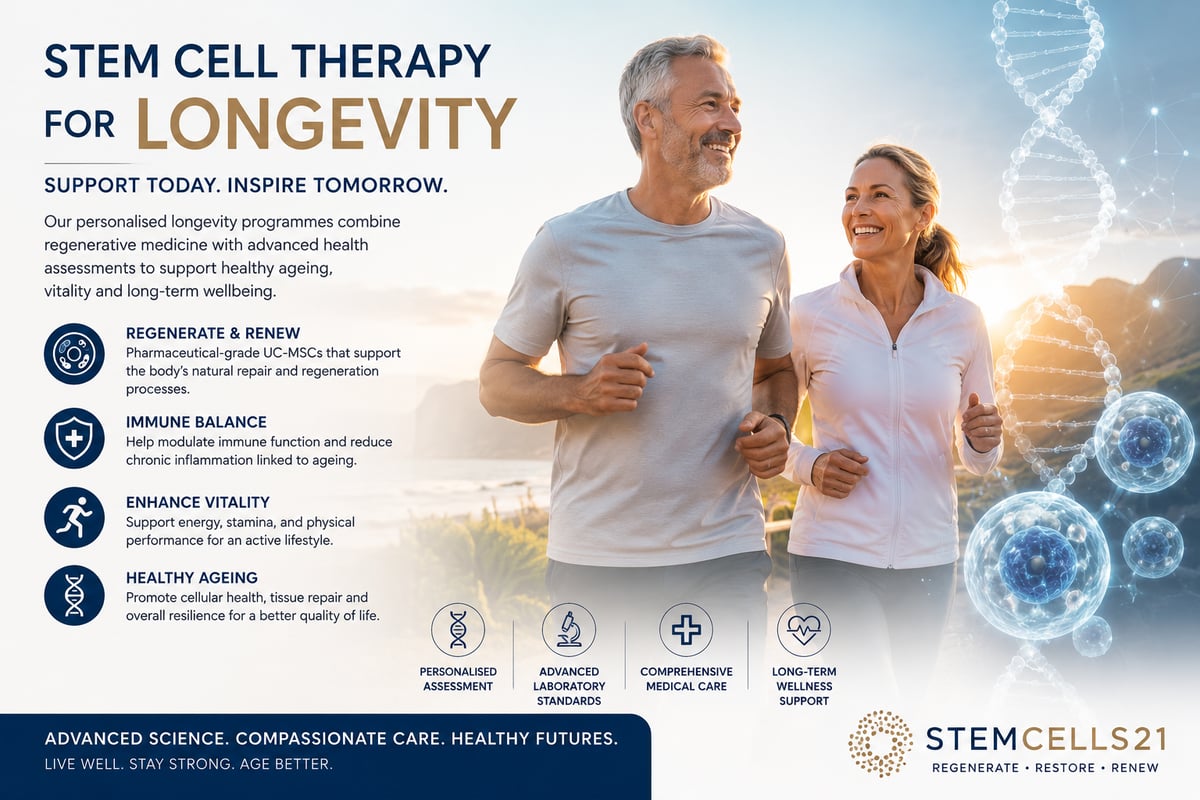
Healthy longevity programmes at specialized facilities now integrate pharmaceutical-grade stem cells with comprehensive health assessments to support long-term wellness and vitality. These longevity treatment approaches combine regenerative medicine with personalized health optimization strategies designed to promote resilience and maintain active, healthier futures.

Global Perspectives and Access
The availability of stem cell therapy for longevity varies significantly across different regions and healthcare systems. Regulatory frameworks range from highly permissive to extremely restrictive, influencing where patients can access these treatments.
Regulatory Landscapes
Different countries have adopted varying approaches to stem cell therapy regulation:
Permissive regulatory environments allow broader clinical use whilst maintaining safety oversight, often requiring clinic registration and adherence to manufacturing standards but permitting treatment for a wide range of conditions including longevity applications.
Restrictive frameworks limit stem cell therapies to approved clinical trials or specific, well-established applications, requiring extensive evidence before permitting broader use.
Emerging regulatory models attempt to balance innovation with patient protection, creating pathways for novel therapies whilst ensuring rigorous safety monitoring.
This global variation means that patients seeking stem cell therapy for longevity must carefully research the regulatory status, facility credentials, and treatment standards in their chosen location.
Cost and Accessibility
Stem cell therapy for longevity currently remains a significant investment, reflecting the complexity of pharmaceutical-grade cell production, specialized medical expertise required, and comprehensive care protocols involved. Costs vary based on:
- Cell source and processing methods
- Number of treatments in the protocol
- Additional assessments and monitoring
- Facility location and credentials
- Integration with other longevity interventions
As manufacturing processes become more efficient and clinical protocols more standardized, costs may decrease, potentially improving accessibility. However, for the foreseeable future, these interventions are likely to remain premium healthcare offerings.
Evaluating Providers and Treatment Quality
For individuals considering stem cell therapy for longevity, selecting an appropriate provider is crucial. Not all clinics offering stem cell treatments maintain equivalent standards, and the quality of care can vary dramatically.
Key Quality Indicators
When evaluating potential providers, consider these essential factors:
- Manufacturing standards: Pharmaceutical-grade production in certified facilities with documented quality control
- Medical expertise: Board-certified physicians with specific training in regenerative medicine
- Transparent protocols: Clear explanation of cell source, processing methods, and treatment rationale
- Comprehensive assessment: Thorough medical evaluation before treatment recommendations
- Realistic expectations: Honest discussion of potential benefits and limitations
- Follow-up care: Structured monitoring and ongoing medical support
Reputable providers maintain transparency about their methods, provide detailed information about cell sourcing and testing, and set realistic expectations rather than making exaggerated claims.
Red Flags to Avoid
Certain warning signs should prompt caution:
- Guarantees of specific outcomes or "miracle" claims
- Unclear or secretive cell sourcing and processing
- Pressure tactics or time-limited offers
- Lack of medical oversight or physician involvement
- Treatment recommendations without thorough medical assessment
- Absence of informed consent processes or risk discussion
Quality providers prioritize patient safety and informed decision-making over aggressive marketing.
Stem cell therapy for longevity represents a scientifically grounded approach to addressing the fundamental mechanisms of ageing, with growing clinical evidence supporting its potential to extend healthspan and maintain vitality. As research continues to refine protocols and enhance our understanding of cellular rejuvenation, these interventions are becoming increasingly sophisticated and personalized. At StemCells21, our state-of-the-art facility in Bangkok specializes in pharmaceutical-grade regenerative medicine, offering personalized longevity programmes that combine advanced stem cell therapy with comprehensive health assessments to support your journey toward healthier, more resilient ageing.