
Regenerative medicine represents one of the most promising frontiers in modern healthcare, with stem cell therapy emerging as a cornerstone of innovative treatment approaches. These remarkable cells possess unique biological properties that enable them to develop into various specialised tissue types, offering unprecedented opportunities to address conditions that were once considered untreatable. As research advances and clinical applications expand, understanding the science, safety standards, and therapeutic potential of these treatments becomes increasingly important for patients seeking alternative approaches to chronic and degenerative conditions.
The Biological Foundation of Stem Cell Therapy
Stem cells are characterised by two fundamental properties: self-renewal and differentiation potential. Unlike specialised cells that perform specific functions, these undifferentiated cells can divide indefinitely whilst maintaining their primitive state, creating an ongoing supply for tissue repair and regeneration.
The National Institutes of Health categorises stem cells into several distinct types based on their origin and potency. Embryonic stem cells demonstrate pluripotency, meaning they can develop into any cell type in the body. Adult stem cells, found in various tissues throughout life, typically exhibit multipotency, differentiating into a limited range of cell types within their tissue of origin. Induced pluripotent stem cells (iPSCs) represent a third category, created by reprogramming adult cells to an embryonic-like state.
Mesenchymal Stem Cells in Clinical Practice
Mesenchymal stem cells (MSCs) have emerged as particularly valuable in clinical applications due to their accessibility, safety profile, and immunomodulatory properties. These multipotent cells can be harvested from various sources:
- Bone marrow
- Adipose tissue
- Umbilical cord tissue
- Placental tissue
- Dental pulp

Research published in recent systematic reviews on mesenchymal stromal cells highlights their capacity to modulate immune responses, reduce inflammation, and support tissue repair through paracrine signalling. This mechanism involves the secretion of bioactive molecules that influence nearby cells, promoting healing without necessarily replacing damaged tissue directly.
Manufacturing Standards and Quality Control
The therapeutic efficacy and safety of stem cell treatments depend fundamentally on manufacturing quality and standardisation. Pharmaceutical-grade production facilities must adhere to stringent protocols that govern every stage from cell procurement to final formulation.
Regulatory Framework and Compliance
The World Health Organization has established comprehensive norms for cell, tissue, and gene therapy products to harmonise global safety standards. These guidelines address critical aspects including donor screening, processing conditions, quality testing, and traceability.
Manufacturing facilities employ several quality control measures:
| Quality Parameter | Testing Method | Acceptance Criteria |
|---|---|---|
| Cell Viability | Flow cytometry, trypan blue exclusion | ≥85% viable cells |
| Sterility | Bacterial and fungal culture | No growth detected |
| Endotoxin Levels | LAL or recombinant assay | <0.5 EU/mL |
| Cell Identity | Surface marker analysis | Positive: CD73, CD90, CD105; Negative: CD34, CD45 |
| Mycoplasma | PCR or culture-based detection | Negative result |
Advanced engineering approaches to drug-delivery systems continue to improve cell survival, targeting precision, and clinical outcomes. These innovations include scaffold materials, biomaterial carriers, and genetic modifications that enhance therapeutic potential whilst maintaining safety parameters.
Clinical Applications Across Disease Categories
Stem cell therapy has demonstrated promising results across numerous medical conditions, particularly those involving tissue degeneration, immune dysfunction, and chronic inflammation. The breadth of applications reflects the versatile biological mechanisms through which these cells exert therapeutic effects.
Autoimmune and Inflammatory Conditions
Autoimmune diseases present a significant treatment challenge, as conventional therapies often suppress the entire immune system rather than targeting specific dysfunctional pathways. Stem cell therapy offers a more nuanced approach through immune modulation and tissue repair mechanisms.
Recent evidence suggests that mesenchymal stem cells can regulate T-cell activity, modify cytokine production, and promote regulatory immune cell populations. These effects may help rebalance overactive immune responses whilst supporting tissue healing in affected organs. For patients exploring regenerative treatment options, understanding these mechanisms provides valuable context for therapeutic decision-making.
Degenerative Joint and Spine Conditions
Osteoarthritis, rheumatoid arthritis, and degenerative disc disease represent major sources of disability worldwide. Traditional management focuses on symptom control through medications, physical therapy, and ultimately surgical intervention. Stem cell therapy introduces a regenerative paradigm aimed at addressing underlying tissue damage.
The therapeutic rationale centres on several key mechanisms:
- Cartilage regeneration: Supporting chondrocyte function and extracellular matrix production
- Anti-inflammatory effects: Reducing pro-inflammatory cytokines in the joint environment
- Pain modulation: Influencing nerve signalling and reducing tissue inflammation
- Improved joint mechanics: Supporting structural integrity and lubrication
Clinical studies have documented improvements in pain scores, functional mobility, and quality of life measures following treatment. The extent of benefit varies depending on disease severity, patient age, and overall health status.

Neurological Disorders and Brain Health
The application of stem cell therapy to neurological conditions represents one of the most complex and actively researched areas. A comprehensive review of cell therapy in neurological disorders published in Nature Medicine examines progress across conditions including stroke, Parkinson's disease, multiple sclerosis, and traumatic brain injury.
Neurological applications face unique challenges including the blood-brain barrier, complex neural circuitry, and limited regenerative capacity of mature nervous tissue. Despite these obstacles, research demonstrates several promising mechanisms:
Neuroprotection: Stem cells release neurotrophic factors that support existing neuron survival and function, potentially slowing disease progression in degenerative conditions.
Immunomodulation: In autoimmune neurological diseases, stem cells may help rebalance immune responses that attack nervous tissue, reducing inflammation and supporting repair.
Neurogenesis support: Whilst mature neurons have limited capacity for regeneration, stem cells may create a supportive environment that enhances the brain's intrinsic repair mechanisms.
The diversity of diseases stem cells can treat continues to expand as research elucidates new therapeutic pathways and clinical protocols are refined.
Treatment Protocols and Patient Considerations
Effective stem cell therapy requires comprehensive patient assessment, personalised treatment planning, and ongoing monitoring. The therapeutic approach varies significantly based on the condition being treated, patient characteristics, and treatment goals.
Pre-Treatment Assessment
A thorough medical evaluation establishes treatment eligibility and optimises outcomes. This assessment typically includes:
- Complete medical history review: Understanding previous treatments, current medications, and co-existing conditions
- Physical examination: Assessing disease severity, functional limitations, and baseline measurements
- Laboratory testing: Evaluating blood counts, inflammatory markers, organ function, and infectious disease screening
- Imaging studies: Documenting structural damage and establishing baseline for comparison
- Treatment goal discussion: Establishing realistic expectations aligned with clinical evidence
Treatment Administration Methods
The route of administration significantly influences therapeutic outcomes and varies by condition:
| Administration Route | Typical Applications | Advantages | Considerations |
|---|---|---|---|
| Intravenous | Systemic conditions, autoimmune diseases, general regeneration | Widespread distribution, convenience | Dilution effect, non-targeted delivery |
| Intra-articular | Joint conditions, cartilage damage | Direct delivery to affected site, high local concentration | Limited to accessible joints |
| Intrathecal | Neurological conditions, spinal disorders | Bypasses blood-brain barrier | Requires specialised expertise |
| Direct tissue injection | Localised injuries, specific organ targeting | Precise placement, maximal local effect | May require imaging guidance |
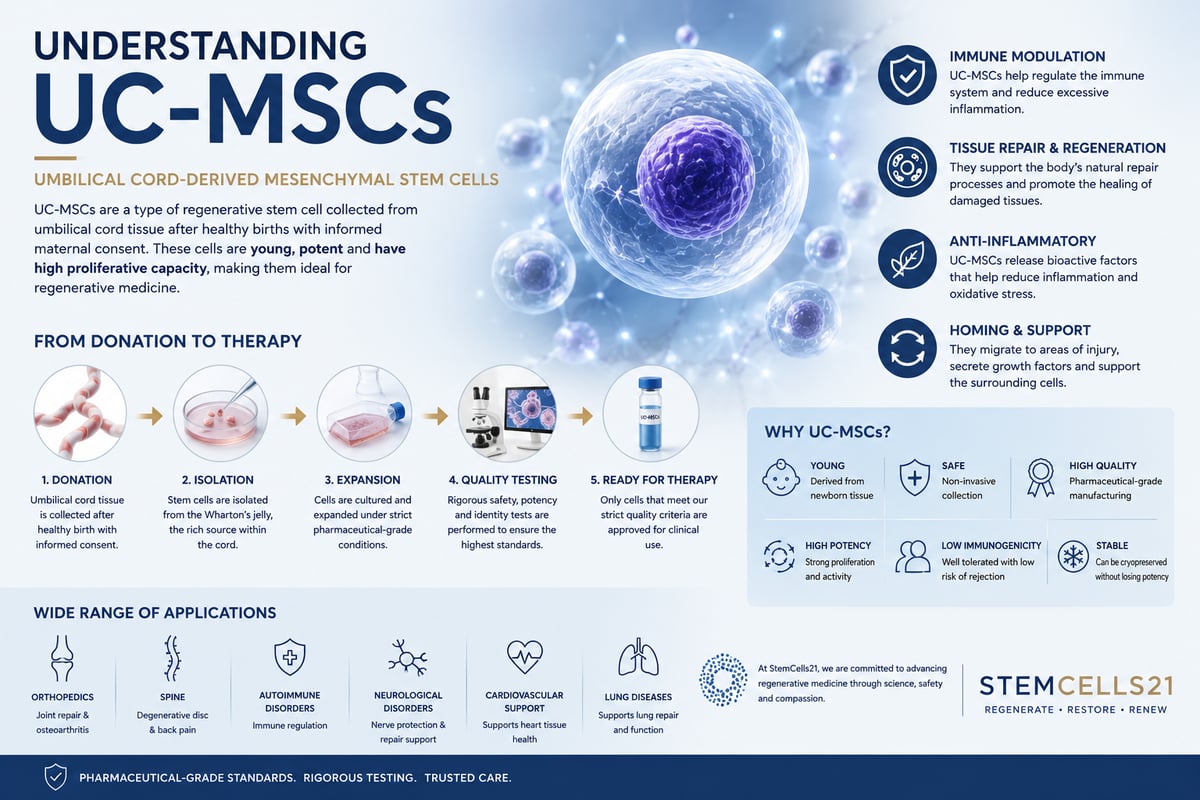
Umbilical cord-derived mesenchymal stem cells have gained particular prominence in clinical practice. At facilities offering stem cell treatment using pharmaceutical-grade UC-MSCs, these young, highly active cells undergo rigorous safety testing and quality control before clinical application, ensuring consistency and safety across patient treatments.
Post-Treatment Monitoring and Support
Therapeutic response unfolds over weeks to months following treatment, requiring systematic follow-up to assess outcomes and optimise recovery. Monitoring protocols typically include scheduled assessments at specific intervals measuring functional improvements, symptom changes, and quality of life indicators.
Patients often receive guidance on complementary therapies, lifestyle modifications, and rehabilitation strategies that support stem cell engraftment and therapeutic effects. These may include nutritional optimisation, targeted exercise programmes, and avoidance of factors that impair healing such as smoking or excessive alcohol consumption.
Safety Considerations and Evidence Standards
Patient safety remains paramount in regenerative medicine, necessitating rigorous adherence to manufacturing standards, clinical protocols, and ethical guidelines. Understanding the safety profile and evidence base helps patients make informed treatment decisions.
Safety Profile of Established Therapies
Well-manufactured mesenchymal stem cell products demonstrate favourable safety profiles when administered by qualified practitioners following established protocols. Potential adverse events are generally mild and transient:
- Temporary injection site reactions
- Mild fever or fatigue (typically resolving within 24-48 hours)
- Transient inflammation at treatment sites
- Rare allergic reactions to media components
Serious adverse events are uncommon with properly manufactured, quality-tested cellular products. The safety record improves substantially when treatments are delivered in accredited medical facilities with appropriate emergency equipment and qualified medical oversight.
Evaluating Clinical Evidence
The strength of evidence varies considerably across different conditions and cell types. Patients should consider several factors when evaluating therapeutic claims:
Study design quality: Randomised controlled trials with appropriate control groups provide stronger evidence than observational studies or case reports.
Publication in peer-reviewed journals: Scientific review processes help ensure data quality and interpretation rigour.
Consistency across multiple studies: Reproducible findings across different research groups strengthen confidence in therapeutic effects.
Realistic outcome measures: Clinically meaningful improvements in function, symptoms, and quality of life matter more than surrogate laboratory markers.
The European Commission’s ethics guidance addresses critical considerations including informed consent, donor rights, and embryonic stem cell research regulations, providing a framework for ethical practice in regenerative medicine.
Future Directions and Emerging Technologies
The field continues to evolve rapidly, with several promising developments on the horizon that may enhance therapeutic outcomes and expand treatment applications.
Cell-Free Therapeutic Approaches
Recent research explores whether stem cells' therapeutic benefits can be delivered without transplanting whole cells. Studies on stem cell-derived exosomes investigate these tiny vesicles that carry bioactive molecules between cells, potentially offering some therapeutic benefits with simplified manufacturing and storage.
This approach may reduce complexity whilst maintaining key therapeutic mechanisms such as anti-inflammatory signalling and tissue repair stimulation. However, clinical translation requires further research to establish optimal exosome isolation methods, dosing strategies, and efficacy across various conditions.
Genetic Enhancement and Precision Medicine
Advanced techniques enable modification of stem cells before administration, potentially enhancing their therapeutic properties or targeting specific disease mechanisms. Gene editing technologies like CRISPR allow precise alterations that may improve cell survival, homing to damaged tissues, or production of therapeutic molecules.
Precision medicine approaches combine genomic profiling, biomarker analysis, and personalised treatment protocols to optimise outcomes for individual patients. As understanding of genetic factors influencing treatment response deepens, these strategies may identify which patients benefit most from specific cellular therapies.
Combination Therapies and Integrated Protocols
Future treatment paradigms increasingly recognise that optimal outcomes may require combining stem cell therapy with complementary interventions. These might include:
- Targeted rehabilitation: Exercise protocols designed to capitalise on regenerative effects
- Nutritional optimisation: Supporting cellular metabolism and tissue repair through specific nutrients
- Pharmacological adjuncts: Medications that enhance stem cell survival or function
- Biomaterial scaffolds: Structures that guide tissue regeneration and cell organisation
The relationship between stem cell exhaustion and aging also informs longevity-focused applications, where regenerative therapies aim to address age-related functional decline and support healthy tissue maintenance.
Integration with Comprehensive Medical Care
Stem cell therapy functions most effectively as part of comprehensive medical management rather than as isolated intervention. Optimal outcomes emerge when regenerative approaches complement evidence-based conventional care, with treatment plans addressing multiple aspects of disease management.
Multidisciplinary Care Models
Advanced treatment facilities employ integrated care teams including:
- Medical specialists with expertise in specific conditions
- Regenerative medicine physicians trained in cellular therapy protocols
- Rehabilitation specialists designing recovery and optimisation programmes
- Nutritionists addressing metabolic support for healing
- Care coordinators ensuring seamless communication and follow-up
This collaborative approach ensures treatments address not only immediate symptoms but also underlying disease processes and overall health optimisation. The connection between cellular therapy and biological aging processes informs comprehensive strategies targeting both specific conditions and systemic wellness.
Patient Education and Empowerment
Informed patients achieve better outcomes through active participation in their care. Quality treatment programmes provide comprehensive education covering treatment mechanisms, realistic expectations, lifestyle factors influencing outcomes, and long-term management strategies.
Understanding how stem cell therapy works, what research supports specific applications, and how to evaluate treatment quality empowers patients to make decisions aligned with their health goals and values. This educational foundation also helps patients identify credible providers and avoid unproven or potentially unsafe interventions.
Stem cell therapy represents a transformative approach to treating degenerative diseases, chronic conditions, and age-related decline through the body's innate regenerative mechanisms. As manufacturing standards improve, clinical evidence expands, and treatment protocols become increasingly refined, these therapies offer new hope for patients seeking alternatives to conventional management. StemCells21 combines pharmaceutical-grade cellular therapies with personalised treatment planning and comprehensive medical care, helping patients explore regenerative medicine options tailored to their individual conditions and health goals in our advanced Bangkok facility.