
Arthritis affects millions of people worldwide, causing joint pain, inflammation, and reduced mobility that significantly impacts quality of life. As conventional treatments often focus on symptom management rather than addressing underlying tissue damage, many patients are exploring regenerative medicine approaches. Stem cells for arthritis have emerged as a promising therapeutic avenue, with growing clinical evidence suggesting these specialized cells may help modulate inflammation, support tissue repair, and improve joint function. Understanding how these therapies work, what the research shows, and what to expect from treatment is essential for anyone considering this innovative approach.
Understanding Arthritis and Current Treatment Limitations
Arthritis encompasses over one hundred different conditions affecting the joints, with osteoarthritis and rheumatoid arthritis being the most prevalent forms. Osteoarthritis results from wear-and-tear degeneration of cartilage, the protective tissue cushioning joint surfaces, whilst rheumatoid arthritis is an autoimmune condition where the body's immune system attacks joint linings.
Traditional treatment protocols typically include:
- Non-steroidal anti-inflammatory drugs (NSAIDs) for pain relief
- Corticosteroid injections to reduce inflammation
- Disease-modifying antirheumatic drugs (DMARDs) for autoimmune forms
- Physical therapy to maintain mobility
- Surgical interventions including joint replacement in severe cases
These approaches provide symptomatic relief but rarely address the underlying degenerative processes. Pain medications may cause gastrointestinal side effects, whilst corticosteroids can weaken surrounding tissues with repeated use. Joint replacement surgery, though effective, involves significant recovery time and is reserved for advanced disease.
The limitations of conventional management have driven researchers to explore regenerative strategies. The Nature Reviews Rheumatology journal has published extensive work on joint immunology, highlighting how understanding cellular mechanisms in arthritic joints opens new therapeutic possibilities.

How Stem Cells for Arthritis Work: Biological Mechanisms
Mesenchymal stem cells (MSCs) represent the most widely studied cell type for arthritis applications. These multipotent cells can be sourced from various tissues, including bone marrow, adipose tissue, and umbilical cord. When administered into arthritic joints, stem cells for arthritis don't simply replace damaged cartilage; instead, they work through several sophisticated mechanisms.
Immunomodulation and Inflammation Control
MSCs secrete bioactive molecules called cytokines and growth factors that modulate the immune environment within inflamed joints. These secreted factors can:
- Reduce production of pro-inflammatory cytokines such as TNF-α and IL-1β
- Increase anti-inflammatory mediators including IL-10 and TGF-β
- Suppress overactive immune cells attacking joint tissues
- Create a regenerative microenvironment conducive to healing
This immunomodulatory capacity is particularly relevant for rheumatoid arthritis, where immune dysregulation drives joint destruction. By rebalancing the immune response, stem cells for arthritis may help break the cycle of chronic inflammation.
Paracrine Signaling and Tissue Support
Beyond immune modulation, MSCs release trophic factors that support resident joint cells. These paracrine signals stimulate chondrocytes (cartilage cells) to produce new extracellular matrix, inhibit cell death pathways, and promote angiogenesis for improved nutrient delivery. The cells essentially communicate with damaged tissues, providing molecular instructions for repair.
Differentiation Potential
Whilst MSCs possess the theoretical ability to differentiate into cartilage-forming chondrocytes, research suggests their primary therapeutic benefit comes from secreted factors rather than direct tissue replacement. Nevertheless, creating a supportive environment may help preserve remaining cartilage and slow degenerative progression.
The WHO guidance on cell therapy products emphasizes the importance of understanding these mechanisms to ensure safe, effective clinical application of regenerative therapies.
Clinical Evidence: What Research Shows
The scientific literature on stem cells for arthritis has expanded considerably over recent years, with numerous clinical trials investigating safety, efficacy, and optimal protocols.
Meta-Analyses and Systematic Reviews
A comprehensive systematic review and meta-analysis examined stem cell injections for knee osteoarthritis across multiple trials. The analysis found that MSC therapy demonstrated statistically significant improvements in pain scores and functional outcomes compared to control groups. Effect sizes varied depending on cell source, dose, and patient selection, highlighting the importance of treatment protocol optimization.
Key findings from systematic reviews include:
| Outcome Measure | Effect Size | Duration of Benefit |
|---|---|---|
| Pain reduction (VAS) | Moderate to large | 6-12 months |
| Functional improvement (WOMAC) | Moderate | 6-24 months |
| Quality of life scores | Small to moderate | 12 months |
| Cartilage volume (MRI) | Variable | Mixed results |
The evidence suggests meaningful clinical benefits, though cartilage regeneration remains inconsistent across studies. Most patients experience pain relief and improved function without complete structural restoration of damaged joints.
Ongoing Clinical Trials
The ClinicalTrials.gov registry lists hundreds of active and completed trials investigating mesenchymal stem cells for osteoarthritis. These studies examine different cell sources, delivery methods, combination approaches with platelet-rich plasma or hyaluronic acid, and long-term safety profiles.
Trials are exploring:
- Optimal cell dosing (ranging from 10 million to 100 million cells)
- Single versus multiple injection protocols
- Intra-articular versus intravenous delivery routes
- Cell source comparison (bone marrow, adipose, umbilical cord)
- Combination with scaffold materials for enhanced cartilage formation

Treatment Protocols and Delivery Methods
Administering stem cells for arthritis requires careful consideration of multiple factors to maximize therapeutic potential whilst ensuring patient safety.
Cell Source Considerations
Autologous versus Allogeneic Cells
Autologous approaches harvest cells from the patient's own tissues, typically bone marrow or adipose tissue. This eliminates rejection risk but requires invasive harvesting procedures and cell expansion time. Cell quality may also decline with patient age and disease severity.
Allogeneic therapies use donor-derived cells, most commonly umbilical cord-derived mesenchymal stem cells (UC-MSCs). These young, robust cells are manufactured under pharmaceutical-grade conditions, rigorously tested for quality and safety, and available for immediate use without harvesting procedures.
Injection Techniques
Intra-articular injection directly into the affected joint represents the most common delivery method. Ultrasound or fluoroscopic guidance ensures accurate needle placement, maximizing cell retention within the joint space. The procedure typically takes 15-30 minutes and can be performed as an outpatient treatment.
Some protocols investigate systemic intravenous administration, particularly for polyarticular involvement affecting multiple joints. This approach relies on the cells' natural homing ability to sites of inflammation, though targeted joint delivery generally achieves higher local concentrations.
Treatment Frequency
Protocol designs vary between single-injection and multiple-dose approaches:
- Single high-dose injection: 50-100 million cells administered once
- Multiple lower-dose series: 20-30 million cells given in 2-3 sessions over several weeks
- Maintenance protocols: Initial treatment followed by repeat doses at 6-12 month intervals
Patient response monitoring through pain scales, functional assessments, and imaging helps determine whether additional treatments provide incremental benefit.
Patient Selection and Treatment Candidacy
Not all arthritis patients are suitable candidates for stem cell therapy. Comprehensive medical evaluation identifies individuals most likely to benefit whilst screening out contraindications.
Ideal Candidate Profile
Early to Moderate Disease Stage
Patients with Kellgren-Lawrence grades 2-3 osteoarthritis typically respond better than those with end-stage bone-on-bone degeneration. Some remaining cartilage provides a foundation for regenerative processes to work with, whilst severe structural damage may require surgical intervention.
Specific Joint Involvement
Knee osteoarthritis has the strongest evidence base, with substantial data supporting stem cells for arthritis in this location. Hip, shoulder, and ankle joints also show promise, though research is less extensive. Small hand joints in rheumatoid arthritis present unique challenges due to size and accessibility.
Realistic Expectations
Successful outcomes require patients who understand that regenerative medicine aims to slow progression, reduce symptoms, and delay surgery rather than completely reverse decades of joint damage. Those seeking moderate functional improvement and pain reduction whilst maintaining active lifestyles make ideal candidates.
Exclusion Criteria
Standard screening excludes patients with:
- Active infections or recent septic arthritis
- Malignancy or history of cancer within five years
- Severe uncontrolled diabetes or immunosuppression
- Pregnancy or breastfeeding
- Unrealistic expectations of immediate cartilage regeneration
Medical history review, physical examination, and imaging assessment inform candidacy decisions.
Safety Profile and Potential Risks
Stem cells for arthritis have demonstrated a favorable safety profile across clinical trials, with serious adverse events remaining rare when proper protocols are followed.
Common Minor Effects
Most patients tolerate treatment well, experiencing only transient reactions:
- Temporary increase in joint pain or swelling (24-72 hours post-injection)
- Mild bruising or discomfort at injection site
- Feeling of joint fullness or pressure
- Fatigue in the day following treatment
These effects typically resolve without intervention as cells engraft and begin therapeutic activity.
Theoretical Concerns
Long-term safety monitoring continues to assess theoretical risks including aberrant tissue formation or immune reactions. To date, large-scale follow-up studies have not identified increased cancer risk, ectopic tissue growth, or other serious complications when pharmaceutical-grade cells are properly manufactured and administered.
The AABB Circular of Information for Cellular Therapy Products provides comprehensive guidance on handling, safety monitoring, and quality standards that help minimize risk in clinical practice.

Comparing Stem Cells with Other Regenerative Approaches
The broader field of orthobiologics includes several treatment modalities beyond stem cells for arthritis, each with distinct mechanisms and evidence levels.
| Treatment Type | Mechanism | Evidence Strength | Typical Cost Range |
|---|---|---|---|
| Platelet-rich plasma (PRP) | Growth factor delivery | Moderate | £500-1,500 |
| Bone marrow aspirate concentrate | Multi-cell population | Moderate | £2,000-4,000 |
| Adipose-derived MSCs | Immunomodulation, paracrine | Growing | £3,000-6,000 |
| UC-MSCs (allogeneic) | Immunomodulation, standardized | Strong | £4,000-8,000 |
| Hyaluronic acid | Viscosupplementation | Moderate | £300-800 |
An evidence-based guideline review examined orthobiologics comprehensively, noting that whilst PRP offers lower cost and easier accessibility, mesenchymal stem cell approaches may provide more robust and sustained benefits for moderate to severe arthritis. Combination strategies using PRP with stem cells are under investigation.
Integration with Conventional Care
Stem cells for arthritis should not be viewed as a replacement for comprehensive medical management but rather as a complementary approach within a multi-modal treatment plan.
Concurrent Therapies
Optimal outcomes often result from combining regenerative treatment with:
- Structured physical therapy programs to strengthen supporting muscles
- Weight management to reduce joint loading stress
- Appropriate pain medication during the initial healing phase
- Anti-inflammatory nutrition strategies
- Activity modification and joint protection techniques
Coordinating care between regenerative medicine specialists, rheumatologists, physiotherapists, and primary care physicians ensures all aspects of the condition are addressed.
Medication Interactions
Certain medications may theoretically interfere with stem cell function. NSAIDs, whilst commonly used for arthritis pain, can affect cell signaling pathways. Some protocols recommend temporarily discontinuing NSAIDs around the time of treatment, though evidence remains mixed. Corticosteroids may dampen the therapeutic response and are often avoided immediately before and after stem cell administration.
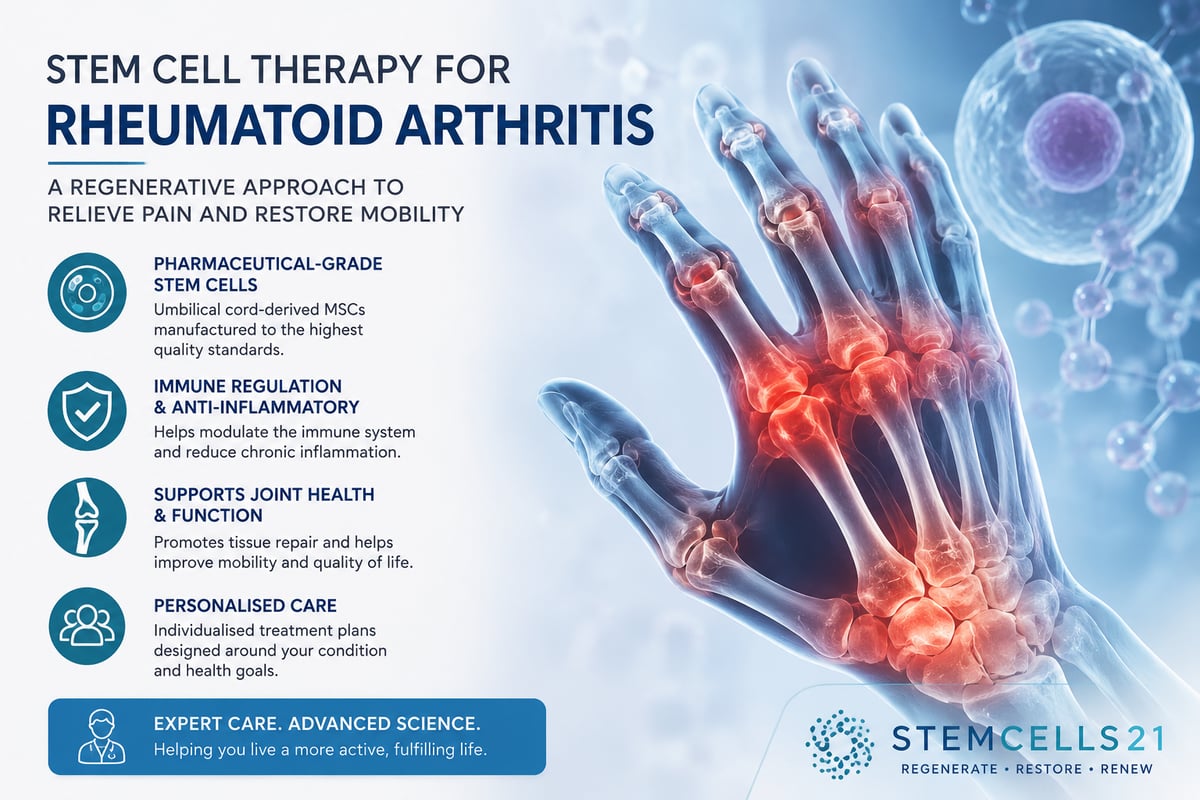
Patients with rheumatoid arthritis face particular challenges, as disease-modifying drugs that suppress immune function might also affect implanted cells. Rheumatoid Arthritis Treatment protocols must carefully balance disease control with creating an environment conducive to regenerative therapy.
Optimizing Treatment Outcomes
Beyond the cellular therapy itself, several factors influence how effectively stem cells for arthritis work in individual patients.
Pre-Treatment Optimization
Metabolic Health
Blood sugar control, inflammatory markers, and nutritional status all affect the joint microenvironment. Addressing vitamin D deficiency, optimizing omega-3 fatty acid intake, and controlling diabetes improves the cellular milieu where stem cells must function.
Joint Preparation
Some clinicians recommend addressing mechanical factors before treatment. Correcting alignment issues, removing loose bodies, or treating meniscal tears may create better conditions for regenerative processes. The NIAMS resources on cartilage preservation discuss how structural factors interact with biological interventions.
Post-Treatment Protocol
The weeks following stem cell administration represent a critical period for engraftment and therapeutic effect initiation:
- Days 1-3: Rest and ice to manage initial inflammatory response
- Weeks 1-2: Gentle range-of-motion exercises, avoid high-impact activities
- Weeks 3-6: Progressive strengthening and functional movements
- Months 2-6: Gradual return to desired activity levels
Following prescribed rehabilitation protocols allows cells to establish themselves whilst avoiding excessive mechanical stress that could disrupt the healing process.
Monitoring Response
Patients typically undergo assessment at regular intervals:
- Pain and function questionnaires (VAS, WOMAC, KOOS scores)
- Physical examination of range of motion and joint stability
- Imaging at 6-12 months to evaluate structural changes
- Quality of life measures
Response patterns vary, with some patients experiencing gradual improvement over 3-6 months whilst others notice changes within weeks. Tracking progress helps clinicians determine whether additional treatments or modifications are warranted.
Future Directions and Emerging Research
The field of stem cells for arthritis continues evolving rapidly, with several promising developments on the horizon.
Enhanced Cell Products
Researchers are investigating methods to potentiate MSC therapeutic effects:
- Pre-conditioning cells with specific growth factors or hypoxic conditions
- Genetic modification to enhance anti-inflammatory molecule production
- Combining cells with biomaterial scaffolds for structural support
- Extracellular vesicle and exosome-based therapies derived from MSCs
These next-generation approaches aim to enhance efficacy whilst potentially reducing the number of viable cells required.
Precision Medicine Approaches
Future protocols may incorporate biomarker analysis to predict which patients will respond best to which cell types and doses. Identifying inflammatory profiles, genetic factors, and disease stage characteristics could enable truly personalized regenerative treatment plans.
Regulatory Evolution
As evidence matures, regulatory frameworks continue adapting. Balancing innovation with safety requires ongoing dialogue between researchers, clinicians, regulatory bodies, and patient advocates. Standardized manufacturing processes, quality metrics, and outcome reporting will help establish stem cells for arthritis as an evidence-based mainstream treatment option.
Cost Considerations and Accessibility
The economics of regenerative medicine represent a significant consideration for many patients exploring stem cells for arthritis.
Pricing Factors
Treatment costs vary based on:
- Cell source and manufacturing complexity
- Number of cells administered
- Single versus multiple injection protocols
- Geographic location and facility standards
- Inclusion of complementary therapies or rehabilitation
Pharmaceutical-grade allogeneic UC-MSC treatments typically range from £4,000 to £8,000 per course, whilst autologous bone marrow or adipose procedures may cost £2,000 to £6,000. These figures generally represent out-of-pocket expenses, as most insurance systems do not yet cover regenerative arthritis treatments.
Value Analysis
When comparing costs to alternatives, consider:
- Joint replacement surgery typically costs £8,000-15,000 with significant recovery time
- Years of ongoing medication, injection series, and physical therapy accumulate substantial expense
- Lost productivity, reduced quality of life, and activity limitations carry hidden costs
For patients who achieve sustained benefit, stem cells for arthritis may represent cost-effective intervention that delays or eliminates need for more invasive procedures.
Insurance and Coverage Trends
Coverage policies are gradually evolving as evidence strengthens. Some private insurers now cover stem cell therapy for arthritis in specific circumstances, whilst others offer partial reimbursement. Patients should verify current policies and explore whether flexible spending accounts or health savings accounts can offset costs.
Making an Informed Decision
Choosing whether to pursue stem cells for arthritis requires careful consideration of personal circumstances, treatment goals, and available evidence.
Questions to Ask Your Provider
- What is your experience specifically with stem cell therapy for my type of arthritis?
- What cell source do you use and what quality standards ensure safety?
- What outcomes have you observed in patients with similar disease severity?
- What does your treatment protocol include and what is the timeline?
- How will you monitor my response and determine if additional treatments are needed?
- What are realistic expectations for my specific situation?
Reputable providers welcome detailed questions, provide transparent information about their protocols, and present realistic outcome expectations based on evidence.
Red Flags to Avoid
Be cautious of providers who:
- Guarantee specific results or promise cartilage regeneration
- Cannot provide clear information about cell source and quality testing
- Pressure immediate decisions without thorough evaluation
- Offer treatments at prices significantly below market rates
- Make claims unsupported by published research
The regenerative medicine field includes legitimate evidence-based practitioners as well as those making exaggerated claims. Due diligence protects both health and financial investment.
Stem cells for arthritis represent a promising regenerative approach supported by growing clinical evidence, offering potential benefits for patients seeking alternatives to conventional symptom management. As research continues to refine protocols and identify optimal candidates, these therapies may become increasingly integrated into comprehensive arthritis care. If you're exploring whether regenerative treatment might help address your joint pain and restore function, StemCells21 offers personalised assessment and pharmaceutical-grade umbilical cord-derived mesenchymal stem cell therapy in our state-of-the-art Bangkok facility, combining advanced regenerative medicine with expert medical care tailored to your specific condition and goals.